



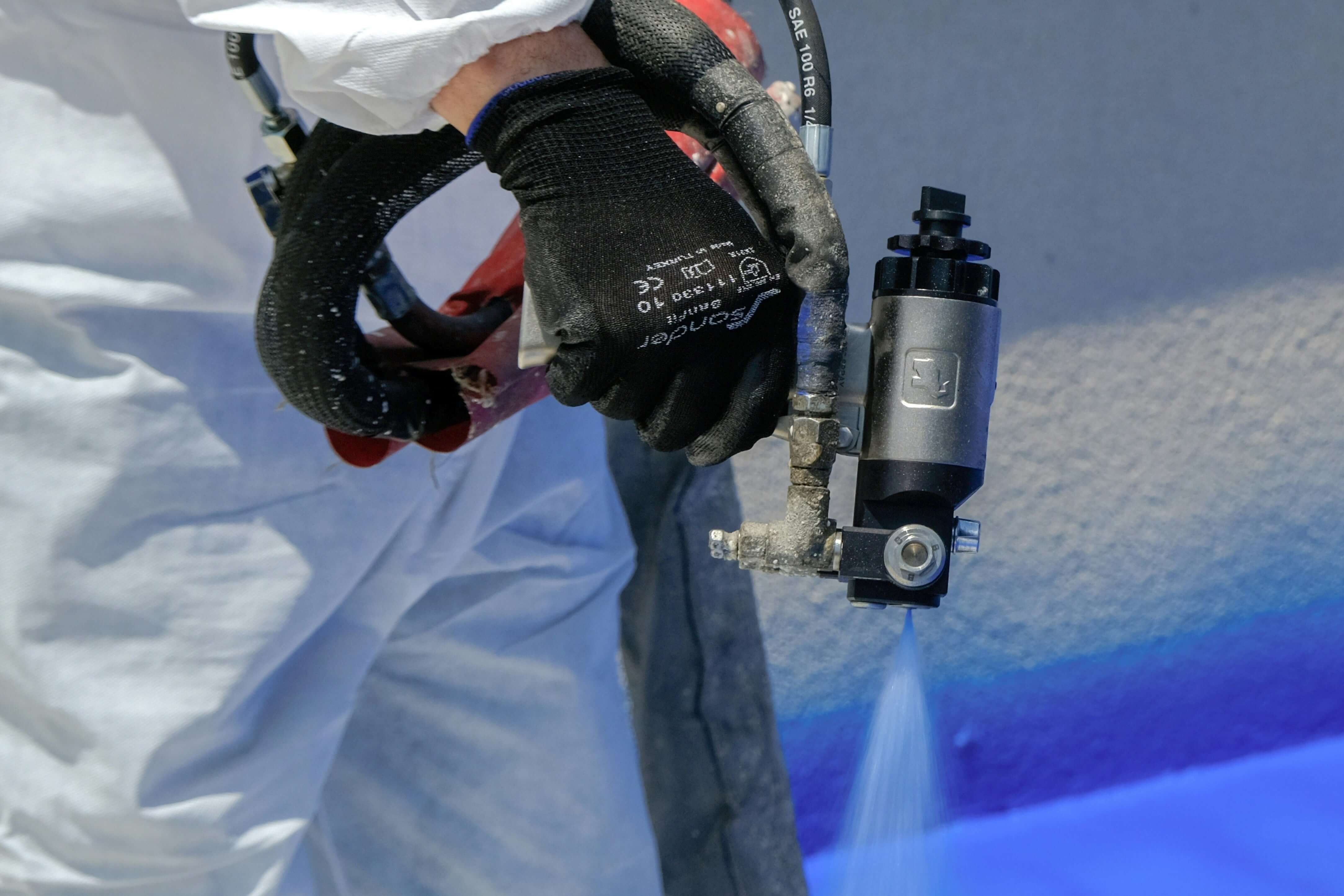
Few subjects in lutherie are as soaked in folklore as the finish. The belief runs deep and it runs old: that nitrocellulose lacquer is tonally superior, that it lets a guitar “breathe,” that the wood underneath needs to be left free to resonate, and that modern finishes — polyurethane, polyester — choke the instrument and kill its voice. It’s repeated by players, by builders, by vintage dealers with a financial stake in the romance, until it has the texture of established fact.
It isn’t. Or rather, the part that’s true is not the part people think is true, and the variable that actually matters is one the folklore almost never names.
This article does what the rest of the series does: it goes to the measurements. There happens to be a clean, careful, peer-reviewed study that tested exactly this question, and its findings are sharper than either camp wants to hear. The finish-deniers are wrong that it does nothing. The nitro-romantics are wrong about what’s doing the work. Let’s look at what’s actually going on.
The “breathing guitar” myth
Start with the central claim, because everything else hangs off it.
The “breathing guitar” idea holds that a thin, permeable finish like nitrocellulose lets the wood vibrate freely — almost as if the finish were porous enough for the timber to inhale and exhale — and that this freedom is what produces superior tone and resonance. Thicker, sealed, “plastic” finishes supposedly suffocate the wood and rob it of life.
It’s an appealing image. It’s also, on its own logic, self-defeating. Here’s the simplest way to see it:
If maximum “breathing” produced the best tone, the best-sounding guitars would all be unfinished, or oiled. A bare, oil-rubbed top adds almost no mass and seals almost nothing — it is as “free to breathe” as a soundboard can get. So if the breathing theory were the dominant truth of tone, oil and bare wood would be the undisputed premium choice, and builders would have abandoned film finishes decades ago for purely sonic reasons.
They haven’t. The finest acoustic instruments in the world are overwhelmingly finished — French-polished shellac, thin nitro, modern thin catalysed coats. Oil finishes exist, they have their place, and they’re genuinely thin and low-mass, but nobody seriously argues they categorically outperform a well-applied thin film finish on tone. The market has had a century to vote with its ears, and it did not converge on “no finish.” That alone should tell you the breathing story is, at best, radically incomplete.
So what’s really happening?
What the measurements actually show
The most useful piece of evidence here is a 2015 study by H.P. Stephens in the Savart Journal, the peer-reviewed journal for the science of stringed instruments. It’s worth describing carefully, because the details are where the myth dies.
Stephens took matched bars of Sitka spruce — the same wood used for soundboards — cut along-grain and cross-grain, machined to uniform dimensions and density. He then coated them with a sealer and one of four top coats: de-waxed shellac and nitrocellulose lacquer (the two traditional “evaporative” finishes), plus two modern reactive shellac-based finishes. He measured each bar’s fundamental vibrational frequency (f0) and its damping quality factor (Q) — essentially, how the wood resonates and how quickly that resonance dies away. And critically, he controlled and measured the thickness of every coat, keeping the combined sealer-and-finish under 100 microns, which is normal lutherie practice.
Three findings matter, and they should be read in order.
First: the finish is not inert. It changes the wood. This is the part the deniers get wrong. Coating the spruce measurably shifted both f0 and Q. The finish does something. Anyone who tells you a finish has zero acoustic effect is also ignoring the data.
Second: the single biggest culprit was the sealer, not the glamorous top coat. The sealer alone produced significant changes in both f0 and Q before any nitro or shellac ever touched the wood. The layer nobody romanticises — the unglamorous foundation coat — moved the needle more than the finish everyone argues about.
Third, and this is the one that ends the debate: all four top coats were statistically equivalent. Cured for seven weeks and applied at the same thickness, nitrocellulose, shellac, and both reactive finishes had the same effect on the wood’s vibration. There was no measurable tonal superiority for nitro. None. The chemistry of the top coat — the thing the entire “breathing” cult is built on — did not distinguish itself in the data.
Hold those together and the real picture emerges. The finish matters; the type of finish, at equal thickness, does not.
The spine: it’s the thickness, not the chemistry
This is the heart of it, and it’s the line worth tattooing over the workbench: what a finish does to tone is governed by how much of it there is, not what it’s made of.
A finish affects the soundboard by adding mass and stiffness to the surface and by adding damping — and those effects scale with the amount of material sitting on the wood. The specific gravity of a cured finish is several times that of spruce, so every additional layer is dead weight on a membrane whose whole job is to move freely. Pile on a thick coat and you load and damp the top; keep it thin and you barely touch it. That’s the mechanism, and it is fundamentally about quantity, not recipe.
Once you see that, the whole nitro-versus-poly war reveals itself as a category error. People compare a thin vintage nitro finish to a thick 1970s polyester slab, hear a difference, and credit the chemistry. But they’re not comparing chemistries — they’re comparing thicknesses. A 0.5 mm finish and a 3 mm finish will sound different no matter what either one is made of. Put nitrocellulose on at 3 mm and it will choke a top just as effectively as any “plastic” finish; apply polyurethane in a whisper-thin coat and the soundboard will hardly know it’s there.
This is also why the comparison is so often rigged without anyone meaning to rig it. Nitrocellulose, by its nature and tradition, tends to be applied thin. Old polyester, by its nature and era, tended to be applied thick. So “nitro sounds better than poly” is very often just “thin sounds better than thick” wearing a costume. The finish that breathes isn’t breathing because of its molecular structure. It’s breathing because there’s less of it.
The romance attached to a specific chemistry, then, is largely misplaced. The genuine craft variable — the one a serious builder actually sweats over — is getting the finish thin and even and properly cured. That’s the skill. The choice between equally-thin shellac and equally-thin nitro is a decision about durability, repairability, working properties, toxicity, and aesthetics — not a decision that will, by itself, give you a better-sounding guitar.
And on an electric guitar, it matters even less
Everything above is about acoustic soundboards, where the top’s free vibration is the whole engine of the sound. On a solid-body electric, the case for finish-as-tone collapses almost entirely.
An electric’s note is generated by the string vibrating over a magnetic pickup. The body’s resonance plays a far smaller, more indirect role, and the finish’s effect on that already-secondary resonance is smaller still — a second-order effect on a second-order effect, then routed through pickups, amp, speaker, and room, each of which moves vastly more of the final tone than a film of lacquer ever could. (This is the same conclusion the tonewood article reached, by the same logic: on a solidbody, the signal chain dominates, and the wood-and-finish contribution sits far down the list.)
On an electric, the honest framing is simple: the finish is an aesthetic and protective choice. Nitro, poly, oil, satin, gloss — pick it for how it looks, how it ages, how it feels under your forearm, how easy it is to repair, and how it holds up to wear. The idea that your solid-body’s finish chemistry is shaping your amplified tone is the breathing myth’s weakest possible home ground, and it does not survive contact with how an electric actually makes sound.
What a finish does legitimately affect on an electric is feel — and that’s not nothing. A thick gloss coat feels different against the hand than an open-pore satin or oil finish; some players find a glossy neck sticky and a satin neck fast. That’s a real, defensible reason to prefer one over another. It’s just not a tonal one.
So where does the finish genuinely matter?
The point of this series is precision, not contrarianism, so let’s be exact about where the finish earns real attention — because it does.
Thickness and application, on an acoustic top. This is the one acoustically significant lever, and it’s a real one. A top finished thin and even will outperform the same top buried under a heavy coat. This is genuine craft and worth paying for. It’s just not about which can the finish came out of.
Durability, repairability, and aging. Finishes differ enormously here, and these differences are real and practical. Nitrocellulose is soft, checks and ages over decades, and repairs invisibly — which is exactly why the vintage world loves it, and a perfectly good reason to choose it. Modern catalysed finishes are harder, tougher, and more stable, but harder to repair seamlessly. Shellac is thin and beautiful and repairable but vulnerable to heat, alcohol, and sweat. These are the considerations that should actually drive a finish decision.
Health, environment, and workflow. Nitro is toxic to spray and off-gasses for weeks; water-based and modern thin finishes have cut the VOCs and the hazard substantially. For a working shop this is a serious, legitimate factor, and it’s one of the better arguments for moving away from traditional lacquers that has nothing to do with tone at all.
Feel. Gloss versus satin versus open-pore oil is a genuine ergonomic and tactile choice, especially on the back of a neck. It changes the playing experience even when it changes nothing about the sound.
Notice what’s absent from that list: “because nitro sounds better.” That claim is the one piece of finish lore the measurements specifically do not support.
So what should you actually take from this?
The finish is real, and it deserves care — but the care belongs somewhere other than where tradition points it.
The “breathing guitar” is a metaphor, not a mechanism. A finish doesn’t free the wood by being permeable; it loads the wood by adding mass and damping, and the only question that matters acoustically is how much of it there is.
At equal thickness, the chemistry is a wash. The controlled measurements are clear: shellac, nitrocellulose, and modern reactive finishes do the same thing to a spruce top’s vibration. The supposed tonal superiority of nitrocellulose is folklore, and much of the “nitro versus poly” difference people hear is really thin versus thick in disguise.
Thickness is the spine. If you care about an acoustic’s tone, care about getting the finish thin, even, and well-cured. That’s the craft. That’s the variable. Everything else about the finish — and it’s a lot — is about how the instrument looks, lasts, repairs, and feels, not how it sounds.
On an electric, relax entirely. Choose the finish you find beautiful and durable, and let the pickups and the amp do the work they’re actually responsible for.
None of this diminishes the craft of finishing — if anything it sharpens it, by aiming the skill at the thing that genuinely matters and freeing the builder from a century of misplaced reverence for one particular can. A guitar’s voice is built by the wood, the bracing, the geometry, the hands that shaped it. The finish protects that voice and makes it beautiful to look at. It does not, by some quiet chemistry, secretly create it.
No fluff, no dogma — just what’s actually on the wood.

Share:
The Truth About Tonewoods - Part 1
IRYW : Why Stainless Steel Frets are a Waste of Money