




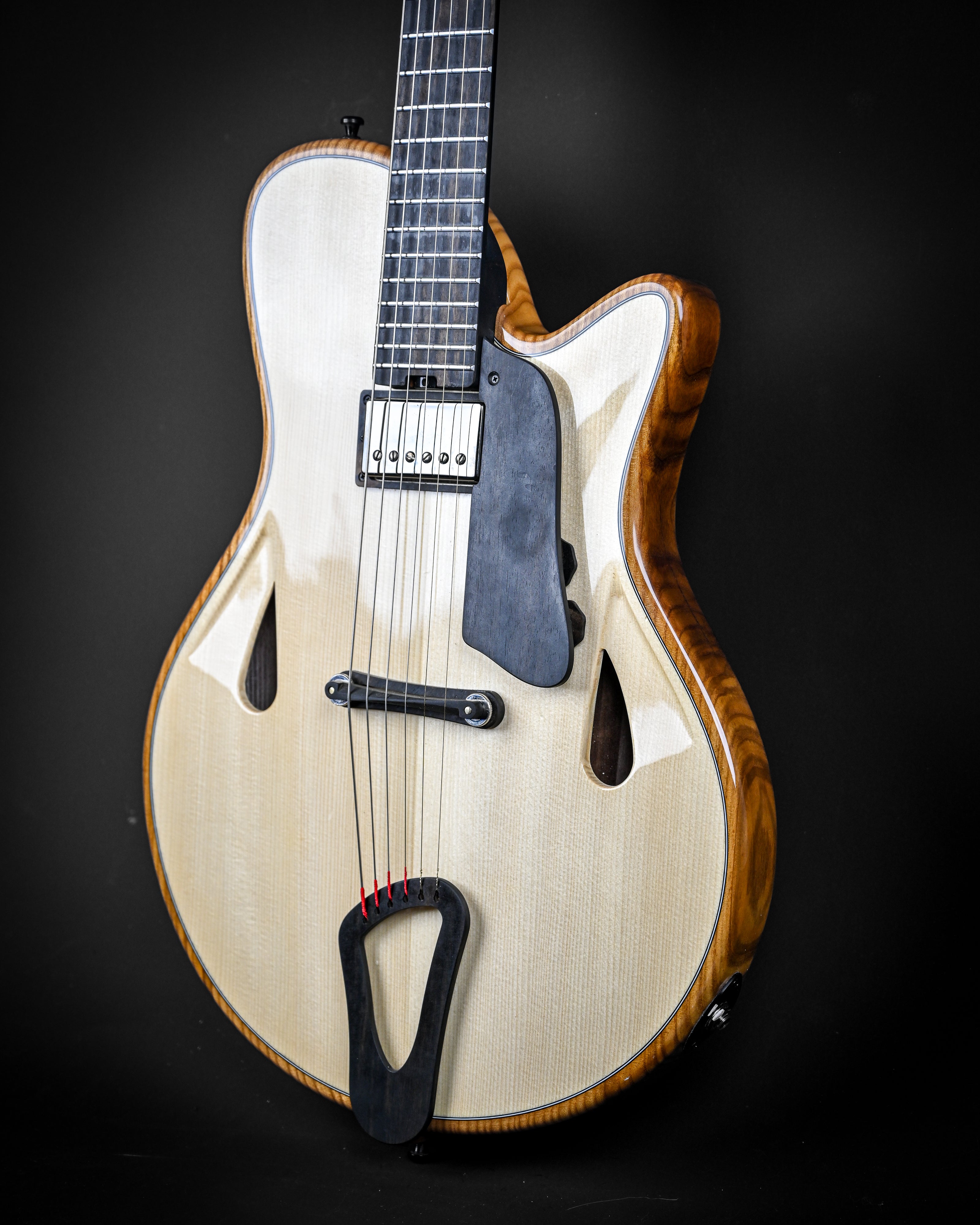

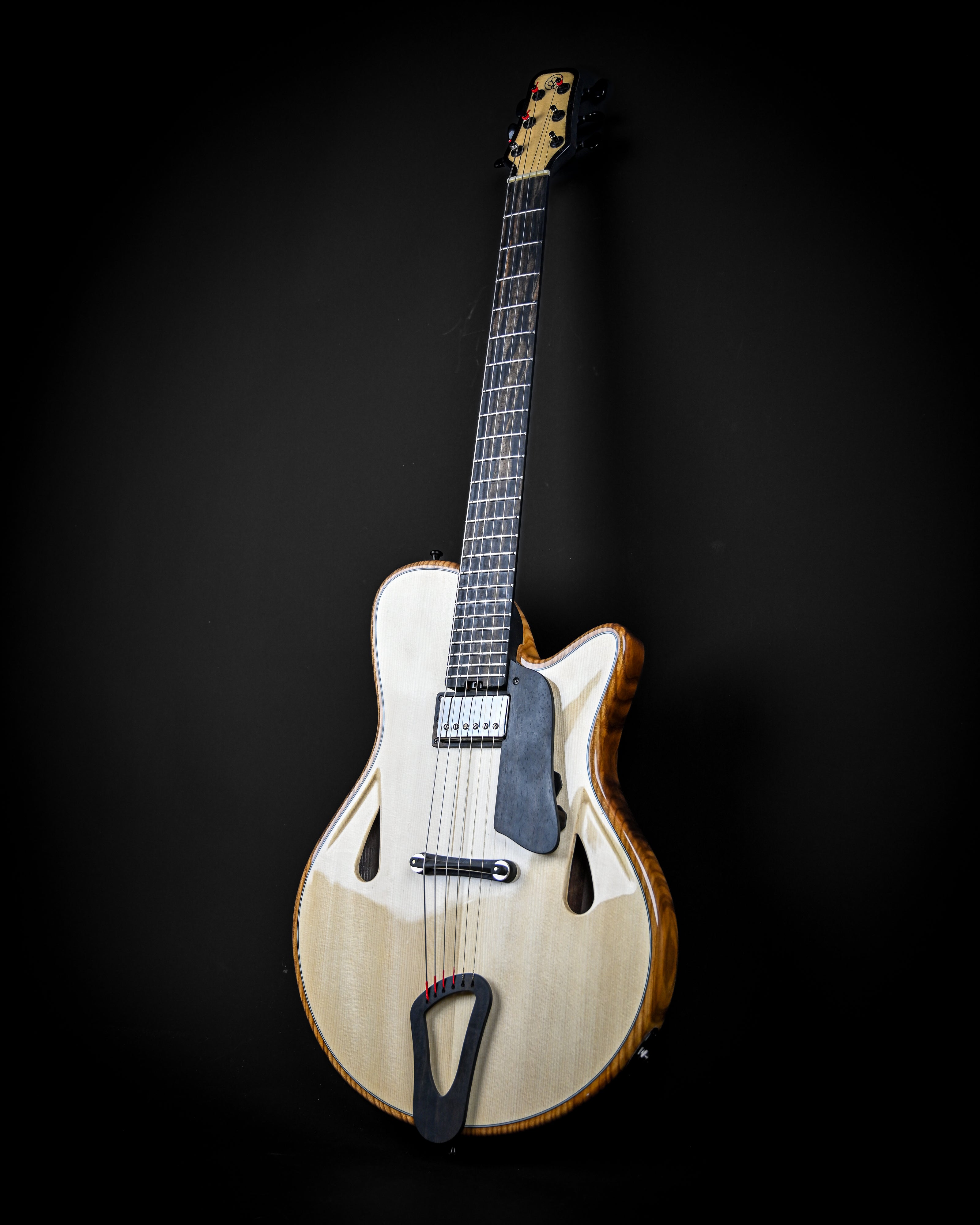
Aeriは、厳密にはアーチトップギターです。見た目はアーチトップそのものであり、音響的にもアーチトップの特性を持ち、その系譜を受け継いでいます。しかし、これは従来のアーチトップの復刻モデルではなく、そもそもそのようなものとして設計されたわけでもありません。
この楽器は、3つの確立されたサウンドの交差点に位置しています。アーチトップの共鳴と音の広がり、ジプシー・ジャズ・ギターの打楽器的なアタックとリズミカルな推進力、そしてシンラインのエレクトリック・ギター特有のクリアで集約された音色です。しかし、これは単にこれら3つの要素を足し合わせたものではありません。これらすべてから得た教訓を活かして作り上げられた、まったく新しい第4のサウンドなのです。
その位置づけは、具体的なデザイン上の選択を左右するものであり、その中でも特に、ある一点については直接的に言及する価値がある。
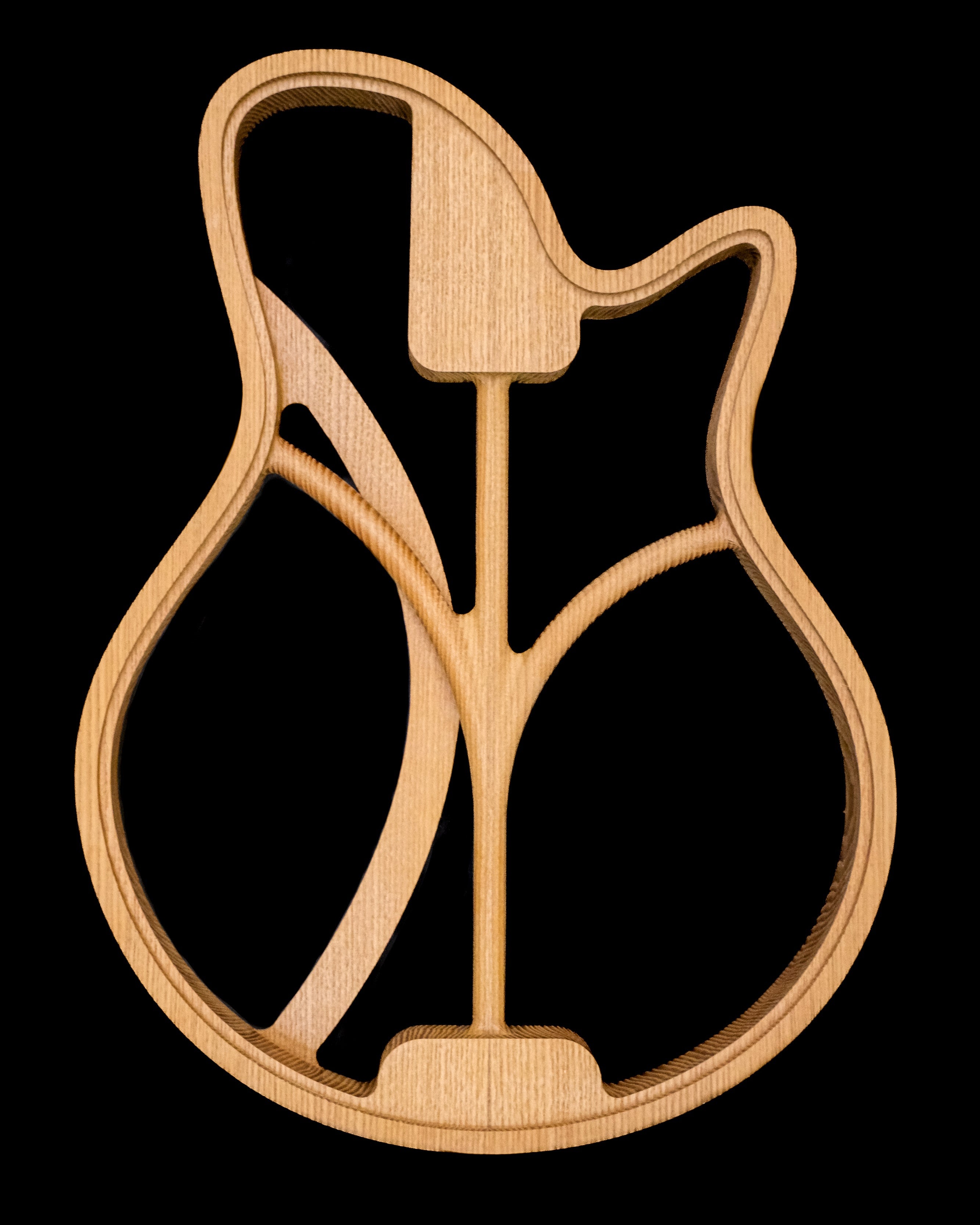
Aeriの中核をなすのは、ネックブロックからテールブロックまで一続きの構造として機械加工された、彫刻のような内部シャーシです。これは、従来の切り込みを入れたライニング、接着されたブロック、トーンバーの組み合わせに代わり、一体型の荷重支持構造を採用しています。この構造は、楽器に必要な箇所にのみ剛性を与えるよう削り出され、不要な箇所はすべて取り除かれています。
その結果、何十年にもわたって弦の張力下でも形状を保ち、季節による変形に強く、接着された内部構造では得られないほどの明瞭さでエネルギーをトップ板へと伝達するアーチトップが完成しました。すべてのAeriは、一台一台、同じ公差で加工された同一の内部構造を採用しています。
AeriとAeri HLの両モデルは、このシャーシをベースに開発されています。
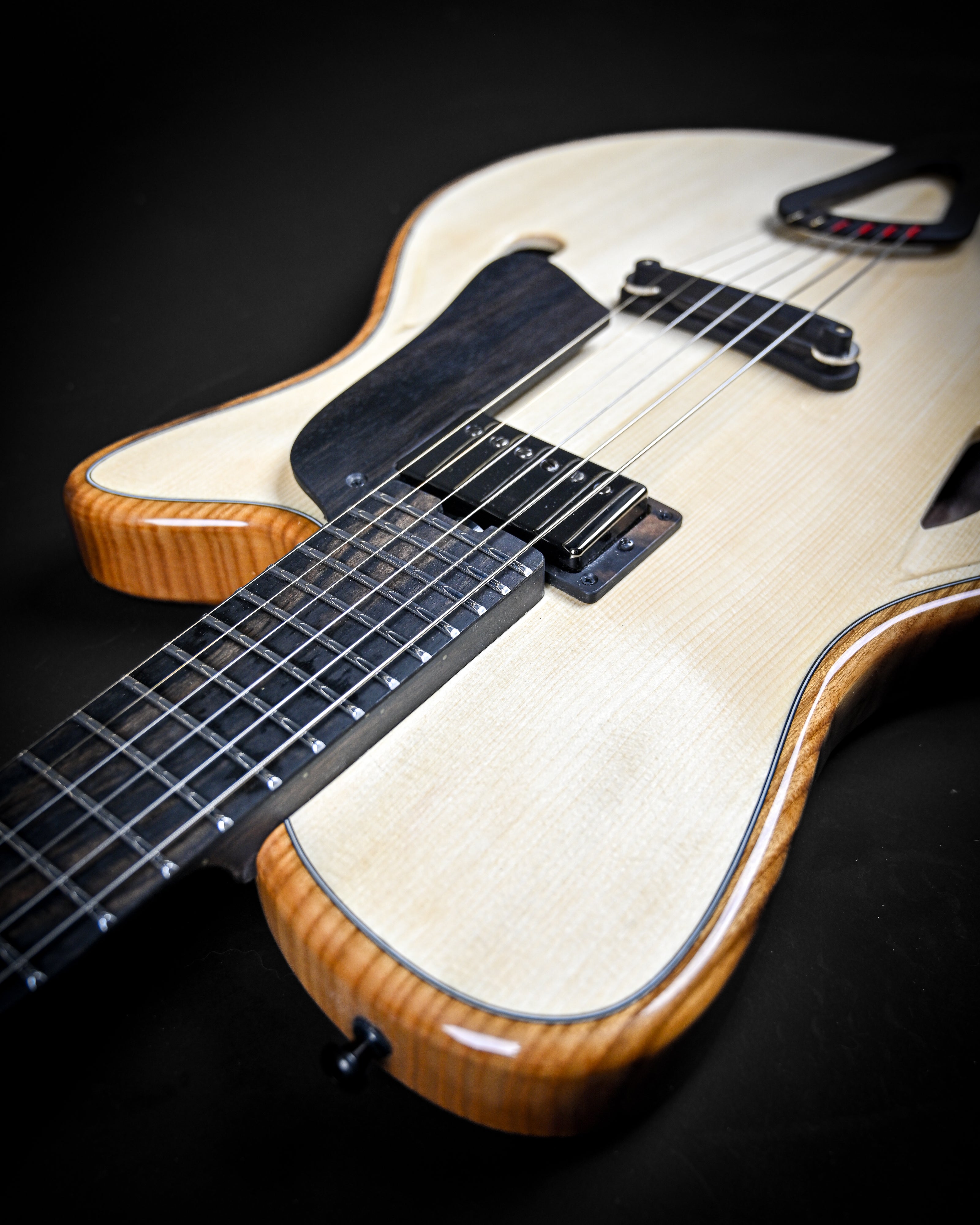
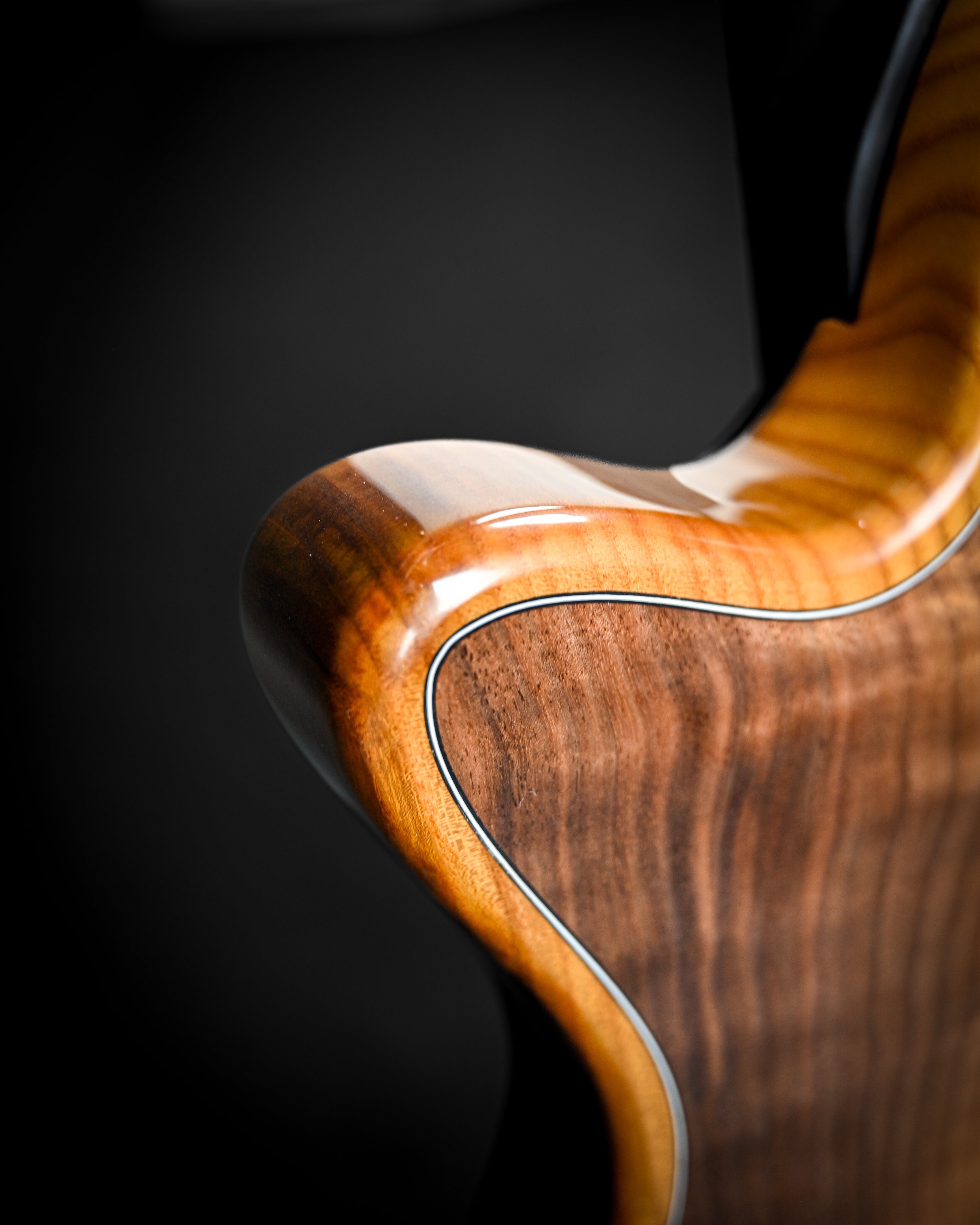
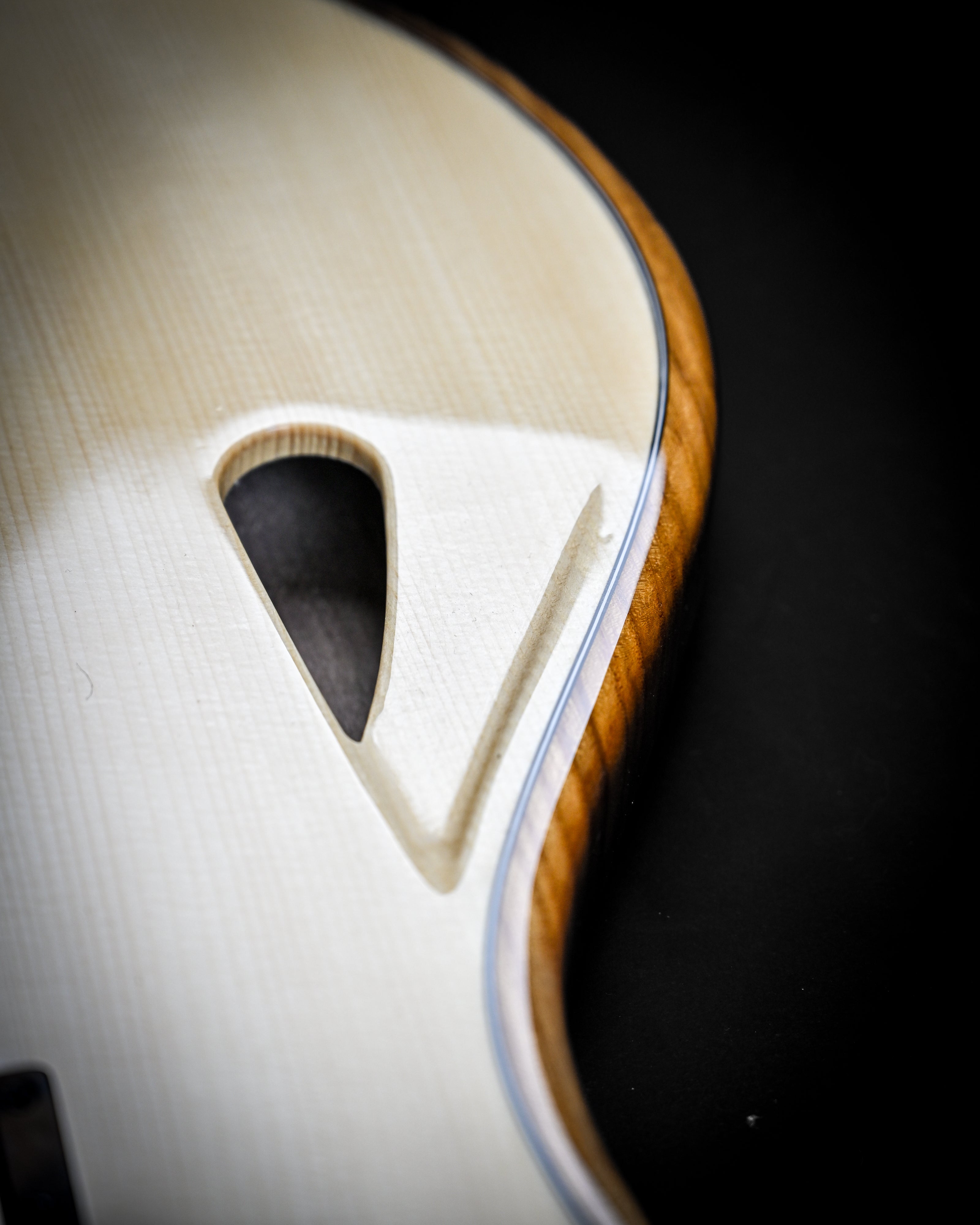
表板、裏板、および腹板は、ボディの側面に面一に埋め込まれています。binding 、突き出た縁もありません。表板、側板、裏板の接合部は、滑らかで丸みを帯びた一体の曲面となっています。
これにより、2つの効果が得られます。1つは、トップの輪郭が楽器の端まで途切れることなく視覚的に滑らかに見えること、もう1つは、身体や前腕に当てた際のフィット感が格段に向上することです。従来binding 、精密な木工技術と全面的に丸みを帯びた縁取りにbinding 。

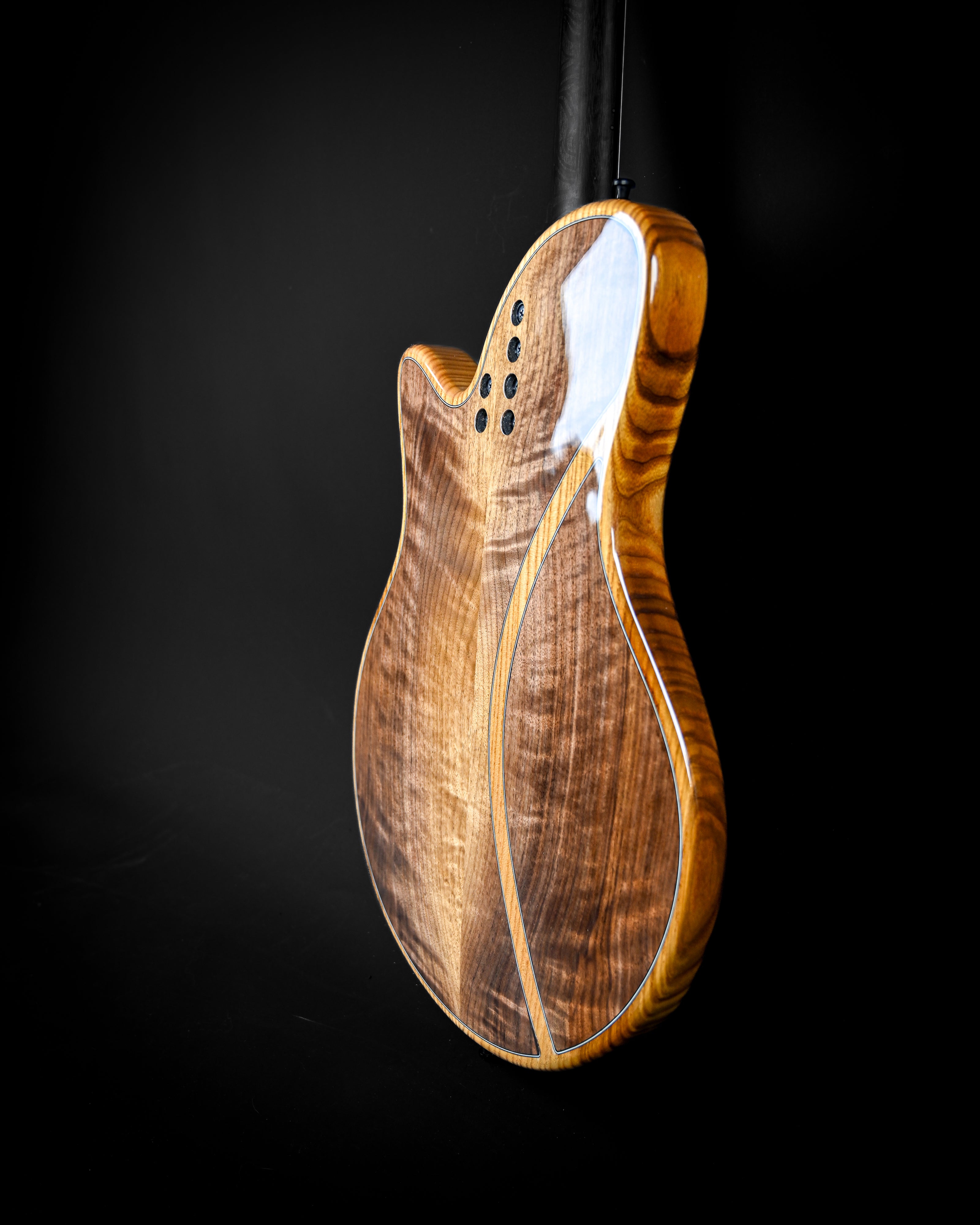
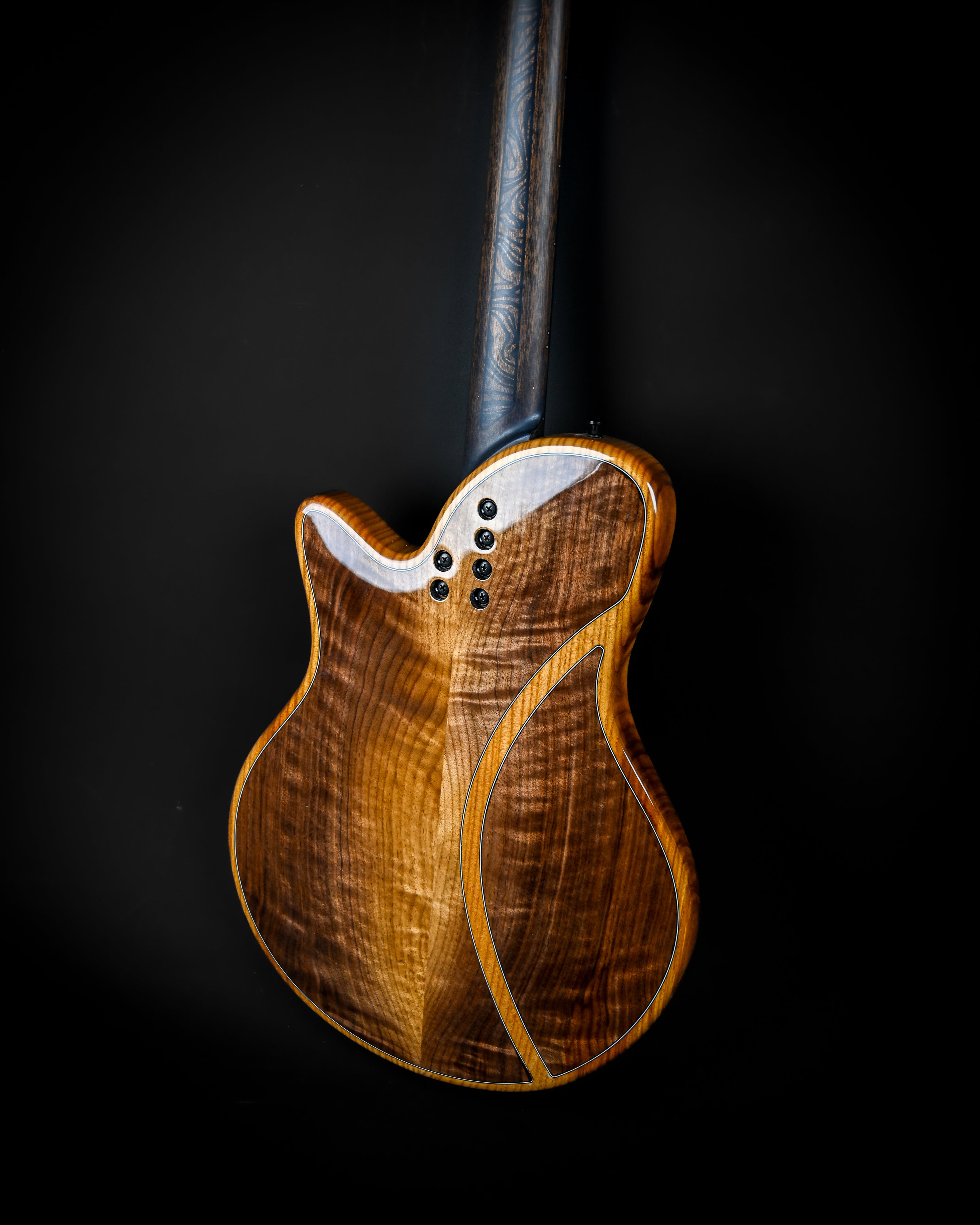
「Aeri」は、アーチトップの形状に「ベリーカット」を採用しました。これは、楽器の背面が奏者の胴体に接する部分に施された、曲線状のくぼみです。丸みを帯びたエッジと、上部のバウトに設けられた前腕用ベベルと相まって、従来は奏法上の利点をもたらさなかったこの楽器の演奏姿勢を一変させます。
座ってでも、立ってでも、あるいはセッション全体を通して弾き続けても、ボディが体に負担をかけないアーチトップギターです。
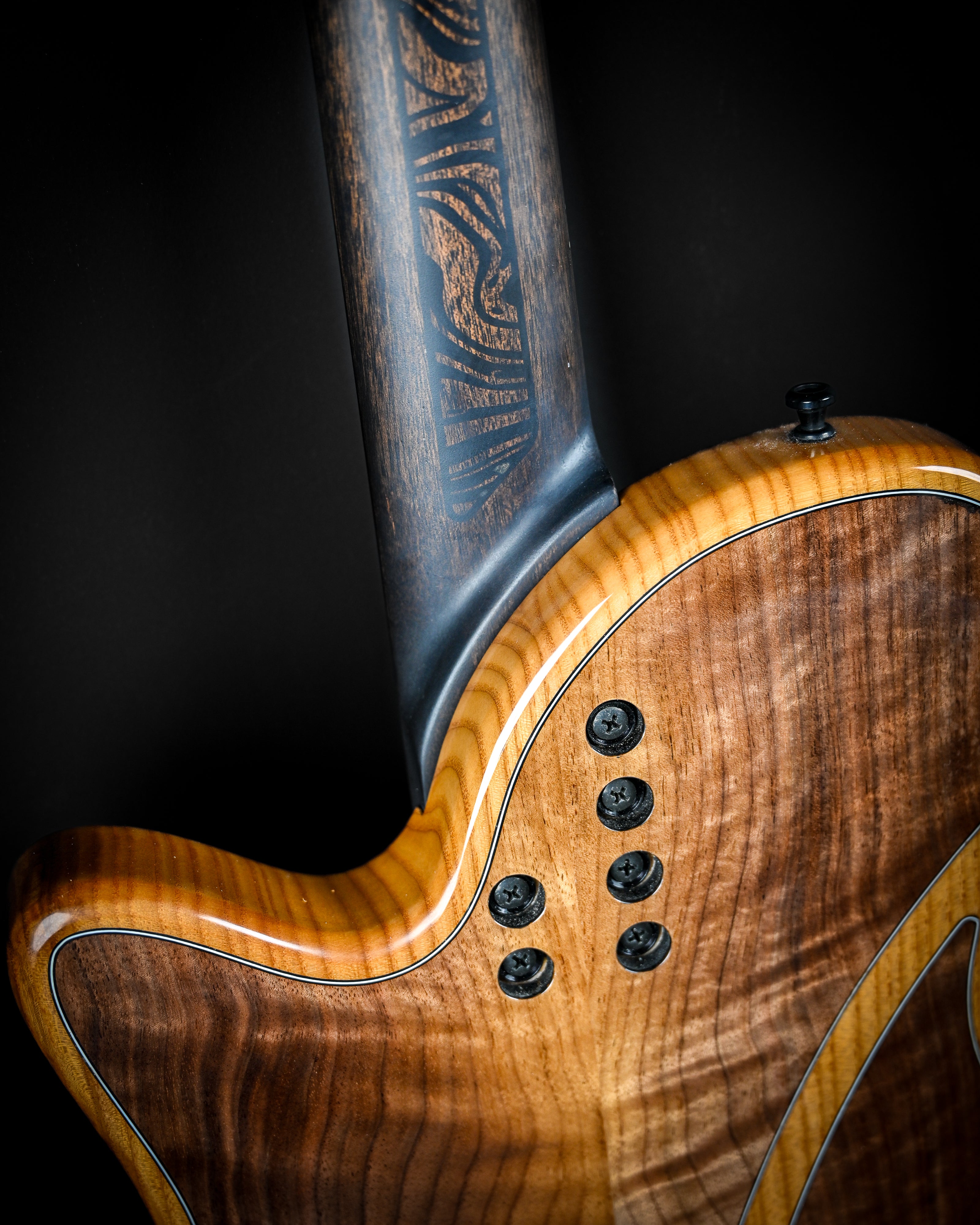
Aeriは、ベルフォルティの代名詞とも言える「ノーヒール」構造を採用しています。これは、手の下に完全に収まるように設計されたボルトオン式ネックジョイントであり、高音域のフレットへのアクセスも完全に妨げられません。ボルトオン構造を採用しているため、このクラスの楽器においてセットネックや接着ネックでは必要となる不可逆的な作業を一切行わずに、ネックの取り外し、シム調整、交換といったメンテナンスをすべて行うことが可能です。
現代のアーチトップギターは、壊れやすい装飾品ではなく、実際に演奏するための楽器であるべきです。Aeriは、激しく弾き倒しても大丈夫で、メンテナンスも容易なように設計されています。
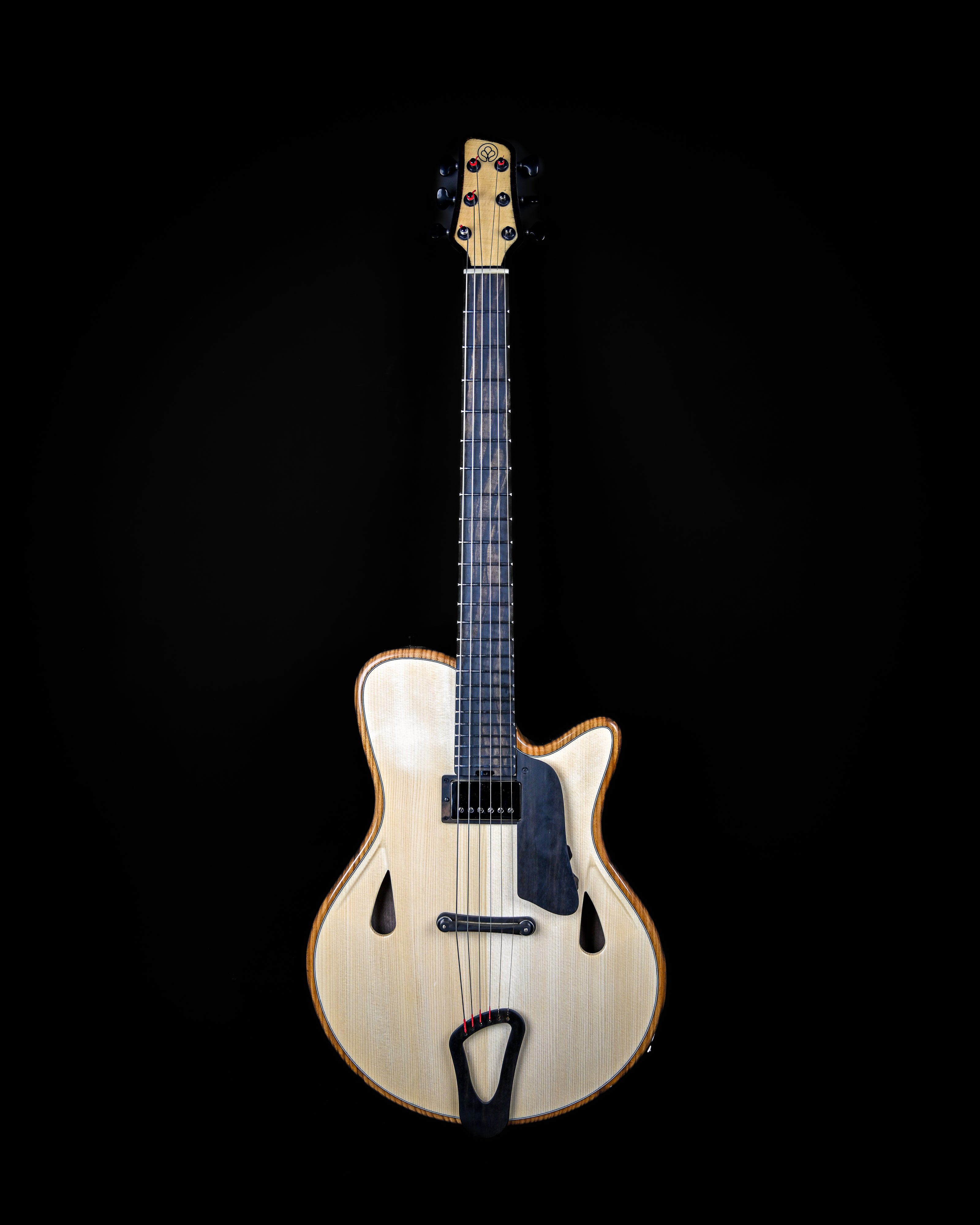
アエリ
「Aeri」コンセプトを体現した、伝統的なアーチトップスタイル。フルヘッドストック、ストレートフレット、標準的なスケール長を採用。ステンレス製フレット24本、カーボンファイバー製ネック補強材(2重)、ヘッドストック側からの調整が可能なトラスロッドを搭載。
アーチトップのシルエット、バランス、そして独自のスタイルを求めるプレイヤーのために――現代的なシャーシと人間工学に基づいた設計を採用し、プロミュージシャンのキャリアを通じて長く愛用できるモデルです。
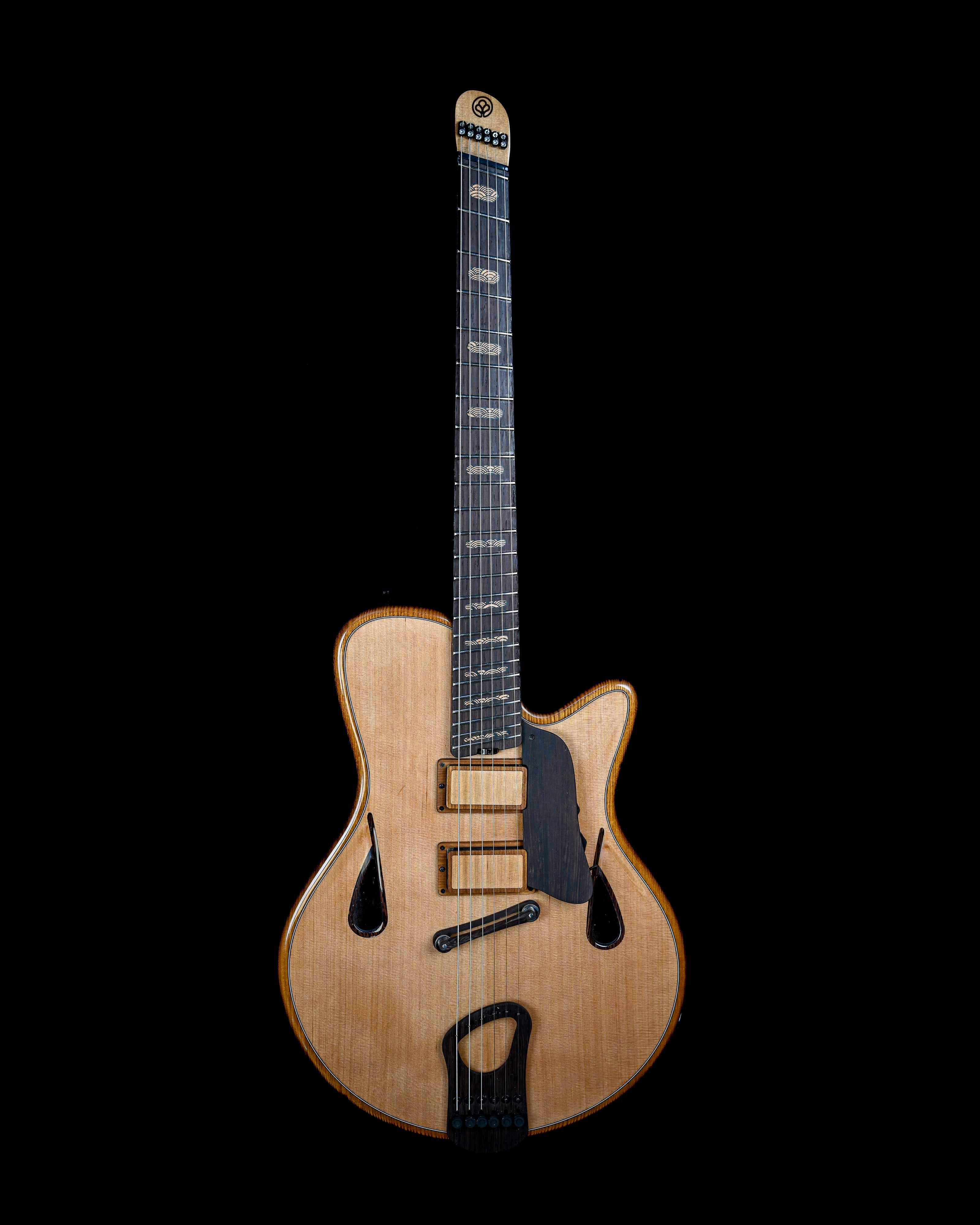
Aeri HL
ヘッドレス仕様のマルチスケールモデル。カスタムスケール範囲にわたるファン・フレット、ブリッジに配置されたヘッドレス・チューニング・ハードウェア、そしてあらゆるポジションでの長時間の演奏に適した人間工学に基づいたネックプロファイルを採用しています。
ヘッドレス構造により、従来のヘッドストックが持つ重量とてこ作用が排除されます。その結果、楽器とボディのバランスが変化し、ストラップへの負担が軽減され、ブリッジ側からチューニングを行うことができます。また、マルチスケール・フレットを採用することで、スケール長と弦の張力範囲を最適に調整し、低音域の響きを際立たせるとともに、高音弦への張力を緩和しています。
アーチトップを単なる伝統的な楽器ではなく、未来志向の楽器として捉えるプレイヤーのために。
どちらの仕様も、同じシャーシ、同じインレイが施されたトップとバック、同じベルリーカットと丸みを帯びたエッジ、同じヒールレス・ボルトオン構造、そして同じ24フレットのステンレス製フレットを採用しています。
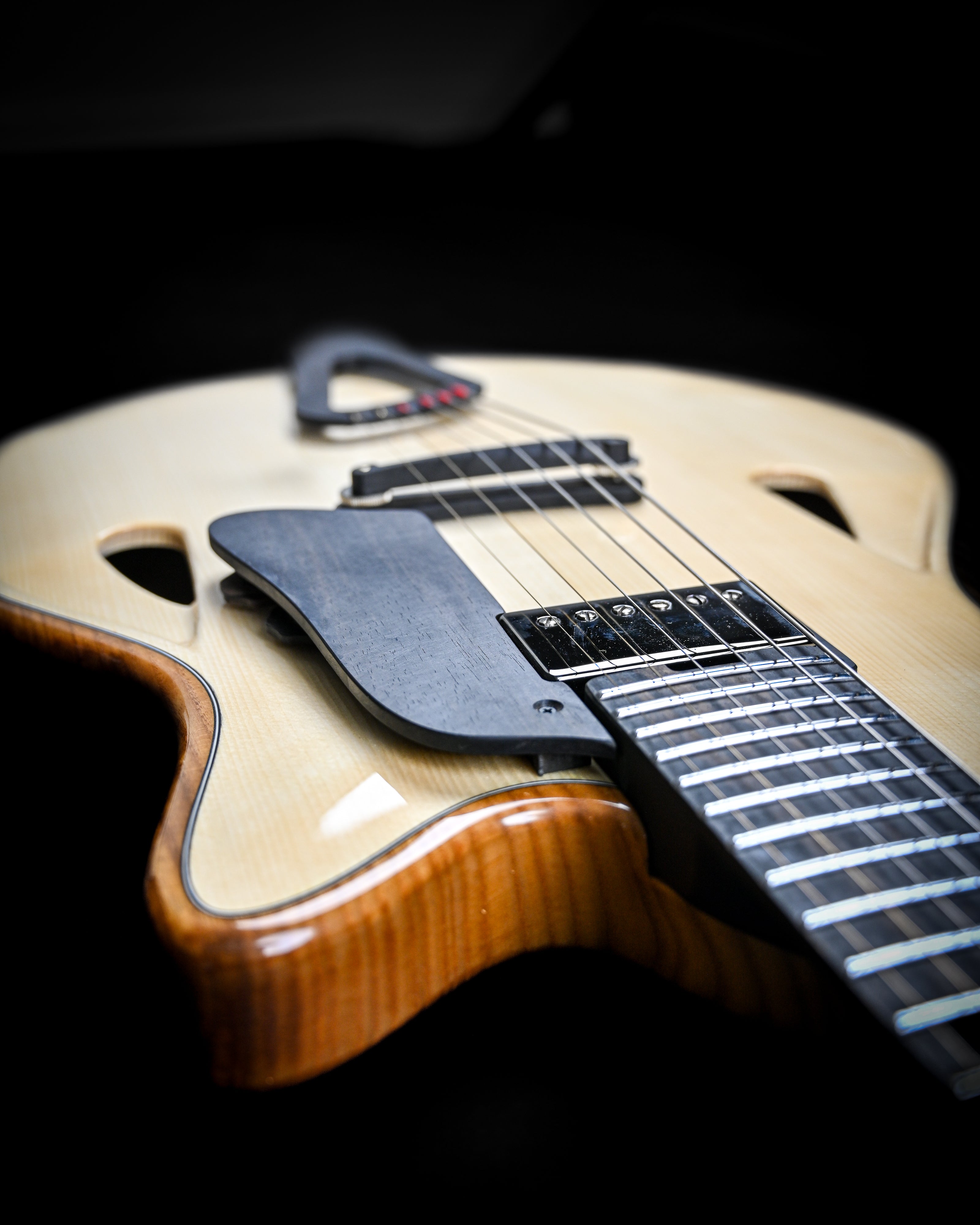
Aeriは、演奏されるのと同じくらい、じっくりと眺められることを想定して作られています。シャーシや構造だけでなく、この楽器には、伝統的なアーチトップのハードウェアを参考にしながらも、再設計・再構築され、すべて自社内で製造された、細部までこだわったデザインが随所に施されています。目に見えるすべてのパーツはエボニー製です。そして、どのパーツも、それ以前のパーツよりも優れた性能を発揮します。
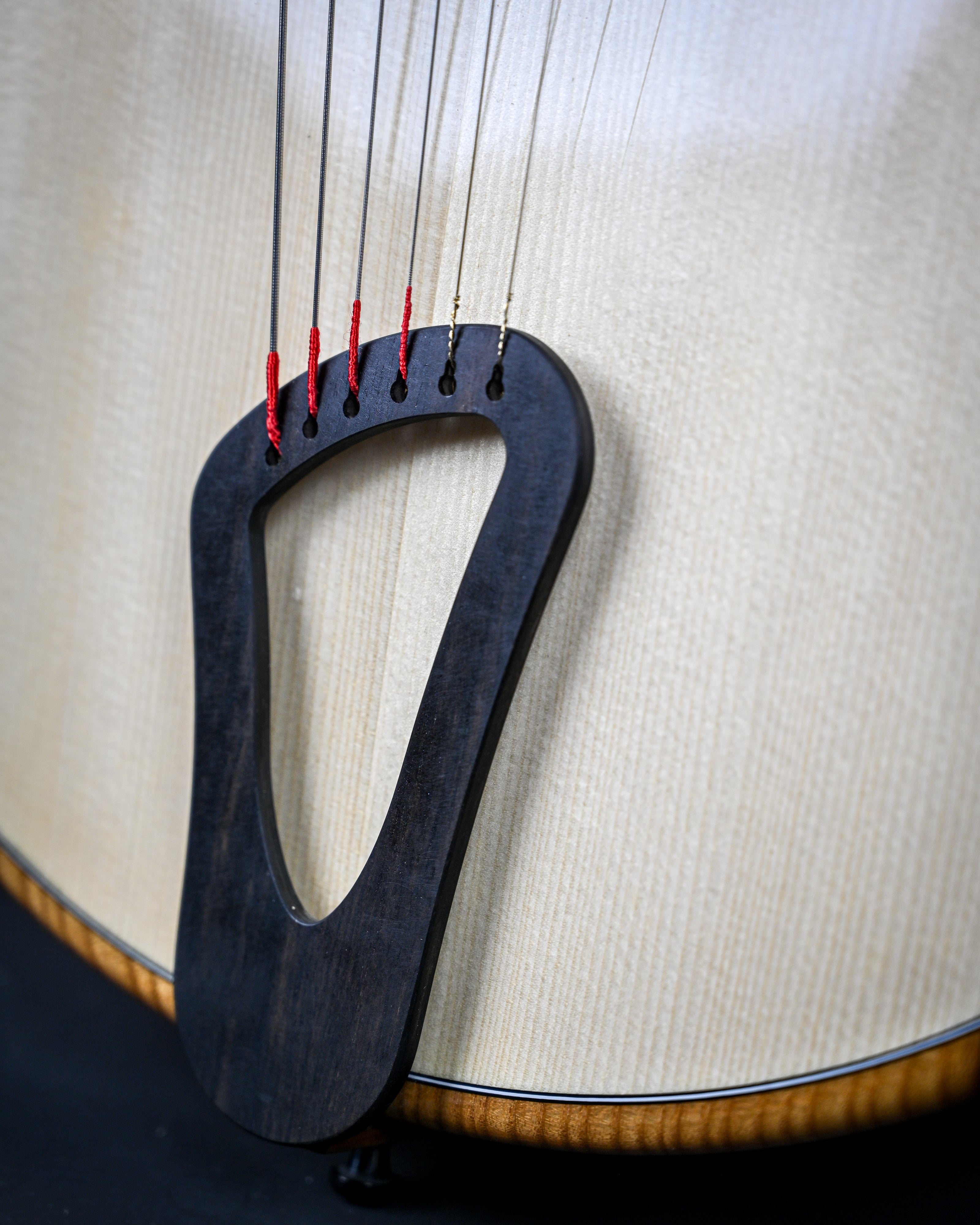
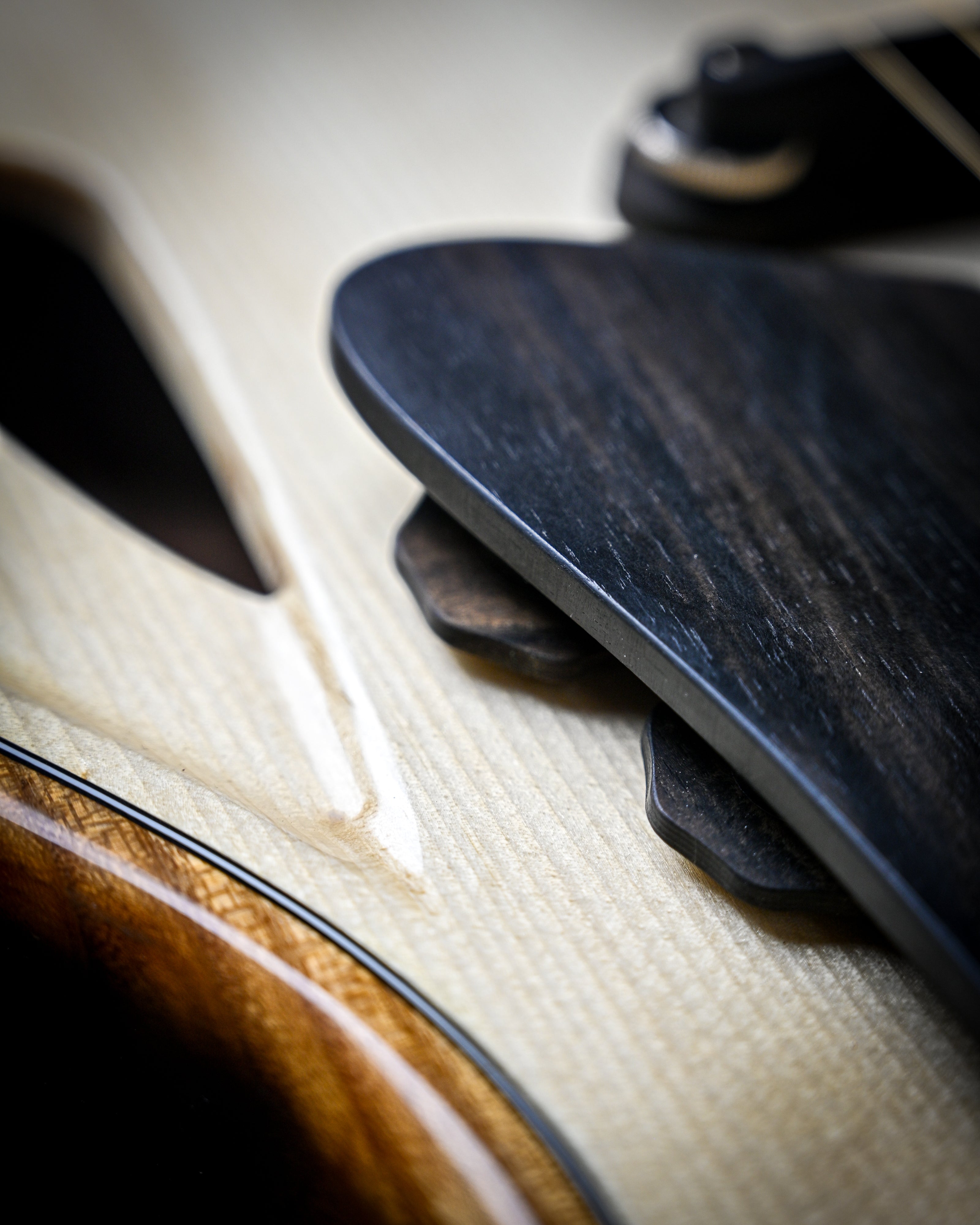
Ebony / Carbon Floating Tailpiece
フローティング・テールピースは、弦をボディの下部に固定しつつ、トップ板を自由に振動させる――これは、サウンドボードの振動を妨げることなくハードウェアを取り付ける、アーチトップギターの伝統的な手法です。Aeriのテールピースは、一枚のエボニー材から削り出され、フレットボードと同等の仕上げが施されており、トップ板との間にすっきりとした影のラインができるよう設計されています。 その質量はサスティーンと弦の戻りを考慮して調整され、形状はブリッジやピックガードとの視覚的なバランスを考慮して設計されています。金属もメッキも使用せず、共鳴性能への妥協は一切ありません。
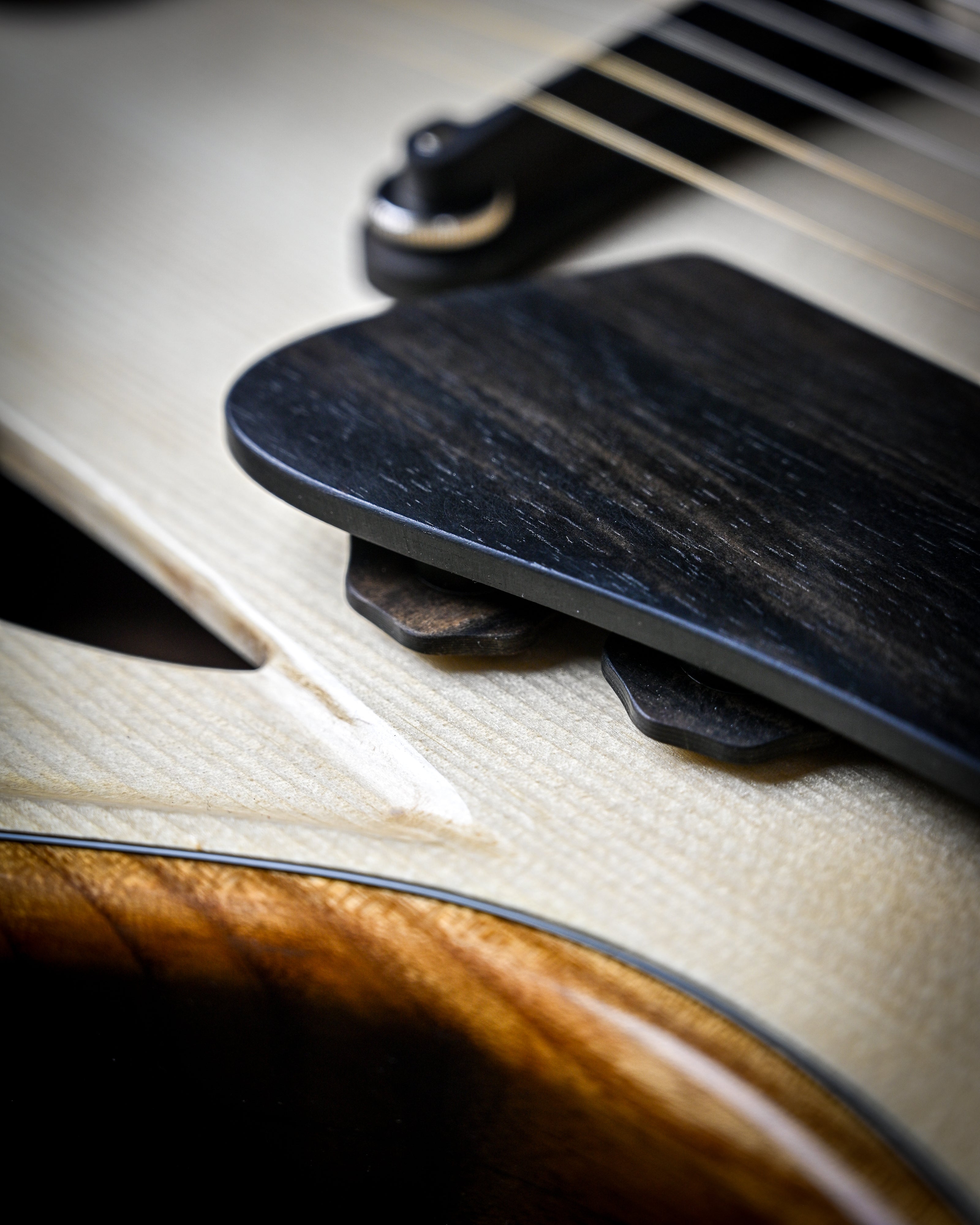
側面に切り欠きのあるエボニー製サムホイール
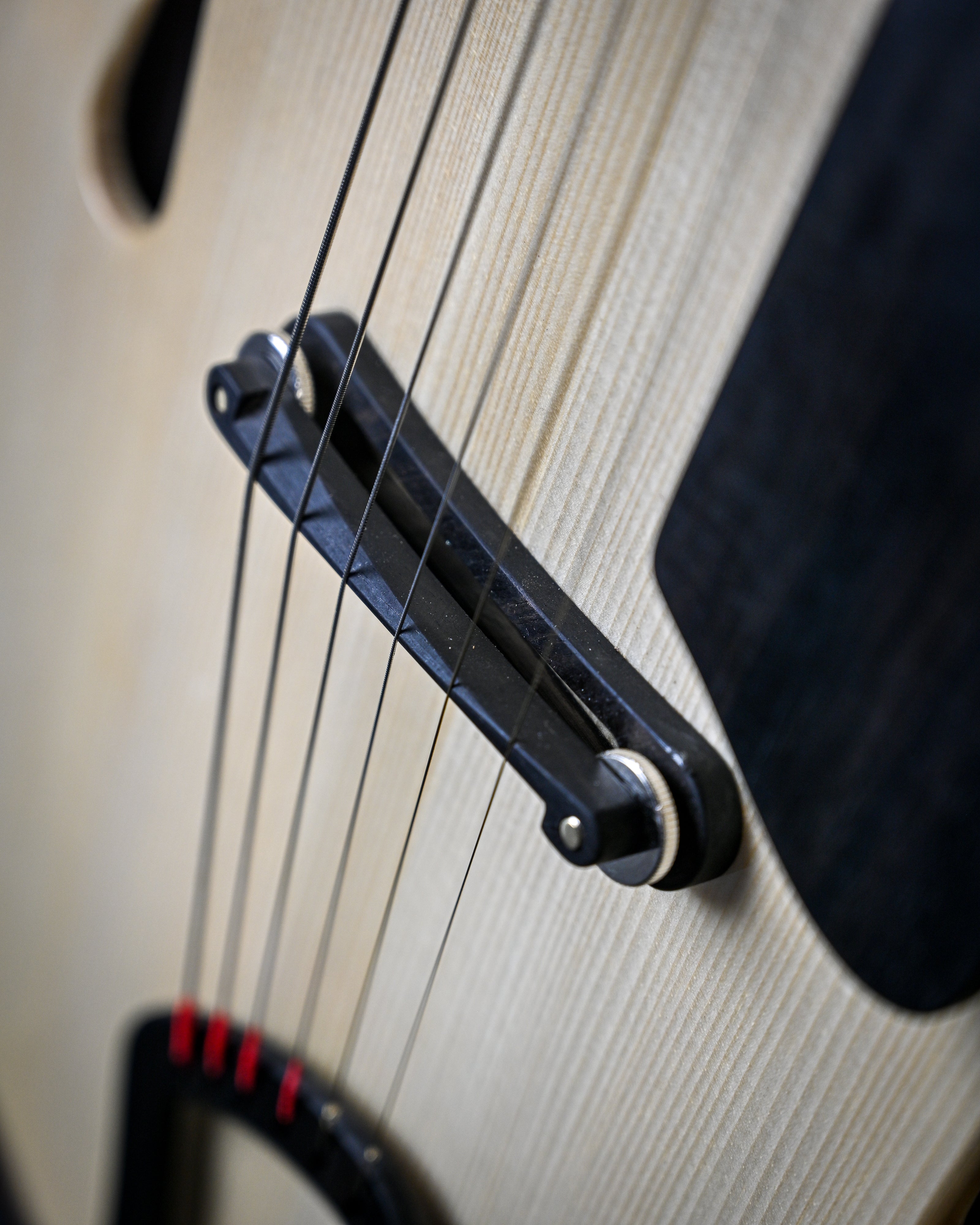
ブリッジのサムホイールはエボニー材で削り出され、外側に溝が刻まれています。これは些細なディテールですが、アクション調整の体験を一変させるものです。この溝により指先に確かなグリップが生まれ、滑ったり締めすぎたりすることなく、正確かつコントロールされた高さの調整が可能になります。一般的なアーチトップのサムホイールは滑らかな金属製の円筒形であり、弦の張力がかかった状態での微調整が困難です。一方、Aeriのサムホイールは、演奏者が手作業で回せるよう設計されており、必要に応じてステージ上でチューニングを保ったまま調整することも可能です。
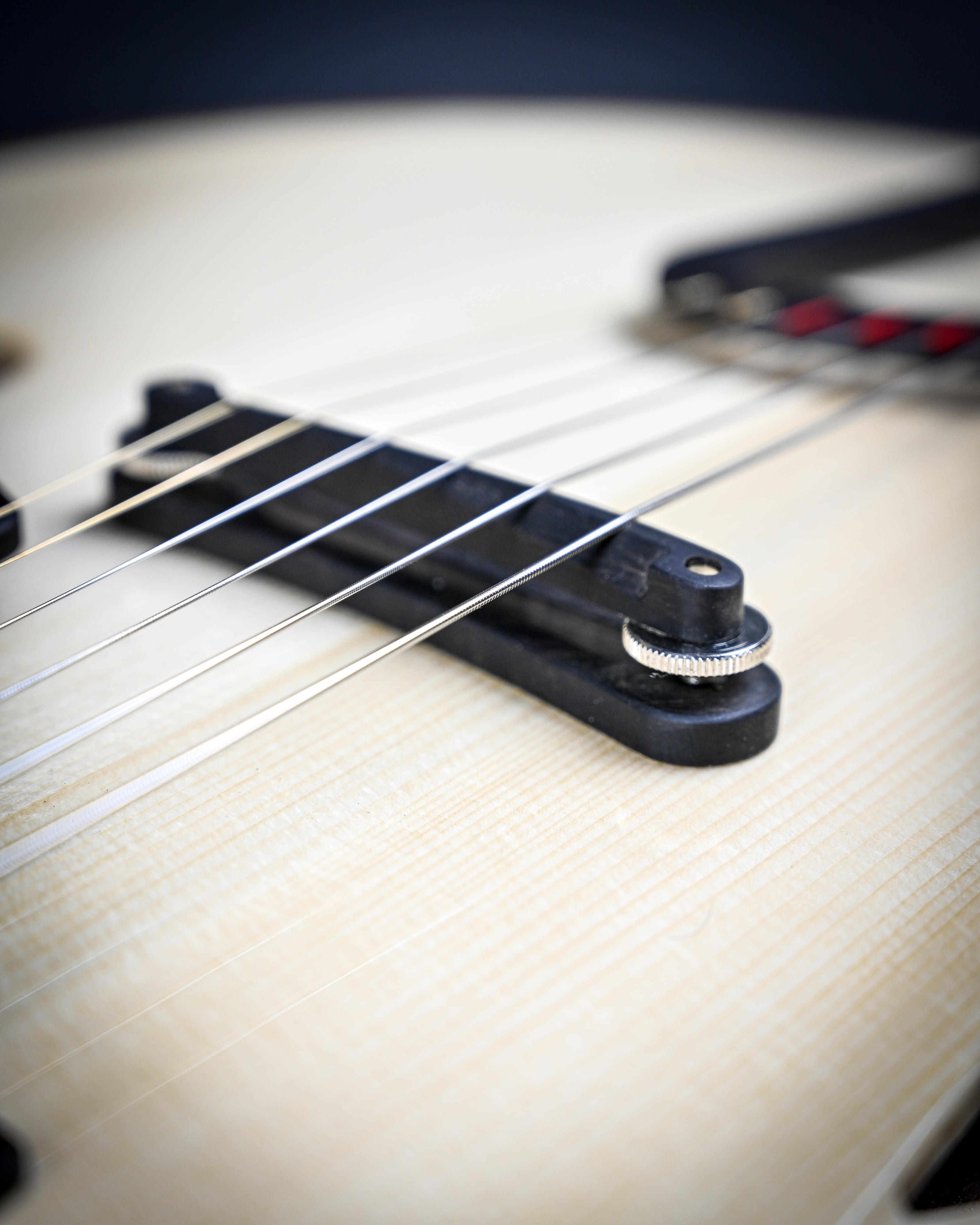
デュアル・イントネーション・エボニー・ブリッジ
デュアル・イントネーション・プロファイルが施されたフローティング・エボニー・ブリッジ。フラットワウンド弦とラウンドワウンド弦の両方とスムーズに調和するよう設計されています。一般的なフローティング・アーチトップ・ブリッジの多くは、特定の弦種に合わせてイントネーションが調整されているため、プレイヤーは楽器の使用期間を通じてフラットワウンドかラウンドワウンドのいずれか一方に固執するか、弦を交換する際にイントネーションの妥協を余儀なくされます。 Aeriのブリッジは、この問題を形状設計のレベルで解決しています。1つのブリッジに2つのイントネーション経路を刻み込むことで、プレイヤーはサドルを再調整することなく、弦の種類を切り替えることが可能になります。素材には全面的にエボニーを採用しています。これは、共鳴性を高めるため、他のハードウェアとの視覚的な統一感を保つため、そして耐久性を高めるためです。
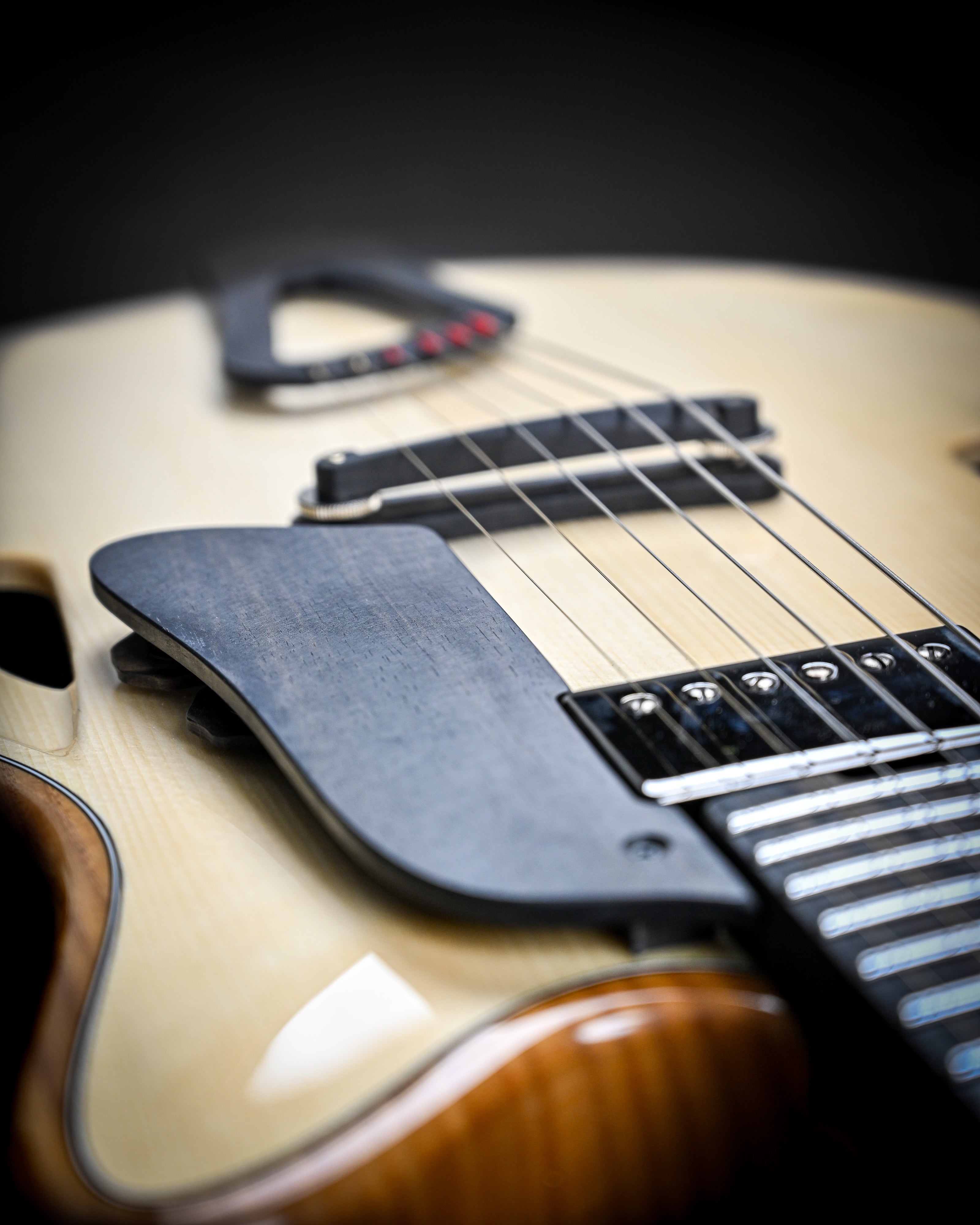
エボニー製ピックガード
ピックガードは無垢のエボニーから削り出され、伝統的なアーチトップの様式に従って、トップから浮いた状態で取り付けられています。プラスチックも、積層材も、木目模様のプリントもありません。このピックガードは、テールピース、ブリッジ、サムホイールと一体となったデザイン要素として機能しています――単一の素材、4つの構成要素、そして一つの視覚的言語です。また、この楽器において、装飾的な要素として見過ごされやすい一方で、装飾ではないと認識されやすいディテールでもあります。
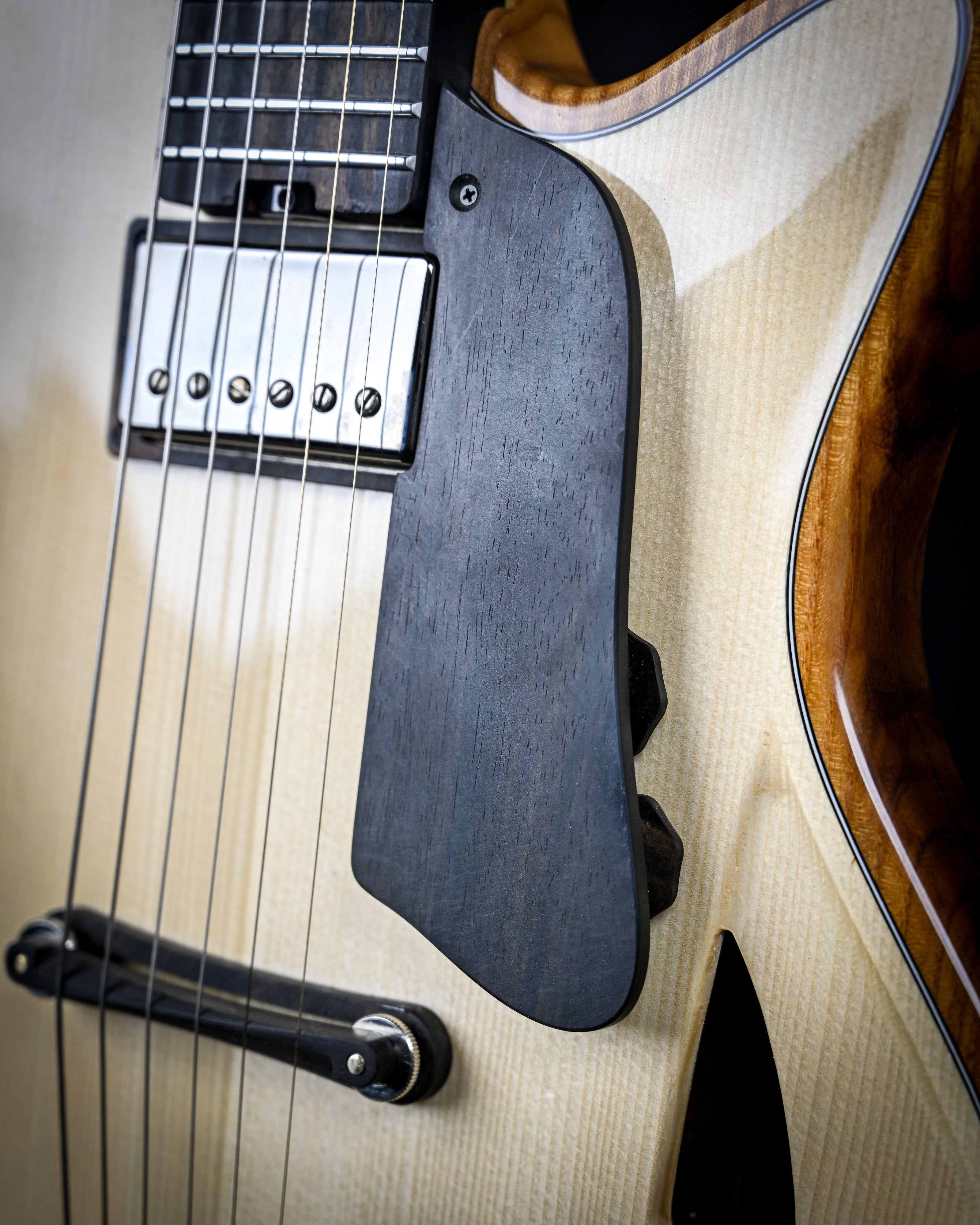
AeriとAeri HLの両モデルとも、シングルピックアップまたはデュアルピックアップの構成から選択可能です。
シングルピックアップ— 焦点の定まった、力強い音色。上部の輪郭はクリアで、トップ面の視覚的な邪魔を最小限に抑えています。
デュアル・ピックアップ— 幅広い音色表現、ネックとブリッジの多彩な使い分け、伝統的なアーチトップの魅力を現代的な領域へと広げました。
ピックアップの選択は自由です。ベルフォルティでは、お客様の好みに合わせて、ハムバッカー、ミニハムバッカー、P-90、フローティングタイプ、トップマウントタイプなど、各種ピックアップの仕様決定と調達を行います。製作の打ち合わせの中で、その楽器に最適なサウンドについてご相談させていただきます。
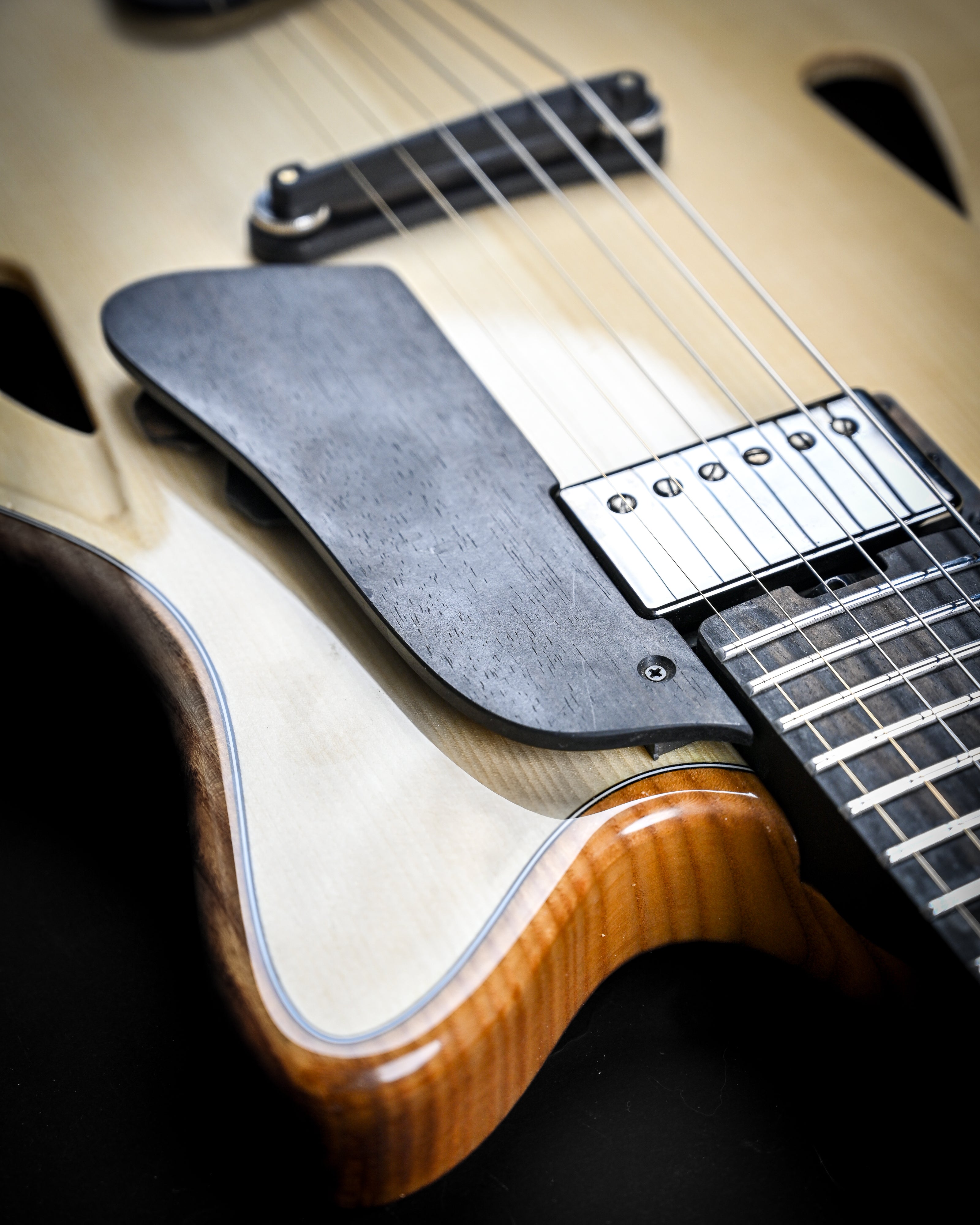
ネック・ピックアップの位置について
Aeriは24フレットを備えています。ボディに19または20フレットを備えた従来のアーチトップギターでは、ネックピックアップは特定の倍音位置(通常は24フレットのノード上)に固定されており、この形式特有の温かみのある、深みのあるボーカルのような音色を奏でます。一方、Aeriではフレットボードが延長されているため、ネックピックアップの位置がブリッジ側に移動し、異なる倍音位置に配置されています。
これは意図的なものです。Aeriのネックピックアップは、ヴィンテージ・アーチトップ特有の煙がかったダークな音色ではなく、明瞭さとアーティキュレーションを重視してチューニングされています。この楽器は、1950年代のES-175のサウンドを再現しようとしているわけではありません。高音域は明るく、中音域はしっかりとした存在感があり、その背後にはチャンバード・アーチトップ・ボディならではの共鳴が響く、独自のサウンドを提供しています。
伝統的なアーチトップのネック・ピックアップのサウンドを特に求めているプレイヤーにとって、Aeriは適した楽器ではありません。しかし、現代の音楽シーンに合わせて設計されたアーチトップがどのようなものになり得るかを求めているプレイヤーにとっては、まさに理想的な一台です。
重要なのは発声です。この楽器は、それを無視してではなく、それを中心に設計されたのです。
やはりベルフォルティ
Aeriはアーチトップの形式に新たな定義をもたらしつつも、紛れもなくベルフォルティの楽器です。工房から出荷されるすべての楽器は、モデルを問わず、私たちが作り出すものを定義づける「製作基準」「演奏性能」「サービス基準」という共通の基盤を備えています。
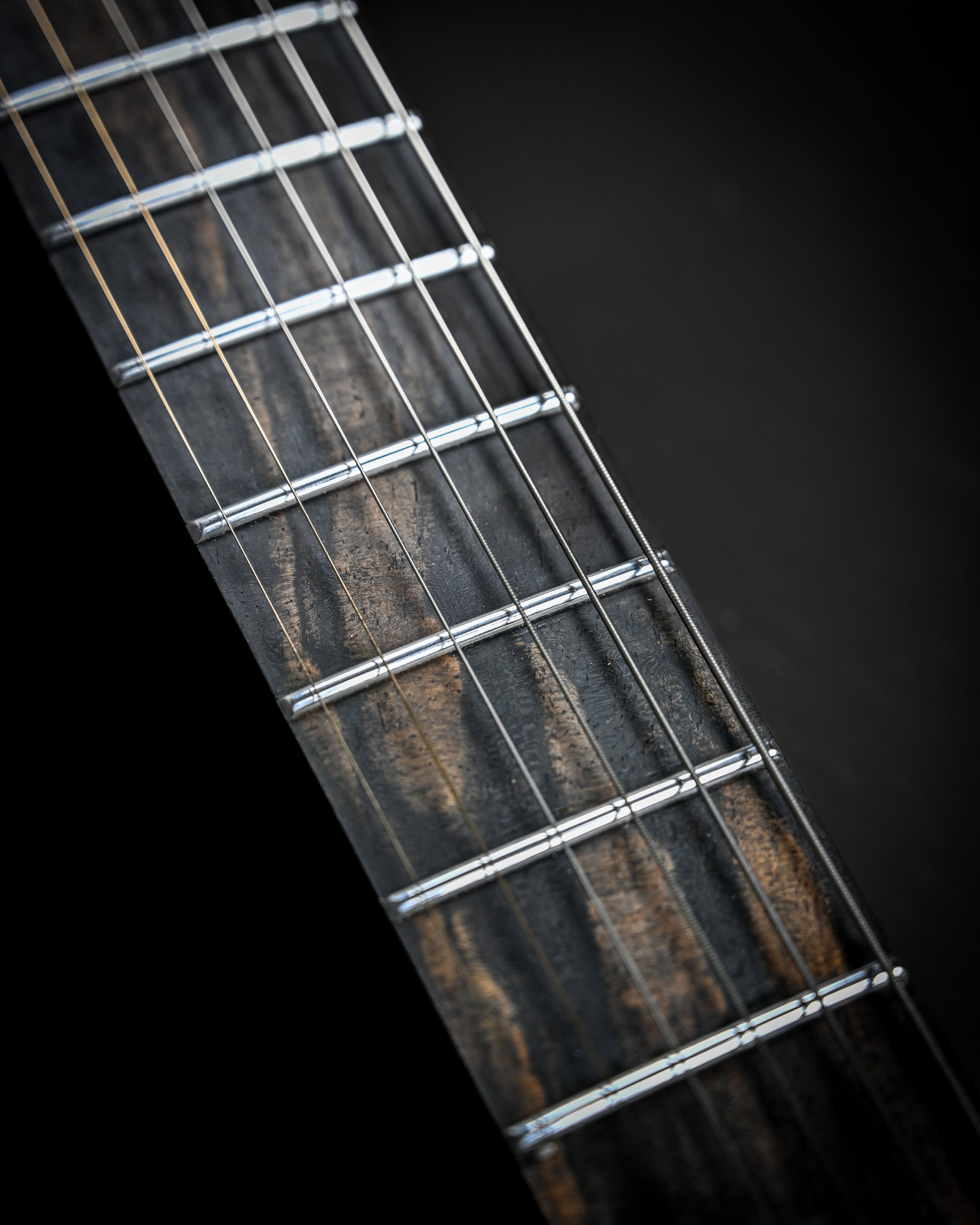
PLEK処理
すべてのBelfortiギターは、フレットを完璧にレベリングし、演奏性を高め、最適なアクションを保証する高精度プロセスである、綿密なPLEK処理を受けています。この最先端技術により、お客様の楽器は、ケースから出してすぐに比類のない快適さと演奏性を実現できるように、最高の精度でセットアップされます。
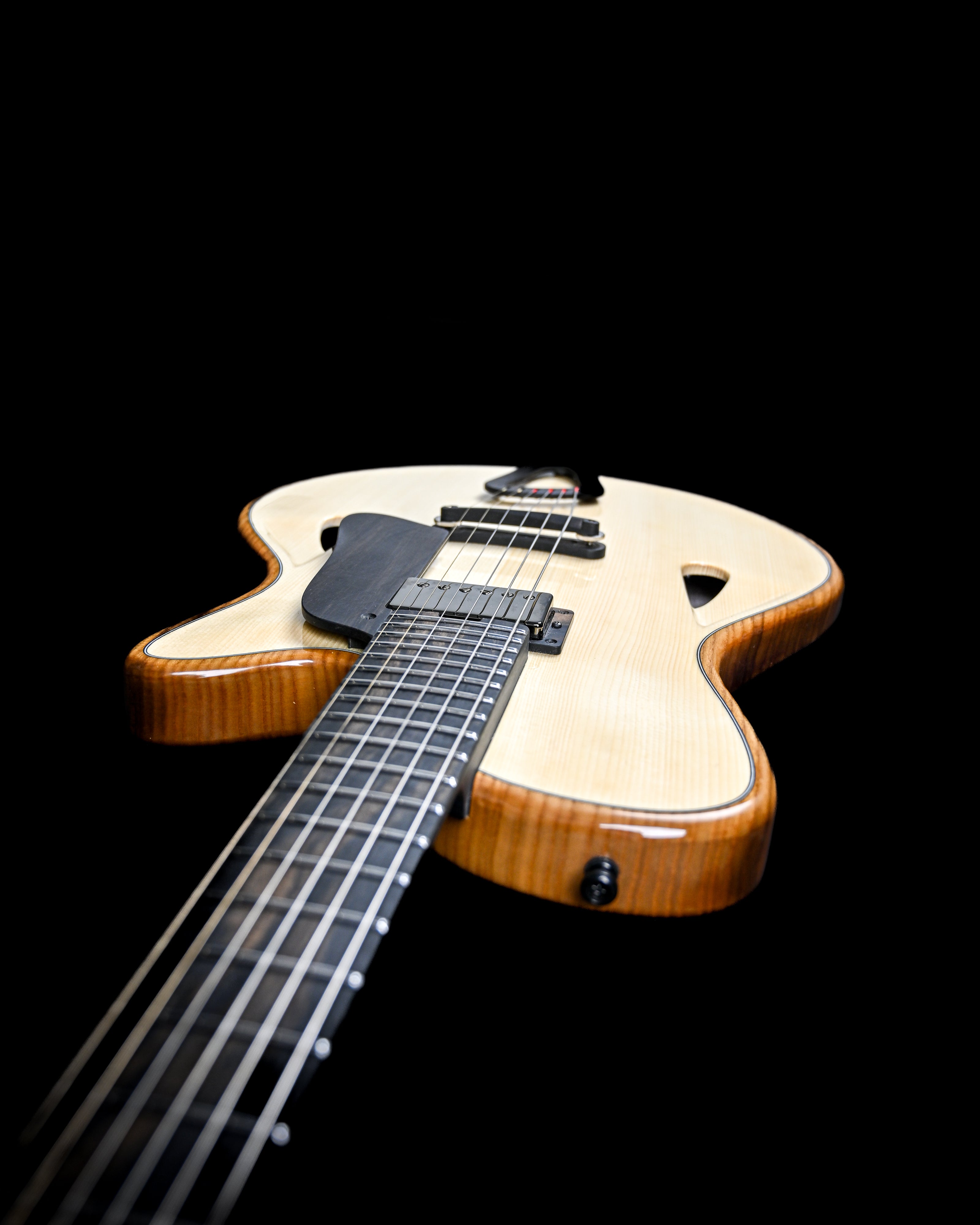
チタン補強ネック
各ネックは、デュアルチタンロッドで内部補強されており、時間、移動、気候の変化にかかわらず、剛性と安定性を維持します。
厳選されたトーンウッドと組み合わせることで、共鳴を維持しながら、反りやデッドスポットを防ぎます。
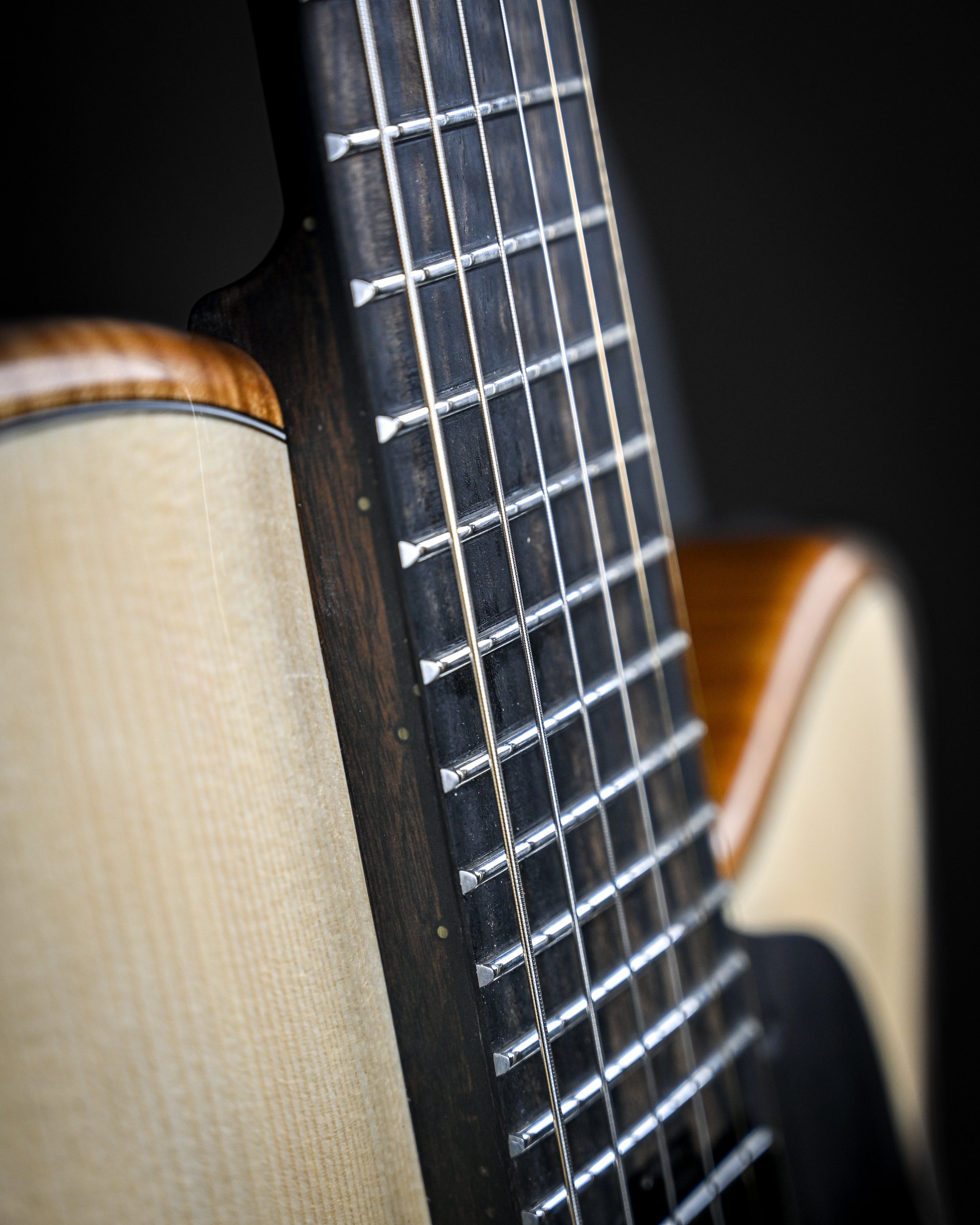
見えないフレットタング
フレットの端は指板に完全に統合されており、突出したタングやbindingの必要がありません。
この技術により、完全に滑らかなエッジ、湿度変化に対する卓越した耐久性、そして見た目と同じくらい心地よい洗練された美観が保証されます。
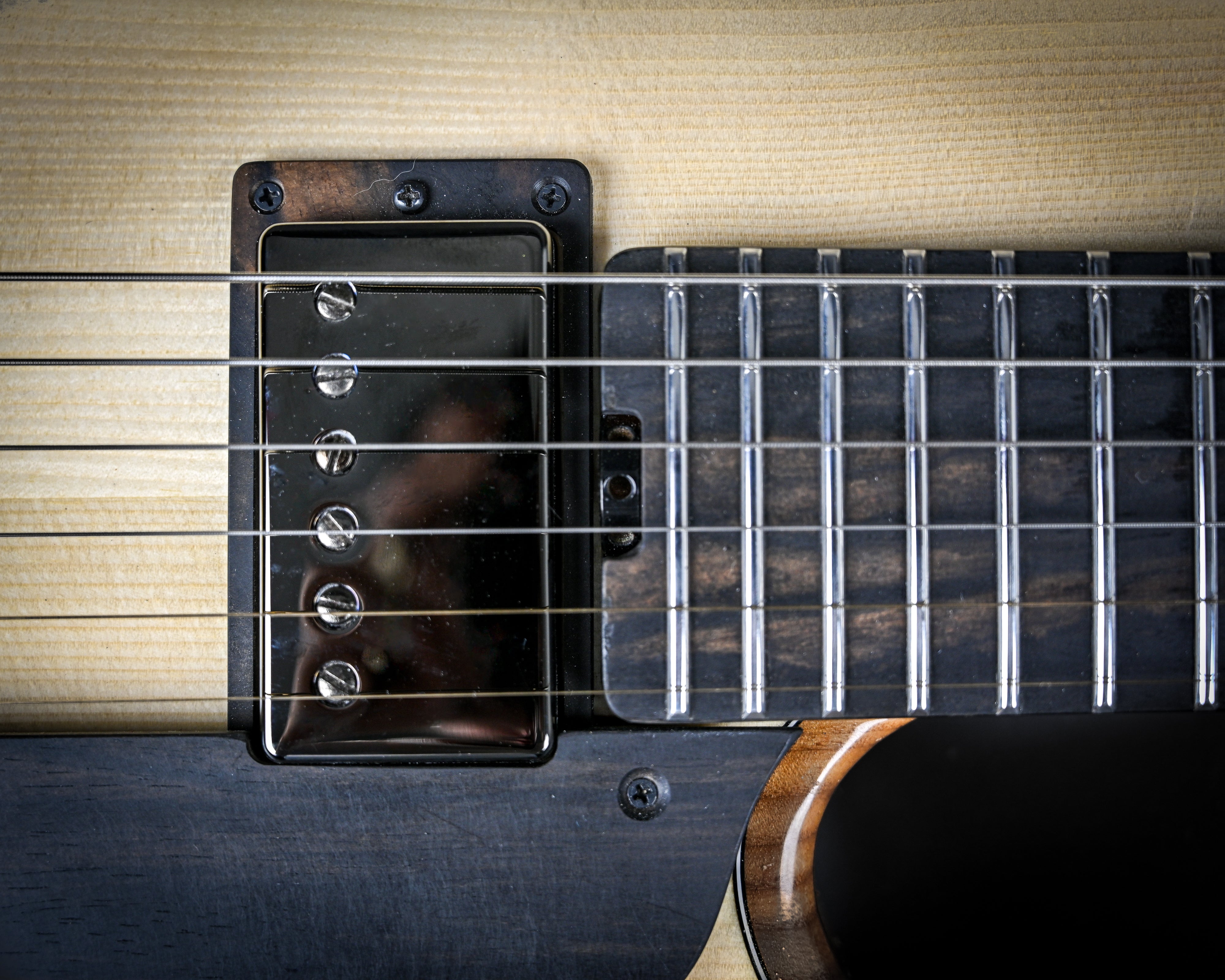
容易なトラスロッドへのアクセス
簡単かつ正確なネックリリーフチューニングのために、Belforti楽器は、弦やハードウェアを取り外す必要なく、ヒールで直接アクセスできるスポークホイールトラスロッドシステムを使用しています。
それは、すべての楽器に組み込まれた、ワークショップの実用性から生まれたプロフェッショナルな機能です。
技術仕様
6弦
ナットの幅:44mm
最終フレットでの幅:60mm
指板ラジアス (3つのオプション)
ヴィンテージ 9"-12" / バランス 10"-14" / モダン 12"-16"
ネックプロファイル (5つのオプション)
スモール / ミディアム / ラージ / 3D Nest™ / 3D Flow™
スケール長(3つのオプション)
Aeri:25インチ / Aeri HL:26インチ~25インチ
フレット数 :24
ブリッジでの弦間ピッチ:10.5mm均等間隔
下幅: 370mm
肩幅:270mm
全長:100cm
厚さ:50mm
7弦
ナット幅: 48mm
最終フレット幅: 70mm
指板ラジアス (3つのオプション)
ヴィンテージ 9"-12" / バランス 10"-14" / モダン 12"-16"
ネックプロファイル (5つのオプション)
スモール / ミディアム / ラージ / 3D Nest™ / 3D Flow™
スケール長(3つのオプション)
Aeri:25インチ / Aeri HL:26インチ~25インチ
フレット数 : 24
ブリッジでの弦間ピッチ:10.5mm均等間隔
下幅: 370mm
肩幅:270mm
全長:100cm
厚さ:50mm
8弦
ナット幅: 54mm
最終フレット幅: 80mm
指板ラジアス (3つのオプション)
ヴィンテージ 9"-12" / バランス 10"-14" / モダン 12"-16"
ネックプロファイル (5つのオプション)
スモール / ミディアム / ラージ / 3D Nest™ / 3D Flow™
スケール長(3つのオプション)
Aeri:25インチ / Aeri HL:26インチ~25インチ
フレット数 : 24
ブリッジでの弦間ピッチ:10.5mm均等間隔
下幅: 370mm
肩幅:270mm
全長:100cm
厚さ:50mm
受注生産
Aeriは、当社のシリーズ構成とは別に受注生産される独立したモデルです。各楽器は、演奏者と工房が直接対話しながら仕様を決定します。具体的には、表板の木材、仕上げ、ピックアップ、ハードウェア、ネックの形状、そしてAeriとAeri HLのどちらを選ぶかといった点について、個別に調整されます。
製作をご希望の方は、モントルージュのショールームまたは工房までお問い合わせください。