



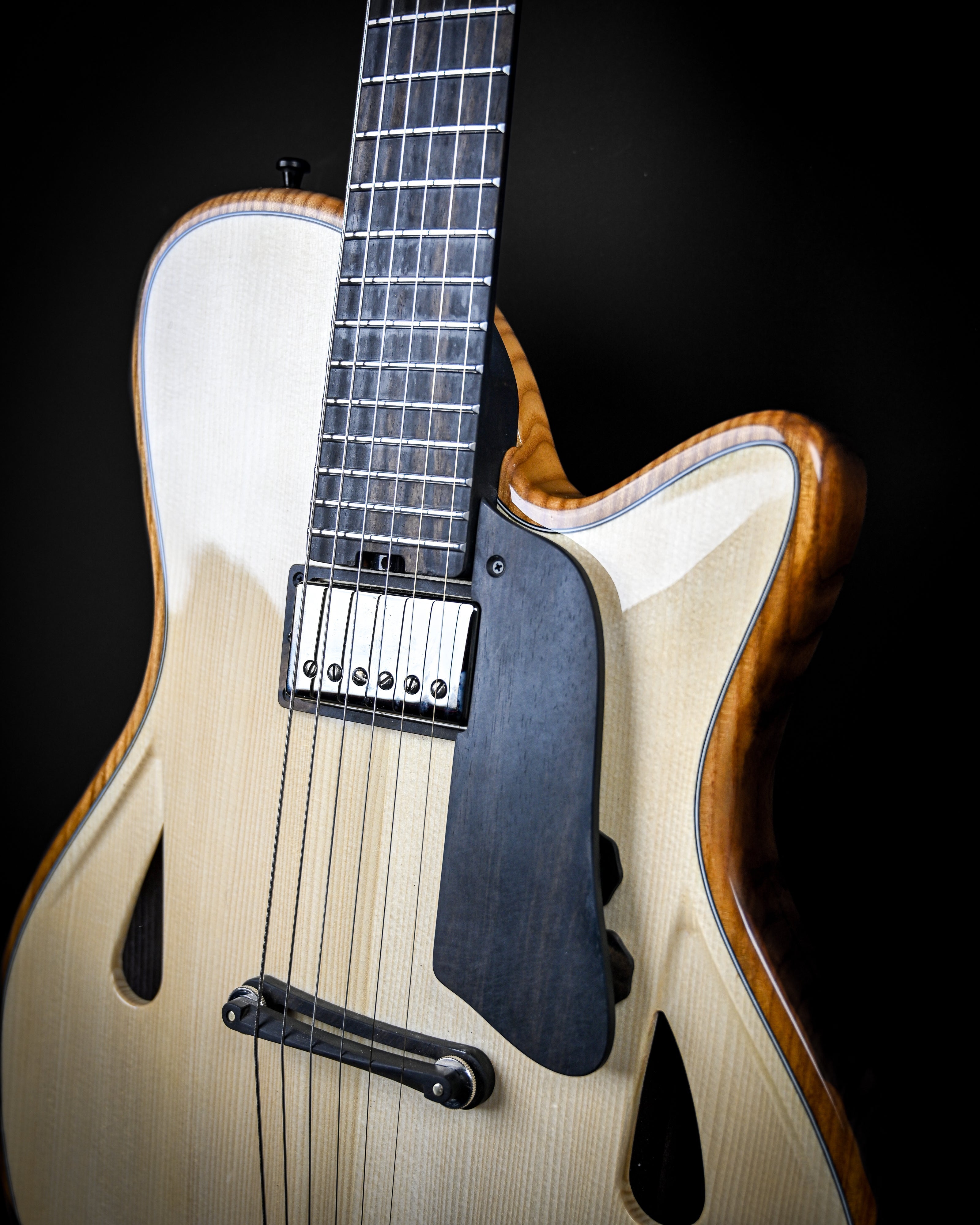
There is a conversation I have had, in some form, several hundred times. It happens at the workshop door, on Instagram DMs, in the comments under videos of beautiful instruments. It begins with admiration, drifts toward curiosity, and lands, almost always, on the same sentence:
“That’s a lot of money for a guitar.”
I want to address this directly, because the assumption embedded in that sentence has quietly become one of the most damaging ideas in our trade. It is not damaging because it is rude — it is not. It is damaging because it is wrong, and because being wrong about this has consequences. It distorts what we expect from instruments. It distorts what the market is willing to support. And, slowly, it strangles the ecosystem of skill, knowledge, and material expertise that makes serious instruments possible at all.
So: guitars should be expensive. Not all guitars — I will get to that — but the kind of guitar that is actually a guitar, made the way a guitar can be made when nobody is cutting corners, should cost what it costs. And that price, in a sane world, would not surprise anyone.
This is the argument.
What's in that box ?

Let us begin with the object itself, because most of this conversation suffers from a simple problem: people who buy guitars rarely know what is inside them. Not because they are incurious, but because the industry has spent forty years training them not to look.
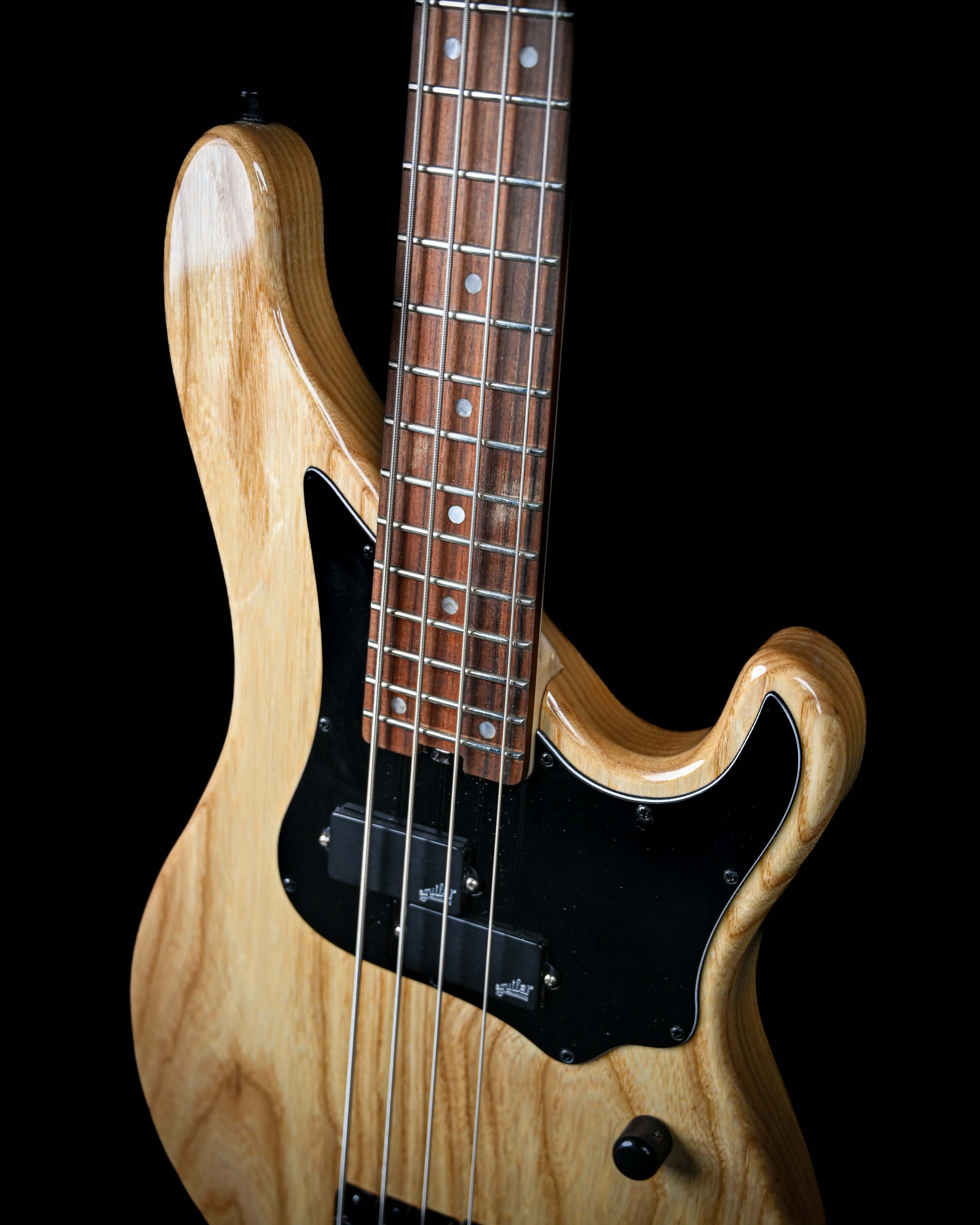
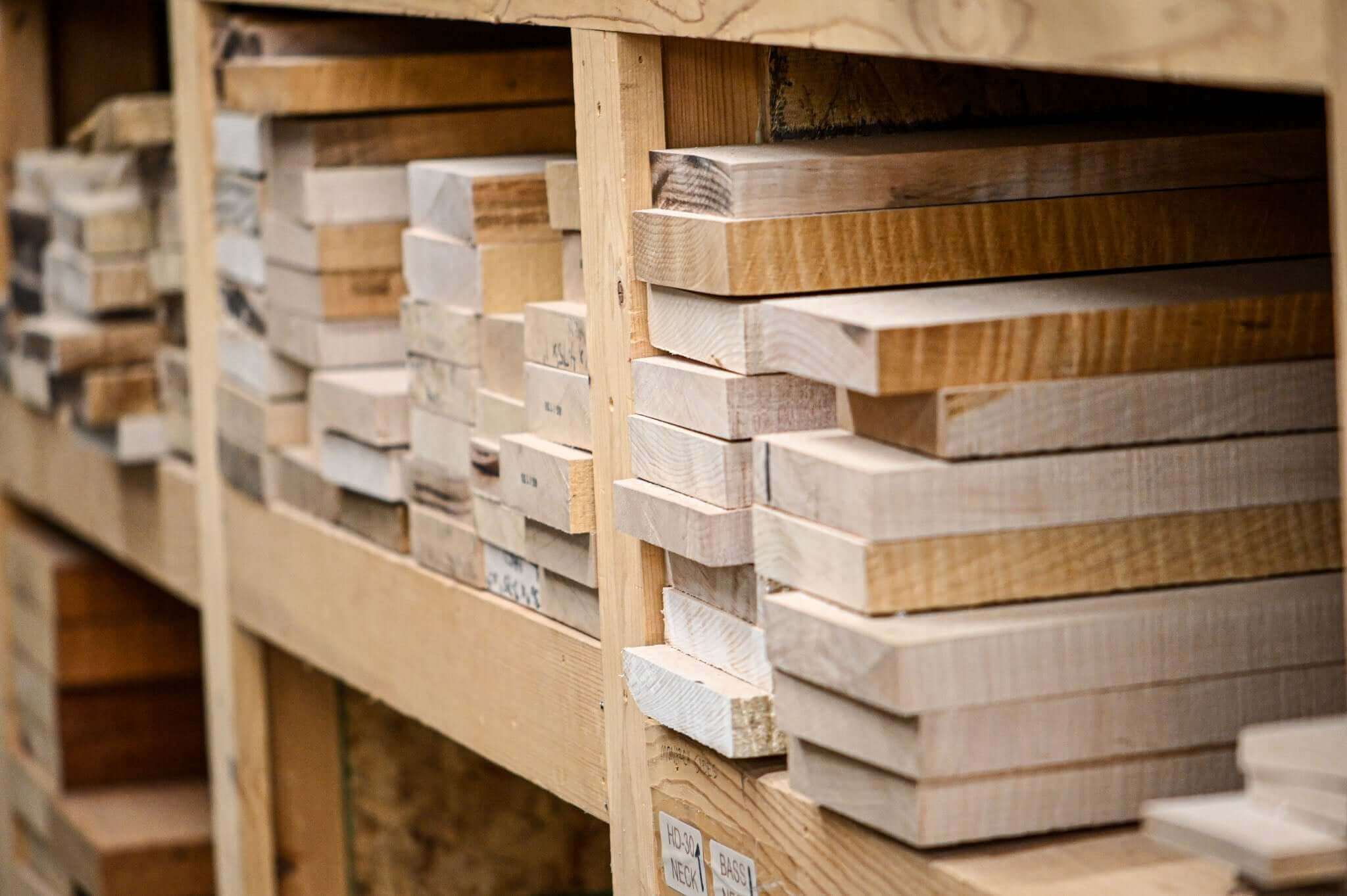
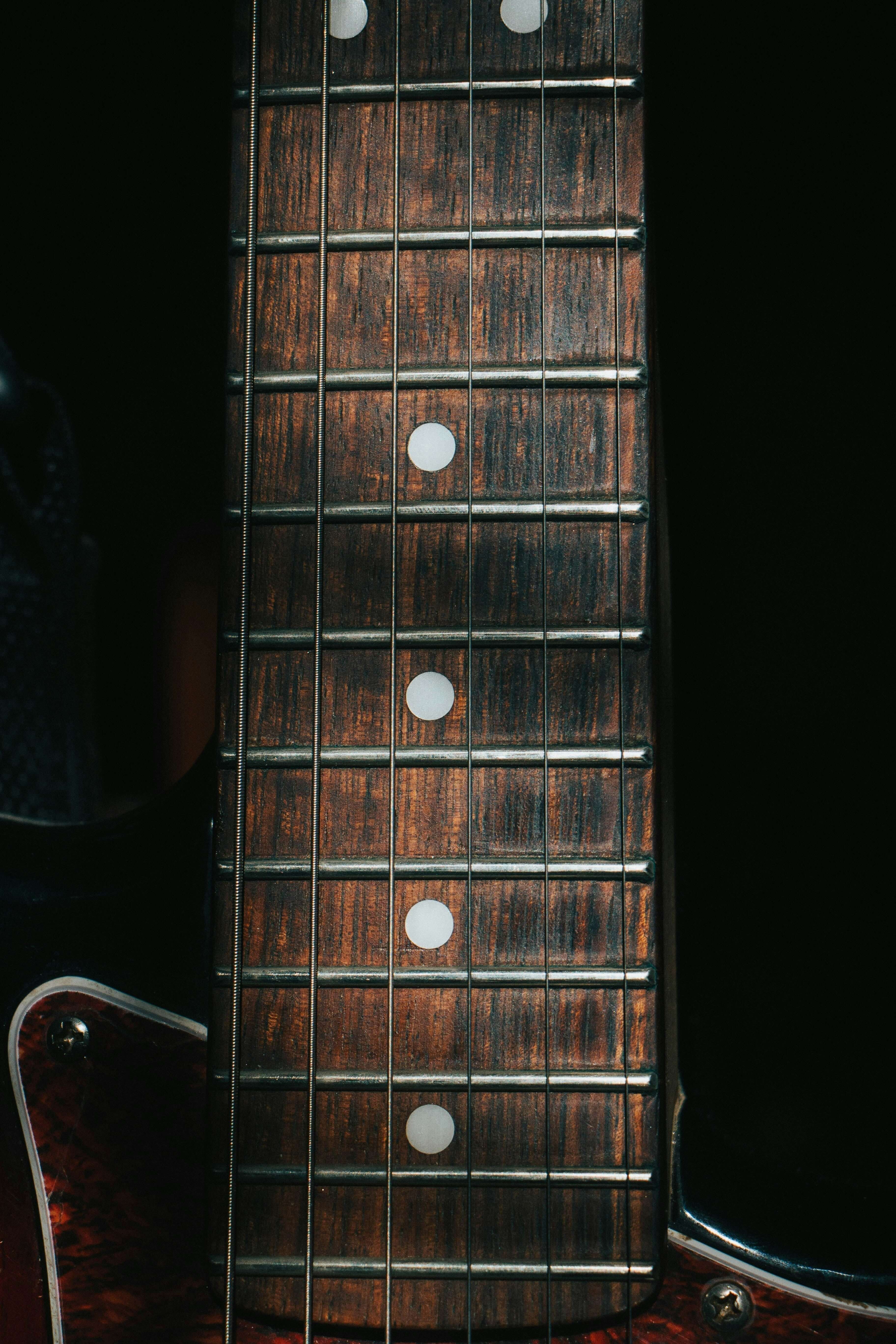
A solid-body electric guitar — the supposedly “simple” instrument — contains, at minimum: a body cut and shaped from tonewood selected for density, grain orientation, and acoustic behaviour; a neck whose carve, scale length, fingerboard radius, and truss-rod geometry must be calculated and executed within tolerances of a tenth of a millimetre; a fretboard slotted and radiused to match that geometry; between twenty-one and twenty-four frets, each crowned, levelled, and dressed so the instrument plays cleanly across its full range; a nut cut to specific string heights and break angles; bridge and tailpiece hardware that must be intonated to actual string behaviour rather than the marketing copy of their manufacturer; an electronic circuit composed of pickups, potentiometers, capacitors, switches, and wiring whose values determine the entire voice of the instrument; a finish — typically a multi-stage system of sealers, fillers, colour coats, and clear coats — that must protect the wood while remaining acoustically inert enough not to choke it; and a setup process that brings all of this into a single playable whole.
That is the short list. It excludes inlay, binding, the headstock veneer, the strap buttons, the truss-rod cover, the tuning machines, the string trees, the cavity shielding, the orientation of the wood blanks in their original log, the moisture content of every component at the moment of glue-up, and the dozen jigs and templates required to do any of this consistently.
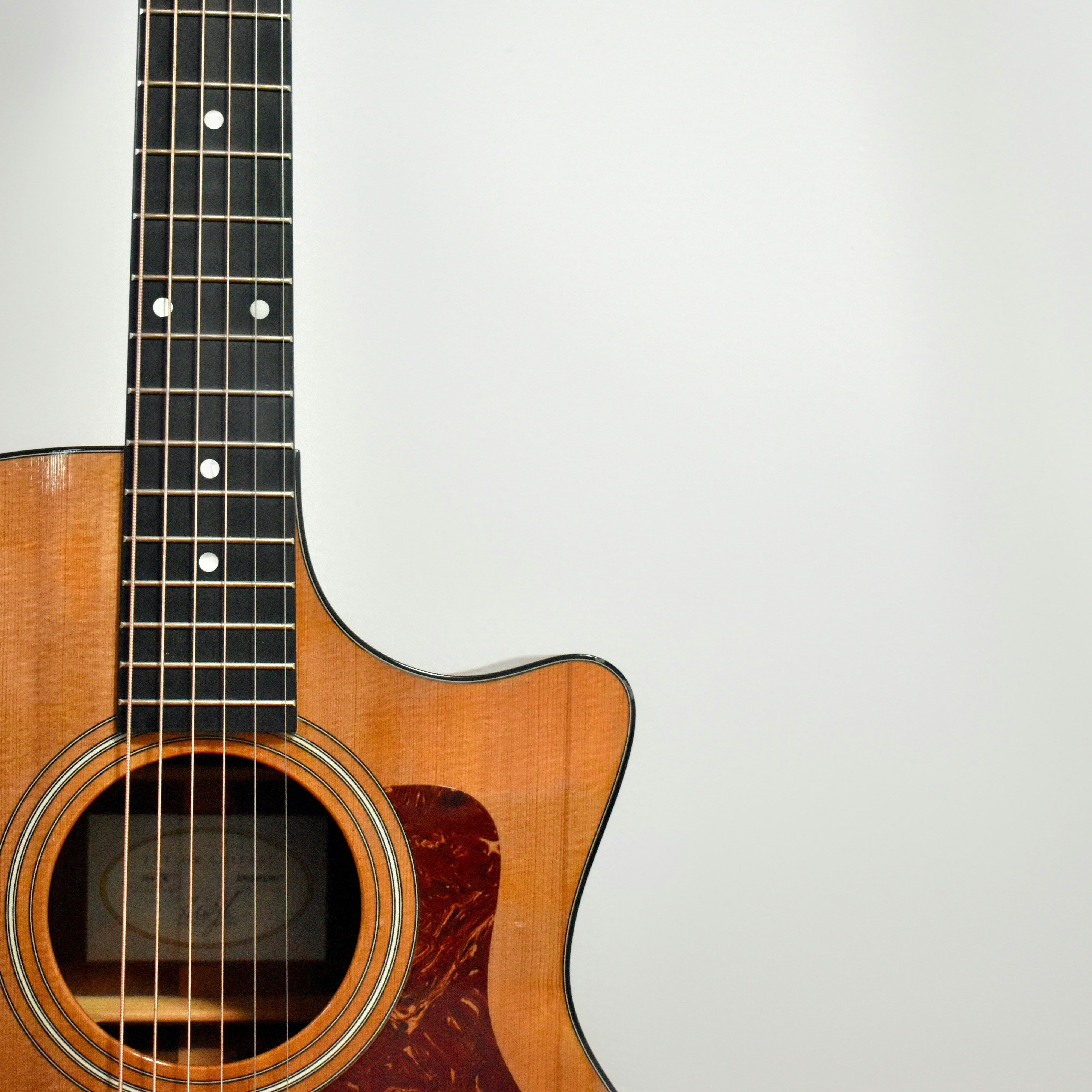
An acoustic guitar adds another order of complexity entirely: a thin top braced internally in a pattern that determines its entire acoustic response, sides bent over heat into a structure that has to survive thirty years of string tension without distortion, a neck joint that must transmit energy without failing, and the entire calculus of voicing — that is, of tuning the structural and acoustic behaviour of the box before it is closed forever.
None of this is mysterious. All of it is hard. And every one of these elements is a place where a builder can spend an extra hour, or skip it entirely, and the difference will not be visible in a photograph.
Boring adult world

This is the part of the conversation people miss most consistently: the cost of a guitar is not the cost of materials. It is the cost of decisions.
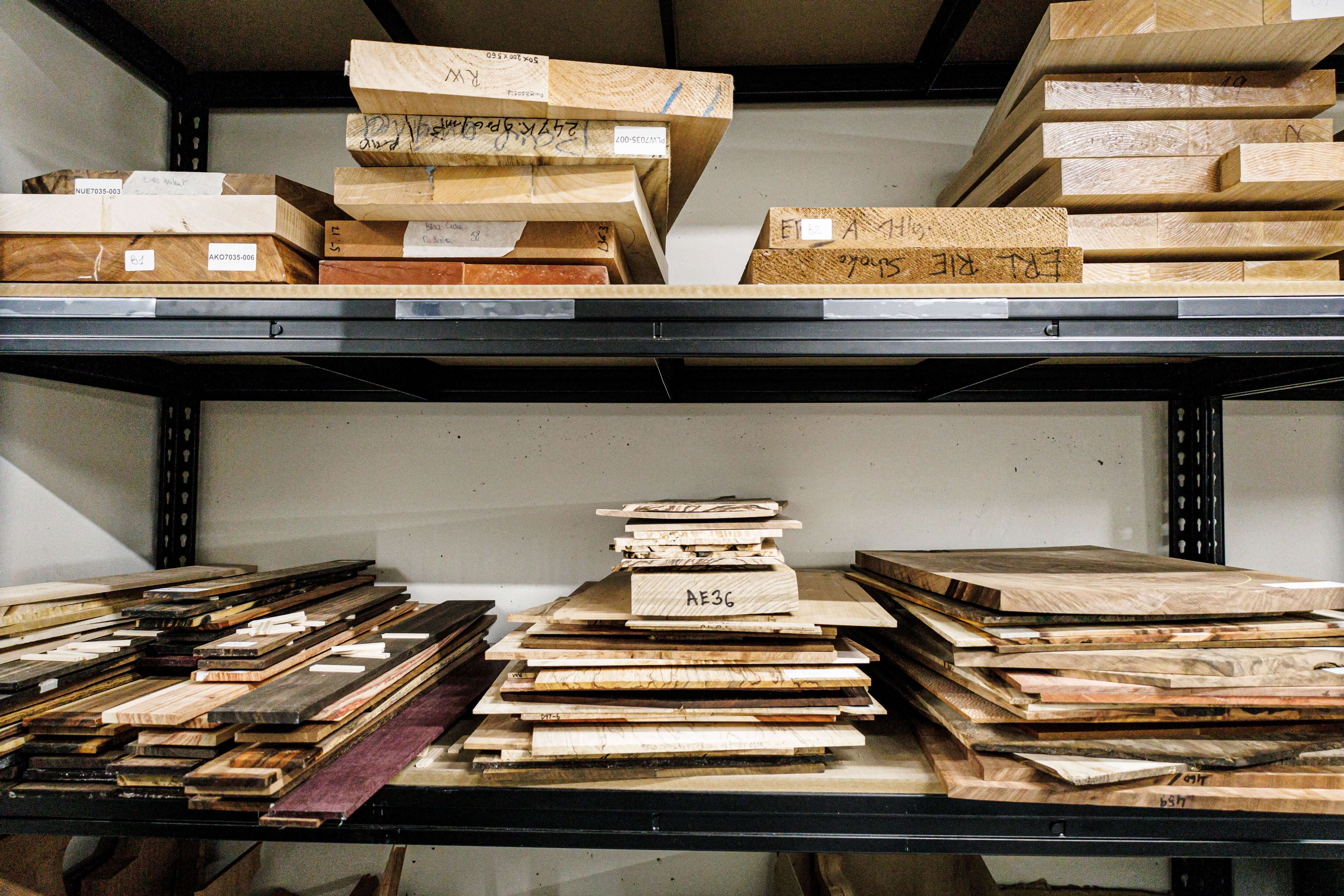
A boutique builder makes, conservatively, several hundred decisions per instrument. Which billet of mahogany. Which orientation of the grain through the neck blank. How thick to leave the top. Whether to chamber the body, and where. Which fret wire, in which size and alloy. Which pickup, wound to which spec. Which pot taper. Which capacitor value. Which finish system. Which sequence of cuts. Which jig to use, and whether to make a new one. Whether yesterday’s humidity is going to bite tomorrow’s glue joint.
A factory makes those decisions once, twenty years ago, and then makes the same guitar four hundred thousand times. This is not a moral failing; it is the entire point of a factory. It is what factories are for. But it is also why a factory guitar and a workshop guitar are different products, and why pretending they are the same product at different prices is the central confusion of our market.
When you buy a small-production instrument, you are not paying for a more expensive piece of wood. You are paying for the time of a person who is making those decisions live, on your instrument, for the first and only time. That time is the product. The wood is the souvenir.
A small detour

Walk into a violin shop. Ask the price of a working instrument — not a student violin, not an antique, but a contemporary instrument by a living maker, the kind a serious amateur or working professional would actually own. You will be quoted somewhere between fifteen and forty thousand euros, and nobody in the room will think this is strange.
Ask about a bow by a respected contemporary archetier. Three to eight thousand euros, routinely, for a stick of pernambuco with horsehair on it. Nobody blinks.
Ask about a hand-made oboe. Twelve thousand euros and up, and there is a two-year waiting list because the global pool of makers who can do this work is small enough to fit in a single room.
Now ask about a hand-made electric guitar. Five thousand euros, and the conversation immediately becomes whether this is reasonable.
I want to be precise about what I am claiming here. I am not claiming that violins are worth what they cost because they are old, or because of mystique, or because classical music has more cultural prestige than rock. I am claiming something narrower: that the price structure of the violin trade reflects a sober, accurate accounting of what it costs to make a fine instrument by hand, and the price structure of the guitar trade does not. The violin trade has not been swept by mass production in the same way. It has retained an honest relationship between price and labour. The guitar trade lost that relationship somewhere around 1965 and has not recovered.
A modern hand-built electric guitar requires no less skill than a hand-built violin. It requires different skill — more electronics, less arching, comparable joinery, comparable finishing, considerably more setup complexity owing to the moving parts — but it does not require less. The wood is comparably expensive at the high end. The tooling investment is comparable. The hours per instrument are, for a serious workshop, comparable. And yet the market expects the violin to cost a year’s wages and the guitar to cost a weekend.
This is not because guitars are simpler. It is because the guitar market was, in the second half of the twentieth century, the test case for industrial-scale instrument manufacturing in a way the violin world never was — and the price expectations of that era have outlived the conditions that produced them.
Abolishing privileges - A French Art

There is a quieter argument running underneath all of this, and it is worth naming directly because it shapes what people are willing to pay for an instrument before they have even examined the instrument in question.
The argument is this: classical instruments are more serious than guitars. They are more refined, more demanding, more deserving of respect, and — by quiet extension — more deserving of high prices. A €40,000 violin is a noble object. A €40,000 guitar is suspicious. The first carries an air of having earned its price through cultural seriousness; the second carries an air of having extracted its price through marketing.
This is a sociological inheritance, not a technical fact, and I want to be precise about what it inherits from.
The violin family was, for several centuries, the instrument of a particular European class. It lived in the salon, the conservatoire, and the concert hall. It was played by professionals who trained for decades and by amateurs whose families could afford lessons, instruments, and the leisure for practice. Its repertoire was canonised, written down, taught in institutions, and embedded in the cultural prestige of European art music. The guitar — and especially the steel-string and electric guitar — has a different lineage. It was the instrument of working-class music, of regional traditions, of self-taught players, of folk and blues and rock. Its repertoire was largely oral, its players were largely outside the academy, and its cultural prestige, for most of the twentieth century, was somewhere between modest and openly disrespected.
These histories are real. They are not made up, and pretending otherwise would be its own kind of dishonesty. The violin and the cello really did belong, for a long time, to people with more money and more cultural capital than the people who first picked up a guitar. The guitar really did rise through populations whose music was considered low even when it was good.
What I am rejecting is the inference, not the history. The inference is that because the violin came from a more prestigious world, the violin is a more noble object — and that because the guitar came from a less prestigious world, the guitar is a less noble object. This inference is doing a lot of work in our discourse about prices and worth, and most of the people doing it have no idea they are doing it.
You can see the inference operating most clearly in the way complexity gets attributed. A cello is widely described as a more demanding instrument to build than an electric guitar, and this description is technically true at the simplest comparison and technically false at the serious one. A student cello and a solid-body electric are not in fact wildly different in difficulty. A concert cello and a serious archtop guitar — both voiced, both carved, both made by makers who have spent decades on their particular problem — are comparable in depth, with different problems but no obvious hierarchy of difficulty between them. The claim that "a lot more goes into a cello" works only if you compare the simplest version of one with the most demanding version of the other, which is the move people make without realising they are making it. The hierarchy of difficulty is not a hierarchy of difficulty. It is a hierarchy of cultural status, dressed up in the language of technical respect.
The same operation runs in the comments around price. A €15,000 contemporary violin reads as expensive but defensible — because the violin world is allowed to have expensive instruments. A €15,000 contemporary guitar reads as suspicious or self-indulgent — because the guitar world, by inherited cultural memory, is supposed to be the world of accessible instruments. The instruments are doing comparable work, with comparable labour, in workshops with comparable overhead. The difference is who we expect to be buying them, and what we have inherited about whether that buyer counts as serious.
I am not arguing that the guitar should aspire to be the violin. The guitar is not a violin and should not pretend to be one — that path leads to bad instruments and worse music. I am arguing that the guitar, made seriously, deserves the same default seriousness as any other instrument made seriously. The instrument's social origin is not a verdict on its current dignity. A flamenco guitar built by a master in Madrid is not less noble than a violin built by a master in Cremona; it is differently noble, and its difference is not a deficit.
The honest version of this argument is uncomfortable for people on both sides of it. The classical-music inheritor has to give up the assumption that their instrument is automatically more serious than the working musician's. The guitar partisan has to give up the inverse — the idea that the guitar's popular lineage makes the classical instruments somehow phony or overrated. Both inheritances are sociological accidents. Neither is a fact about the instruments themselves.
The guitar is the most popular instrument in the world. That is not its problem. That is its history, and it does not lower the ceiling on what a guitar can be when it is made by someone who is trying to make it as well as a guitar can be made. The hierarchy that says otherwise is older than any of us and quieter than we notice — but it is doing work in every comment that says €5,000 is too much for a guitar while not blinking at €15,000 for a violin. The instruments are not the problem. The hierarchy is.
Woops, wrong way

I owe the title of this series its honesty, so let me make the move that complicates the argument.
Some classical instruments are overpriced. Genuinely. Not because the labour is dishonest but because the trade has, in places, stopped innovating. There are violin shops where the highest praise an instrument can receive is that it sounds like a 1720 Cremonese instrument, and where any departure from that target is treated as a failure. There are bow makers who will not touch a non-traditional material under any circumstance, even as pernambuco approaches functional extinction. There are oboe makers who have not meaningfully redesigned their key systems since the Conservatoire model of the 1880s.
This is its own pathology. An instrument tradition that defines excellence as fidelity to a 300-year-old object has, by definition, capped its own ceiling. You can charge a great deal for a meticulously executed copy of an old idea, and at some point you are charging for the meticulousness alone, because the idea itself stopped accruing value the day its originator died.
The guitar world, for all its problems, does not have this pathology — or has it only in patches, mostly around vintage worship of pre-CBS Fenders and 1959 Les Pauls. The living edge of the trade is still genuinely innovating: in neck geometry, in tonewood selection from sustainable sources, in pickup design, in bracing systems, in compound radii and multi-scale fretboards, in the integration of carbon fibre and traditional joinery, in the application of non-destructive grading techniques to wood selection. A serious contemporary guitar can be a serious contemporary object — a thing being made now, in response to now, by someone who is solving problems that did not exist a generation ago.
That is worth paying for. Arguably it is worth paying for more honestly than a 47th copy of a Stradivari pattern, which is the move I am making to earn my title: the classical instrument trade is sometimes overpriced for what it is, and the guitar trade is usually underpriced for what it could be. The asymmetry runs in both directions.
Cheaper, every year, by design

The pressure on guitar prices runs only one way, and it runs hard. Every year, the floor of what an “acceptable” guitar costs moves slightly downward in real terms. Every year, a new manufacturer in a country with lower labour costs releases an instrument that looks, in a photograph, indistinguishable from an instrument costing three times as much. Every year, the discourse around guitar value gets a little more punitive: why would anyone pay X when you can get Y?
This is the race to the cheapest, and the thing about a race to the cheapest is that there is no finish line. There is always a country with lower wages. There is always a corner that has not yet been cut. There is always a process that can be automated. And there is always a buyer who will rationalise the result as good enough, because the alternative is admitting that the price they want to pay does not exist in reality.
The consequence, accumulated over decades, is a market that has trained itself to misjudge value. A buyer encountering a five-thousand-euro instrument has, by this point, a reflex: that is expensive. They do not have the reflex they should have, which is: expensive compared to what? Compared to a factory instrument from a country where labour costs a tenth of what it costs in France, yes. Compared to a violin from the workshop next door, no. Compared to the actual labour input required to make this object honestly, no. Compared to a bicycle, a watch, a piece of furniture, or any other artefact of comparable complexity made at comparable scale by comparable labour, no.
The race to the cheapest has not made guitars cheaper. It has made our judgement about guitar prices wrong. Those are different things.
Aaaaaand it's gone
Here is what concerns me most, and where I will be plainest.
When the market shifts decisively from small-production to mass-market, the trade loses things that cannot be reconstituted later. It loses, first, the population of working makers who maintain skills at the high end. Those people do not exist independently of demand for their work; they are not preserved in amber, waiting for the market to come back. When they retire, their workshops close, their apprentices disperse, their suppliers go under, and the knowledge that lived in their hands goes with them.
It loses, second, the diversity of approaches. A mass market rewards convergence: every guitar must be a slightly different version of a small number of canonical designs, because that is what scales. A small-production ecosystem rewards divergence: this maker bevels the body differently, that maker chambers it, this one has a thing about neck profiles, that one has spent ten years on a particular bracing pattern. Diversity is the engine of an instrument tradition. It is what allows the next idea to happen. A trade with twelve makers in it can produce a revolution; a trade with two factories in it cannot.
It loses, third, the supply chain. Boutique tonewood dealers, small parts manufacturers, specialist finish suppliers, the people who wind pickups to weird specs because someone asked them to — none of these survive in a market that only buys what factories buy. They go out of business one by one, quietly, and the next generation of makers inherits a poorer toolbox.
And it loses, fourth, the knowledge transmission. A young person who wants to learn to build guitars properly needs somewhere to learn. Schools matter, and the good ones are doing serious work. But schools are downstream of an ecosystem. If there are no working boutique shops to apprentice in, no small builders running viable businesses, no examples of what a life in this trade can look like at scale — then the schools train people for a trade that does not exist when they graduate.
These losses are not theoretical. They have happened, repeatedly, in adjacent trades. The Japanese woodworking tradition lost half its specialist tool-makers in two generations. The French archetier population is small enough to be counted on two hands. Hand-engraved firearms, once a thriving trade in three European countries, is now a curiosity. The mechanism is always the same: a market trains itself to expect a price that does not reflect the cost of doing the work, the people doing the work retire or starve, and a few decades later everyone wonders where the knowledge went.
Counter Strike

I want to take the strongest form of the counter-argument seriously, because the section above can be read as nostalgia for a world in which only the rich played, and that reading would be both wrong and worth refuting.
The case for cheap instruments is real. A $300 factory guitar in 2026 is a remarkable object: it plays in tune, sounds good enough to learn on and gig with, and is available to anyone with a part-time job's worth of savings. The same instrument in 1955 would have cost, in inflation-adjusted terms, several times more. A child in a working-class family today has access to a serviceable electric guitar in a way her grandfather almost certainly did not. The mass-production of musical instruments has put guitars in the hands of millions of people who would otherwise never have held one, and that is not a small thing. Music is a public good. Practice is a public good. Anything that gets more people playing is, at the first order, defensible.
I do not want to argue against this. I want to complicate it.
Here is the complication: the argument for cheap instruments rests on a hidden assumption, which is that the alternative to a cheap guitar is no guitar. That assumption is historically false. Before mass production, ordinary people did own musical instruments. They owned fewer of them, they saved longer to acquire them, and they kept them their entire lives. The pre-industrial working-class home contained, on average, a small number of well-made objects — a coat, a pair of boots, a set of tools, sometimes an instrument — each of which represented months or years of saving and each of which was expected to last decades. The household had less stuff in it, but the stuff was good, and it was kept.
What mass production democratised was not access to objects. It was access to quantities of objects. The difference matters. A 1900 factory worker who saved for two years to buy a parlour guitar owned an instrument that would outlast him; his great-grandson buying a $300 factory guitar in 2026 owns an instrument that will likely be unplayable in fifteen years, and which he will probably replace twice in his playing life. The total spend is, in real terms, comparable. The total number of guitars in his life is higher. The total durability of his ownership is lower. He has not been given more; he has been given more churn.
This is the part of the story that the democratisation argument leaves out. The pre-mass-production world was not a world in which only the rich owned instruments; it was a world in which ordinary people owned good instruments rarely, saved for them carefully, and held them long. The transition we have lived through has not made guitars available to people who could not have had them before — it has changed what owning a guitar means. It used to mean a single, considered, durable purchase. It now means a disposable object, replaced on a cycle, never quite committed to. Whether that exchange is a net gain depends on what you think a guitar is for.
There is a version of the affordable instrument that I am genuinely in favour of, and it is the well-made entry-level guitar — the $400 to $800 instrument that is solidly built, designed to last twenty years, repairable, made by a manufacturer that pays its workers fairly. That guitar is the descendant of the 1955 student instrument and the legitimate heir to the democratisation argument. It is not the same object as the $200 disposable copy from a country with no labour law, and pretending those two objects belong to the same category is the move the discourse needs to stop making.
The honest version of the affordability argument supports the first kind of guitar. The discourse, as it currently runs, defends the second. That is the slippage worth naming.
Behold, a conclusion

If you want a guitar to be cheap, somebody is paying for it. It is either the maker, working below sustainable wage; or the supply chain, squeezed thinner each year; or the wood, harvested from forests that cannot replace it; or the next generation, who inherit a trade with fewer skills in it than the one we inherited. Cheap is a transfer, not a discovery. The money still gets paid; it is just paid by someone other than the buyer, and usually paid in something other than money.
A guitar made properly, by a person who knows what they are doing, in a workshop that pays its bills, with materials sourced honestly, in a country with adult labour law, takes the time it takes and costs what it costs. That cost is not arbitrary. It is not greed. It is not “boutique markup.” It is arithmetic.
The next time you encounter the price of a serious instrument and feel the reflex to say that is a lot for a guitar, I would invite you to try a different sentence: that is what a guitar costs, and the strange thing is how many things in the world cost less than they should.
The strange thing, in fact, is not that good guitars are expensive. The strange thing is that we have spent two generations training ourselves to think they shouldn’t be.
Fret Leveled ? Check
In tune ? Check
You being Wrong ? Check
Me being Right ? Check
注:本站所有文章均先用法语撰写,再进行翻译。这种翻译属于主动翻译,并非简单地逐字对应,而是在必要时进行调整,以更好地适应目标语言。这可能会导致语气或内容的微妙变化,对此我们表示理解并予以认可。
分享:
关于实心电吉他音木 ”的真相——第二部分
是什么让现代拱面琴
1 条评论
Magnifiquement écrit. Merci d’avoir partagé!