



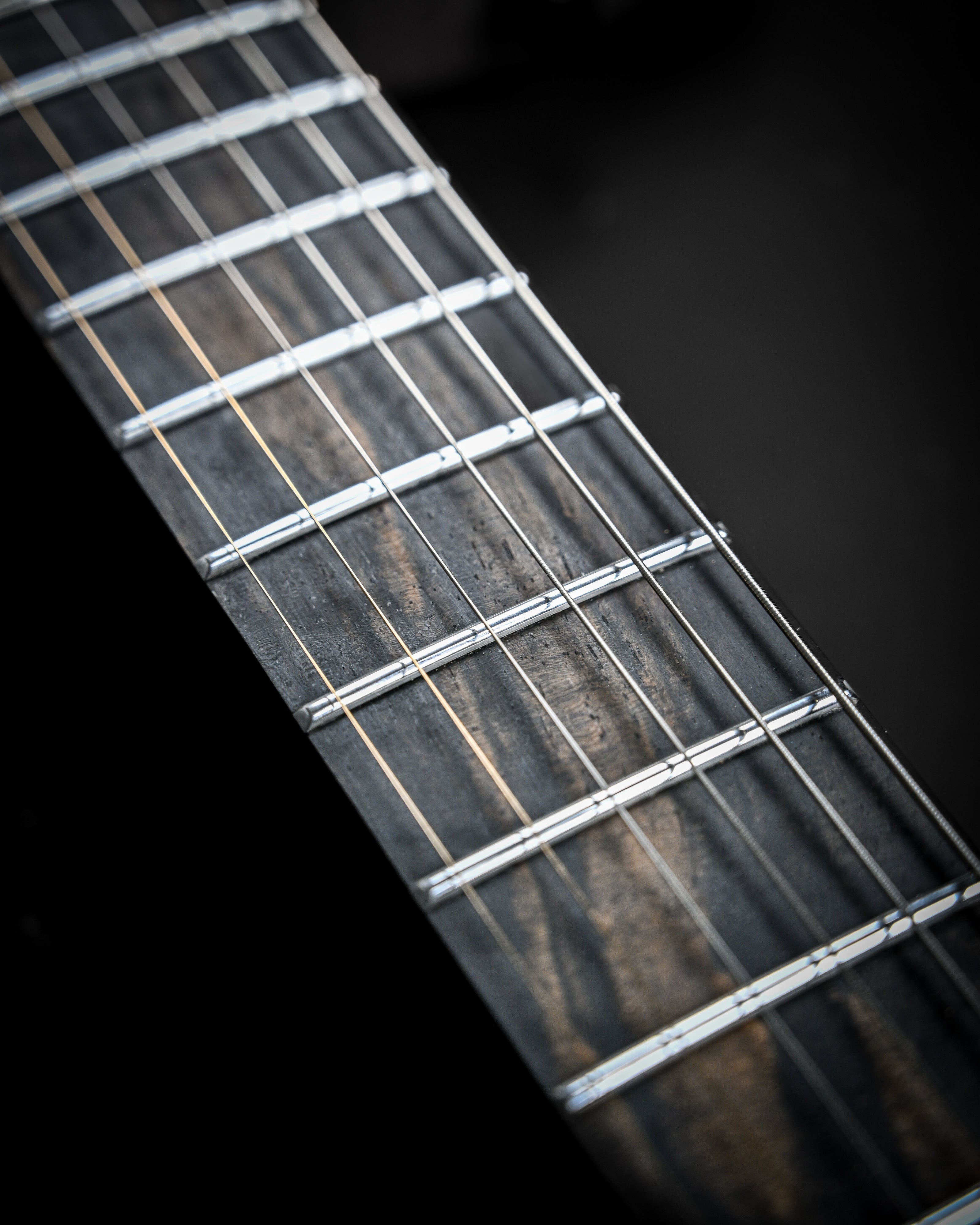
On this new episode of the series : I’m Right, You’re Wrong - Stainless Steel Frets.
Hold on to your seat, it’s about to get bumpy, just like your fretboard.
There is a phrase that gets repeated, almost as a reflex, every time someone walks into a workshop and asks about a new build or a refret. Stainless steel. Always stainless. As if specifying the metal of the fretwire were the same kind of decision as specifying the pickup, the wood, or the bridge — and as if the answer were already settled.
It isn't settled. It has just been repeated long enough that nobody bothers to push back.
So let me push back.
Stainless steel frets have been sold to the entire player market as a universal upgrade — as if every guitar, regardless of style or use, would simply be better with them. That is the claim I want to break. Because the more closely you look at what stainless steel frets actually do, the clearer it becomes that they solve a problem most players don't have, sit on top of an architecture they can't stabilize, and cost significantly more across the life of the instrument than anyone admits.
Let me show you.
Why Stainless Steel Fret Sucks

Let's start with the bigger problem, because it is the one that almost never gets discussed honestly.
The implicit promise of stainless steel frets — the one that gets you to specify them on a new build, even if nobody actually says it out loud — is that they stabilize the instrument. That the guitar will stay set up longer. That the frets will stay level longer. That you are buying not just durability, but consistency.
You are not.
A guitar neck is a wooden architecture. The fretboard is wood. The neck itself is wood. The truss rod adjusts a wooden beam against the tension of steel strings.
That entire system breathes, expands, contracts, and shifts with every change in humidity and temperature it encounters. Göken and his collaborators, writing on spruce damping behavior in Acta Physica Polonica A (2014), document the obvious-but-routinely-ignored point: wood is viscoelastic, and its mechanical response — including its dimensional stability — is moisture-dependent. The frets sit on top of that material and move with it.
A neck that was perfectly level in your shop in January will not be perfectly level in July. That is not a flaw. That is wood being wood.
Stainless steel frets are no more immune to this than nickel ones. The metal doesn't bend at the molecular scale, but the fret-line does shift, because the wood underneath shifts. A guitar with stainless frets will go out of level, will need adjustment, will eventually need a leveling pass — for exactly the same reasons a nickel-fretted guitar does, on more or less the same timeline.
The material doesn't matter. The architecture moves.
This is the part of the conversation that is almost never honest. The player upgrades to stainless expecting the whole experience to stabilize. It doesn't. They get the same guitar, with the same wood, doing the same things — and they have paid a significant premium for frets that, in their actual playing life, will probably never reach the wear point that justified the upgrade in the first place.
You'll Quit First
Which brings us to the wear point itself. Because most players have a wildly distorted sense of how fast nickel frets actually wear.
A nickel-silver fret, on a guitar that is played regularly — several hours a week, mixed-genre, with normal bending and vibrato — will develop visible wear over a span of years. Not months. Years.
The first level-and-crown a guitar typically needs is somewhere between five and ten years into its working life. A full refret, depending on the player, sits somewhere between fifteen and thirty years out. Many guitars never need one at all, because their owners simply don't play them enough.
Now think about who you actually are.
If you play your guitar for an hour or two a night, write songs, jam with friends, record at home — your frets will outlast your interest in the instrument. Probably by a significant margin. The fret material is not the limiting factor in your relationship with that guitar. It isn't even close.
If you are a touring professional playing four to six nights a week, year-round, in a style that involves aggressive bending — yes. Stainless steel will save you fret jobs. That is a real, measurable benefit. It is also a population of players that represents a vanishingly small fraction of the people who specify stainless on new builds.
The rest is anxiety, sold back to you as a feature.
Blame The Shredders
A little history is useful here, because nobody who is sold stainless frets is told the story behind them.
Mainstream stainless fretwire is not old. For most of the twentieth century, every guitar that mattered to anyone — every Strat, every Les Paul, every Telecaster on every record you've ever heard — was fretted in 18% nickel-silver. The material was good enough. The wear it produced was the wear that defined how a played-in guitar felt under your fingers.
Stainless fretwire arrived as a mainstream product through suppliers like Jescar and Dunlop — Jescar's marketing language openly describes stainless as "the hardest type of fretwire you can get," promising "higher wear resistance for greater fret life." It was, in their telling and in the original use case, a solution to a specific problem. That problem belonged to a specific population.
The population was the shred and extended-range scene of the late 1980s and 1990s. Heavy bending, fast vibrato, hours per day at the same three positions, frequent string changes with stainless roundwounds. Those players genuinely chewed through nickel frets. Stainless was a working tool, designed for a real failure mode.
What happened next is the part of the story that gets quietly dropped. The marketing followed the supply. Premium became premium, and premium became better. By the time the average home player walked into a builder's shop in 2015 or 2020 and casually said "stainless, please," nobody was checking whether the original problem was theirs to solve.
It almost never is.

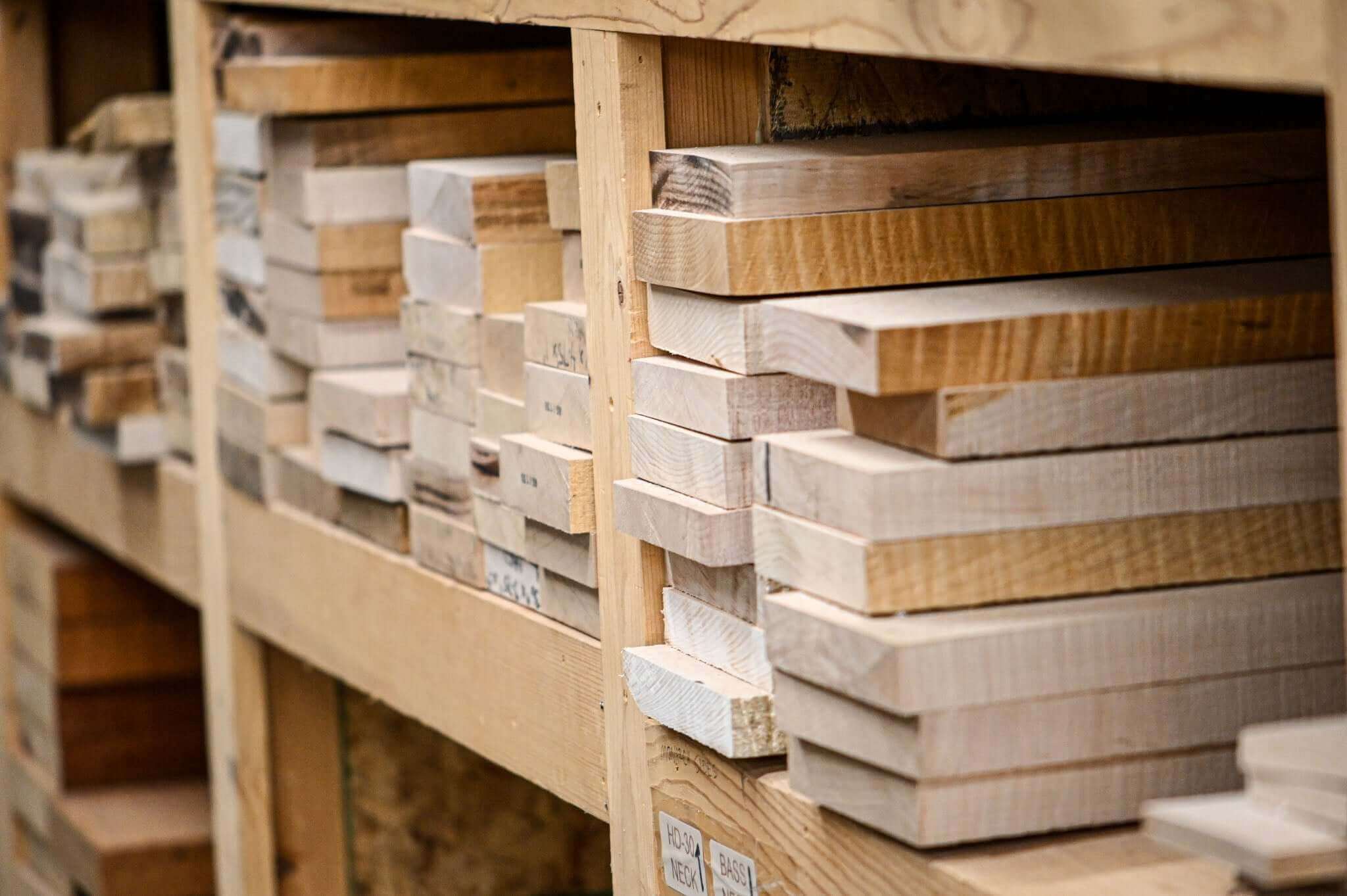
For legal purposes, we will not include any shredder picture. Here is actual shredded paper, absolutely unrelated to this article
The Math

Now we can do the math.
A nickel-silver refret, at a competent shop, costs somewhere in the range of three to five hundred euros depending on the binding, the fretboard wood, and the region. A stainless steel refret typically costs double — often more, because the labor is harder, the tooling wears faster, and many shops charge a premium simply because fewer luthiers are willing or equipped to do the work cleanly.
The Music Gallery, a US repair shop, refuses to put stainless frets on their Plek leveling machine — the metal dulls the cutting wheel fast enough to make it economically unviable. That is not a marketing claim. That is a working shop, naming a problem, in print.
A fret level on a nickel-fretted guitar runs roughly one to two hundred. On stainless, also roughly double — because the same hardness that resists wear in playing also resists the files, beams, and crowning tools that are used to level the frets.
Now run a realistic scenario. A player who plays seriously, regularly, over fifteen years. On nickel: probably two fret levels and one refret across that span — three jobs, totaling perhaps eight hundred to a thousand euros. On stainless: zero refrets, but one or two levels at double the price. Maybe four to six hundred euros total.
The stainless guitar saves you, in this scenario, a few hundred euros across fifteen years. Maybe.
And it costs you, in exchange:
— A significantly higher initial cost on a new build — Doubled maintenance cost on every leveling pass — Limited choice of shops willing to work on the instrument — Harsher tooling on the fretboard during installation and removal — No improvement whatsoever to playability, tone stability, or the actual experience of owning the guitar
It is not, on any honest accounting, a win. It is a lateral move, with a higher entry fee, sold as an upgrade.
You Can't Hear It

Some players will say stainless steel sounds brighter. Some say it produces more attack, more sustain, more clarity. I have heard this claim in the workshop, in print, and on every forum on the internet.
It is, at best, marginal. At worst, it is a placebo wrapped around a price tag.
The tone of a fretted note is overwhelmingly determined by the string, the pickup, the body wood under tension, and the player's hands. The fret itself contributes a small contact-mechanics signature — and yes, in laboratory conditions, you can measure tiny differences in attack envelope between a stainless fret and a nickel one.
But measurable in a lab and audible through an amplifier in a room are not the same thing. Any player who claims to reliably hear the difference between nickel and stainless on the same guitar, with the same setup, under blind conditions, is either operating in genuinely exceptional circumstances or selling you something.
If you want a brighter guitar, change strings. Change pickups. Change the cap on your tone pot. The fret material is the wrong lever to pull.
So that is the case against. The frets don't stabilize anything. Most players will never reach the wear point that justifies them. The cost math doesn't work. The tone argument is a placebo.
Now let me be fair to the material, because the position I am attacking is not stainless steel frets exist. The position I am attacking is stainless steel frets are universally better, and you should always specify them. Those are very different claims, and the difference is where the rest of this essay lives.
Fine, It's Good at Three Things
Let's be precise about what the material does, because there are real benefits and I would rather name them honestly than pretend they don't exist.
The first is wear resistance. Stainless steel is significantly harder than the traditional nickel-silver alloy that has been used on virtually every fretted instrument made since the early twentieth century. That hardness means it resists the slow grooving and pitting that develops on nickel frets after years of contact with wound strings under bending pressure. A stainless fret will hold its profile longer. A guitar fitted with stainless frets will, in theory, go longer between fret-leveling jobs and longer between full refrets.
The second is feel. A polished stainless fret has a faintly slicker, glassier sensation under bending fingers than a polished nickel one. Some players love it — particularly fast lead players who want the bend to glide. Some find it too slippery and prefer the very slight grip of nickel. It is a preference, not an objective improvement, but it is not nothing.
The third is corrosion resistance. Stainless steel, as the name suggests, doesn't oxidize the way nickel does. On a guitar that lives in a humid environment, on a player whose hands are particularly acidic, or on an instrument that gets neglected for months between sessions, stainless frets will stay cleaner-looking longer. Real. Marginal for most players, but real for some.
That is the entire upside. Wear resistance, a particular feel, and slower oxidation. Three real benefits, none of which is fictional.
The question — the only question that ever mattered — is whether those benefits, for your playing, justify everything I described in the first half of this piece.
Stainless Who ?
There is one more thing the marketing rarely tells you. Not all stainless steel is the same stainless steel.
The premium fret manufacturers — Jescar, Sintoms, a few others — make stainless fretwire from specific alloys (the Jescar 47XXX series, for example) that genuinely deliver the durability claimed. The wear resistance is real, the hardness is consistent, the material behaves predictably under installation and leveling. That is what the original case for stainless was built on, and that is what the working pros who choose stainless are actually buying.
But "stainless steel" is a category, not a specification.
There is a wide market of generic stainless fretwire — cheaper imports, off-brand suppliers, mystery alloys — that gets installed and sold under exactly the same name, with exactly the same upgrade premium, that doesn't perform anywhere near the same way. Softer than premium stainless. Less wear-resistant. Sometimes harder to work and less durable, which is the worst of both worlds.
The customer almost never knows which one they are getting. The word stainless on a build sheet doesn't tell them. The price premium doesn't tell them — premium and generic stainless cost roughly the same to install, because the labour is what makes the job expensive, not the wire. And once the frets are in, you can't easily tell by looking, because the visible difference between premium and generic stainless only shows up after years of comparative wear.
This is the second-order problem with specifying stainless as a default upgrade. Even if you genuinely want what stainless is supposed to deliver, you have no way to verify that you're getting it — unless you specifically ask, name the manufacturer, and confirm what's being installed. Most builders won't volunteer that information unprompted. Most players don't know to ask.
So when I say stainless is a waste of money for most players, I mean it twice over. The premium isn't justified for the playing most of you actually do. And the premium often isn't even buying what it claims to buy.
*Insert Mandatory Nuanced Take
There are players for whom stainless is the correct answer, and I want to name them clearly.
Touring professionals playing a hundred and fifty shows a year, with aggressive technique, who would otherwise refret an instrument every two or three years. Session players whose instruments need to be reliable across thousands of takes. Bassists with stainless roundwound strings who chew through nickel frets fast enough that the material savings are real. Players in extreme humid or coastal environments where corrosion resistance is a genuine durability concern. Players with diagnosed nickel allergies for whom standard fretwire is medically not an option.
In those contexts, stainless steel earns its premium. It is the right tool for a specific job.
The mistake is not in the material. The mistake is in the assumption that every player is that player. The home guitarist who plays an hour a night is not that player. The collector who owns six instruments and rotates through them is not that player. The hobbyist working on weekends is not that player.
Most of you are not that player. And specifying stainless on your next build because the internet told you to is, in the most straightforward financial sense, a tax on anxiety. You are paying a premium to solve a problem you will never have.
The Options Big Steel Keeps Hidding

Here is the other thing the stainless-versus-nickel conversation gets wrong: it presents itself as a binary. Soft nickel, hard stainless. Pick one.
It isn't a binary, and it hasn't been for a long time.
The standard fretwire that most factory guitars ship with is an 18% nickel-silver alloy — confusingly named, because it actually contains around 18% nickel and the rest is mostly copper and zinc. It is soft, easy to work, and it has been the industry default for decades.
But fret manufacturers also make a 22% nickel alloy, which is meaningfully harder and more wear-resistant than the standard 18%, without being anywhere near as hard as stainless. It installs like nickel. It levels like nickel. It costs slightly more than nickel and considerably less than stainless. For a player who plays harder than average but isn't on the road three hundred nights a year, it is often the correct answer that nobody offered them.
Then there is EVO Gold — a copper-titanium-tin alloy made by Jescar. Harder than 18% nickel, softer than stainless, hypoallergenic for players sensitive to nickel, with a warm gold color that some builders like and some hate. It works with standard tooling. It refrets like a fret should refret. A lot of working luthiers consider it the most underrated material in current use.
The fact that most players have never been offered either of these — that the conversation always defaults to nickel or stainless — tells you more about how the industry markets fret material than it does about the actual range of options. The binary is false. The middle exists. In many cases, the middle is the answer.
Honestly
If you are building or commissioning an instrument and you want the honest version of the conversation, here it is.
Nickel-silver frets are not a compromise. They are not a downgrade. They are the material that the entire history of fretted instrument making has been built on, that every great recording you have ever loved was probably made with, and that has demonstrated, across roughly a hundred years of working luthiery, that it does the job perfectly well for the overwhelming majority of players.
If you play professionally, hard, often — specify stainless and never think about it again. It will earn its keep.
If you play harder than average but you're not on the road full-time — ask your luthier about 22% nickel or EVO Gold. You'll get most of the durability gain without the maintenance premium or the tooling problems on the other side.
If you play normally, like most of us do — specify standard nickel. Pocket the difference. Spend it on strings, on a setup, on a case, on a lesson, on literally anything else that will affect your playing more than the fret alloy ever will. When, ten or fifteen years from now, your frets need a level — pay for it. It will still cost you less than the upgrade did, and you will have spent those ten years with a guitar that played exactly as well as the stainless one would have.
The frets are not the upgrade. They were never the upgrade.
Disagree ? Doesn't matter - I'm right, you're wrong.
Note : All our articles are written in French then translated. The translation is an active translation that doesn't simply translate word by word, but takes on when needed to better suit the targeted language. This can create a shift in tone or content that we accept and agree with.

Share:
The Truth about Guitar Finishes
IRYW : Vintage guitars are overpriced hype
1 comment
Look at this issue this way. If you have a vintage Gibson SG Standard, 1970 (75th Anniversary Model), purchased when I was a teen (I’m now 73) as I do, and, the frets installed were Gibson’s low, wide nickel-silver fret wire. They called guitars that had these frets, “Fretless Wonders”. After 55 years of playing it, I’d only now found out about the dimensions of those frets. For the last 20 years, or so, I’d been looking at the frets and thinking, “Gee. I gotta get this guitar re-fretted.” But, a hard look at the fret wear over all those years indicates that there isn’t much fret wear to speak of, especially when you consider the type of frets they were. There are no issues with this guitar over the decades with respect to its frets or fret wear.