


Lutherie is the craft of building and repairing stringed instruments. In most places, including France, it is also an unregulated trade: no qualification is legally required to set up shop. A 2018 study of the French instrument-making sector, commissioned by the CSFI and the DGE, records this plainly — and notes that some established makers would like a minimum qualification imposed on new entrants, precisely because none exists.
That leaves two honest questions. How does a person actually learn to build and repair instruments? And how does a buyer tell a serious maker from someone with a workbench and a website? This article answers both. It will not pretend a certificate settles either one.
How luthiers learn the craft
There are three real routes into lutherie. None is mandatory. None guarantees skill.
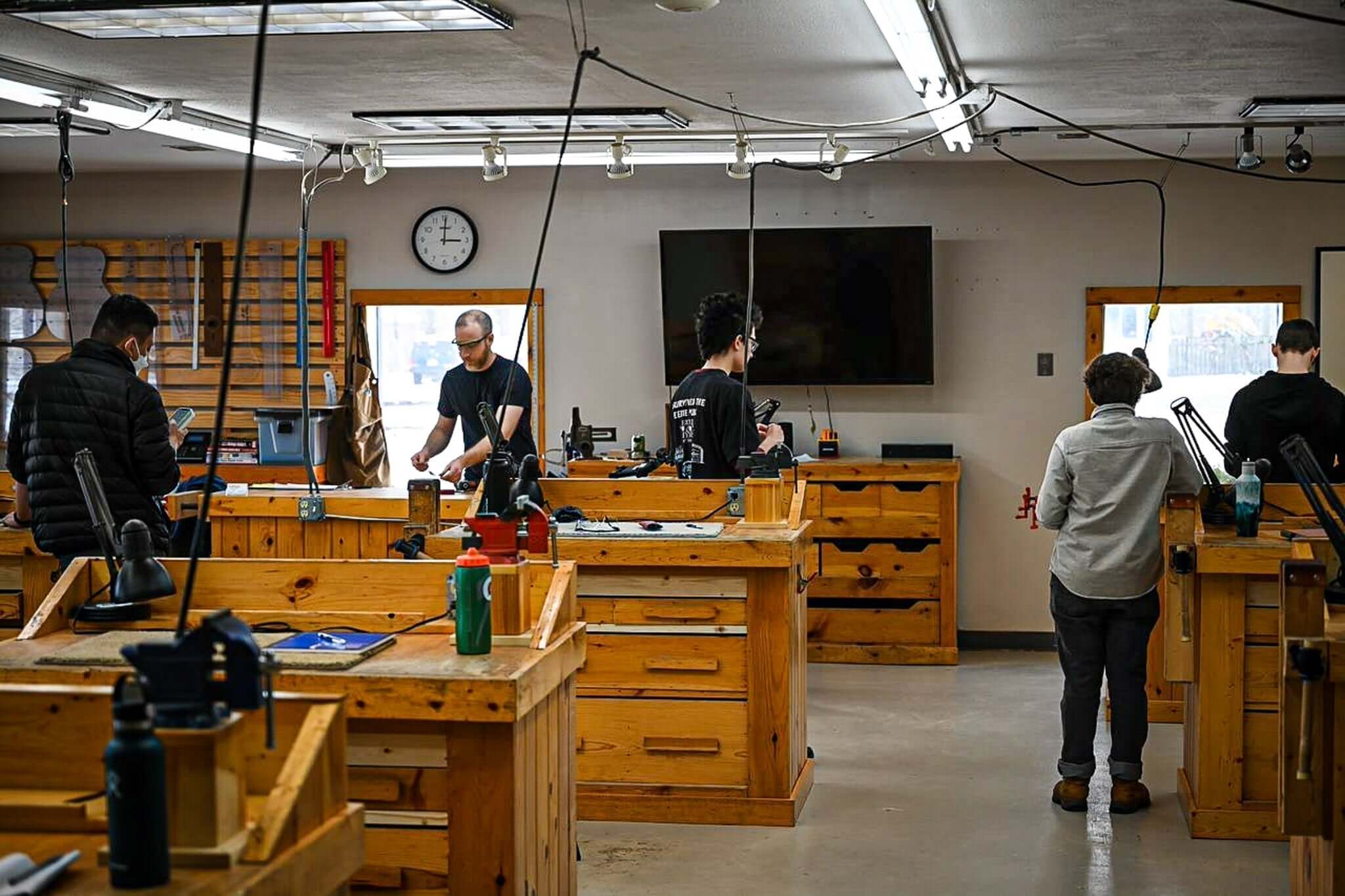
Formal schools. A structured program teaches the foundations fast: how wood behaves, neck and body geometry, fretwork, electronics, finishing, setup, and increasingly CAD and CNC. You get demonstrations, supervision, and a sequence that keeps you from learning every lesson the hard way. The trade-off is cost and time, and the plain fact that a certificate proves you finished a course, not that you can build a good instrument.
Apprenticeship. Working at the bench under an established maker is the oldest route and still one of the best. You absorb the judgment that does not fit in a manual — when a joint is right, how a neck should feel, what a finish is doing as it cures. It is slow, it depends entirely on the maker you find, and it is harder to arrange than it once was.
Self-teaching. Plenty of respected builders are self-taught. It is legitimate. It is also the slowest and most error-prone route, because nobody is there to catch the mistake before it is glued, cut, or shipped. Books, forums, and videos help. They do not replace feedback from someone who can see your work.
The point underneath all three is the same: skill is demonstrated, not credentialed. How a maker trained matters far less than what they can put in front of you.
What the training actually covers
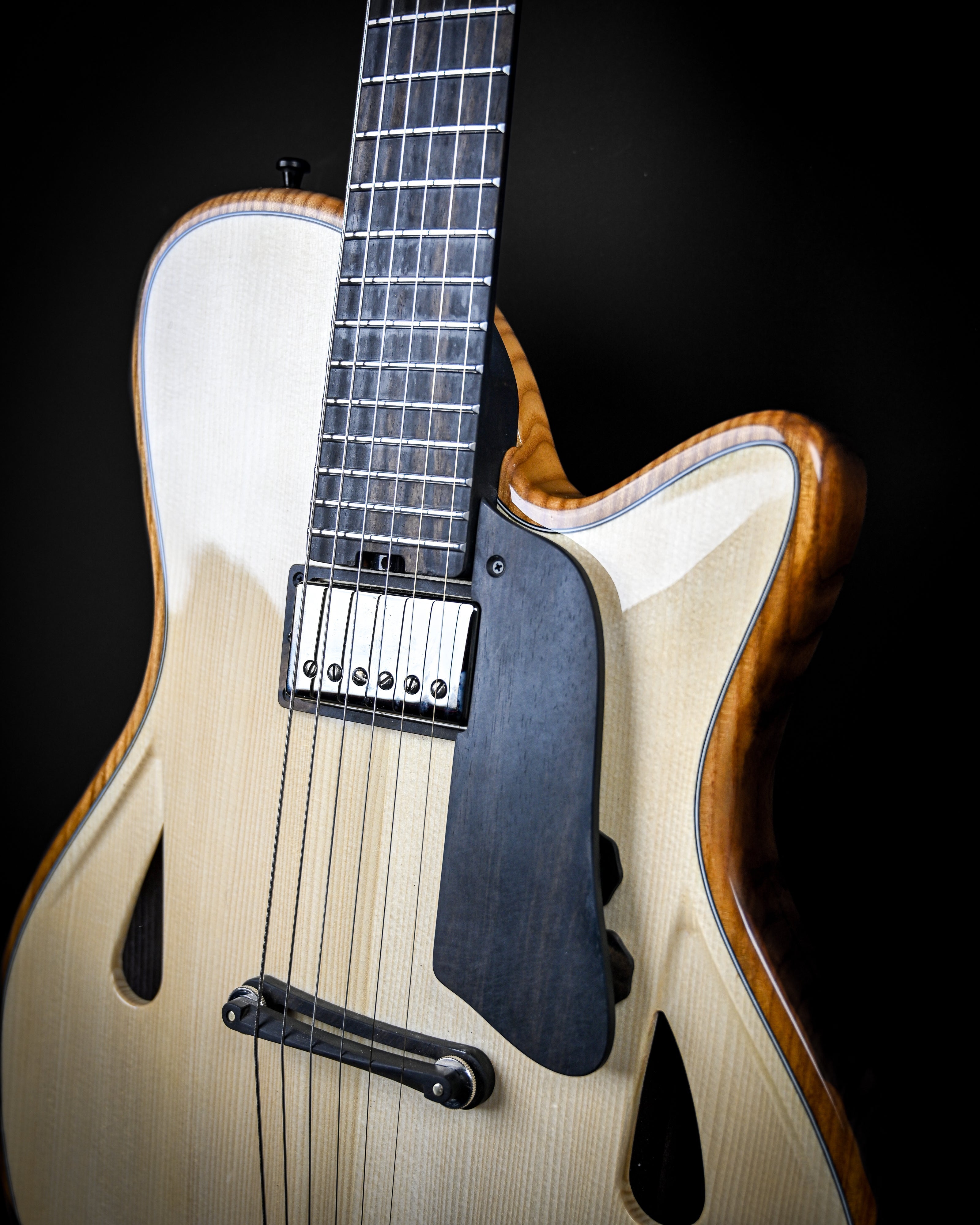
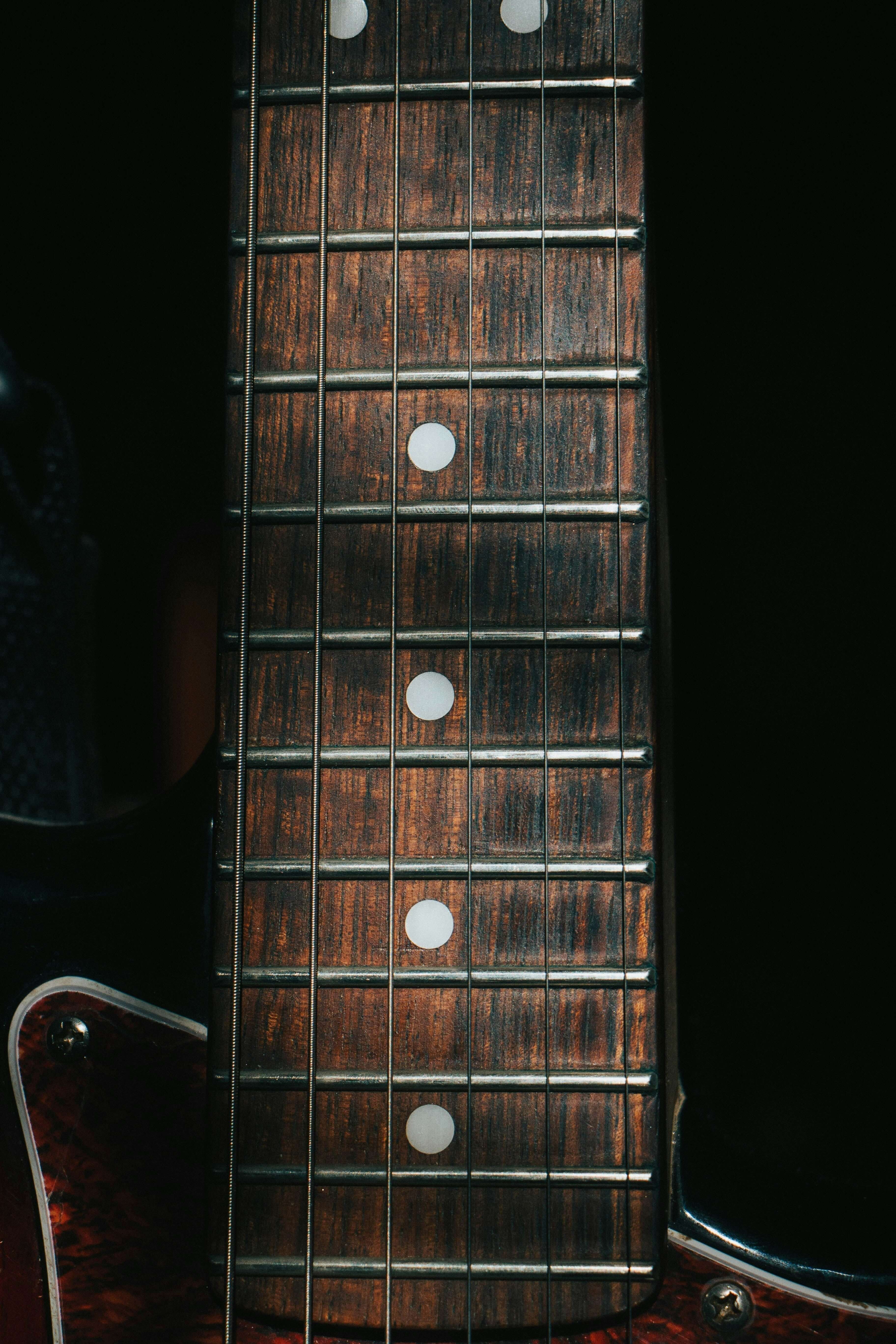
Whatever the route, the skill set is the same, and it is broader than most people expect. A guitar or bass maker has to understand how wood moves with humidity and load; how neck geometry, nut, and saddle govern playability and intonation; how to cut, level, and dress frets so the instrument plays clean the length of the neck; how to apply a finish that protects without deadening; and how to design an instrument — now often in CAD, with parts cut on a CNC — before a single piece of wood is shaped.
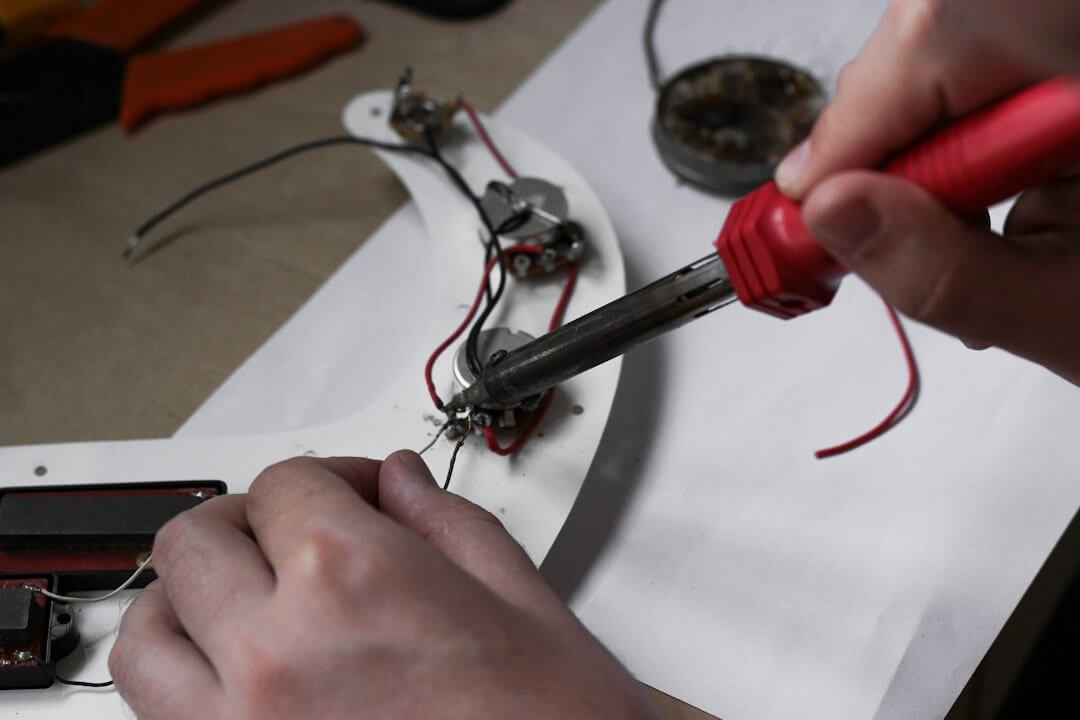
The electric side adds a layer the acoustic side does not have. It is partly an electrical job. Pickups, pots, switching, and shielding all have to be right, and none of it is cosmetic.
Repair is its own discipline — setups, refrets, structural fixes — and for most working makers it is a steady part of the job, not a sideline. A good school teaches both building and repair, because most graduates will earn from both.
Staying current
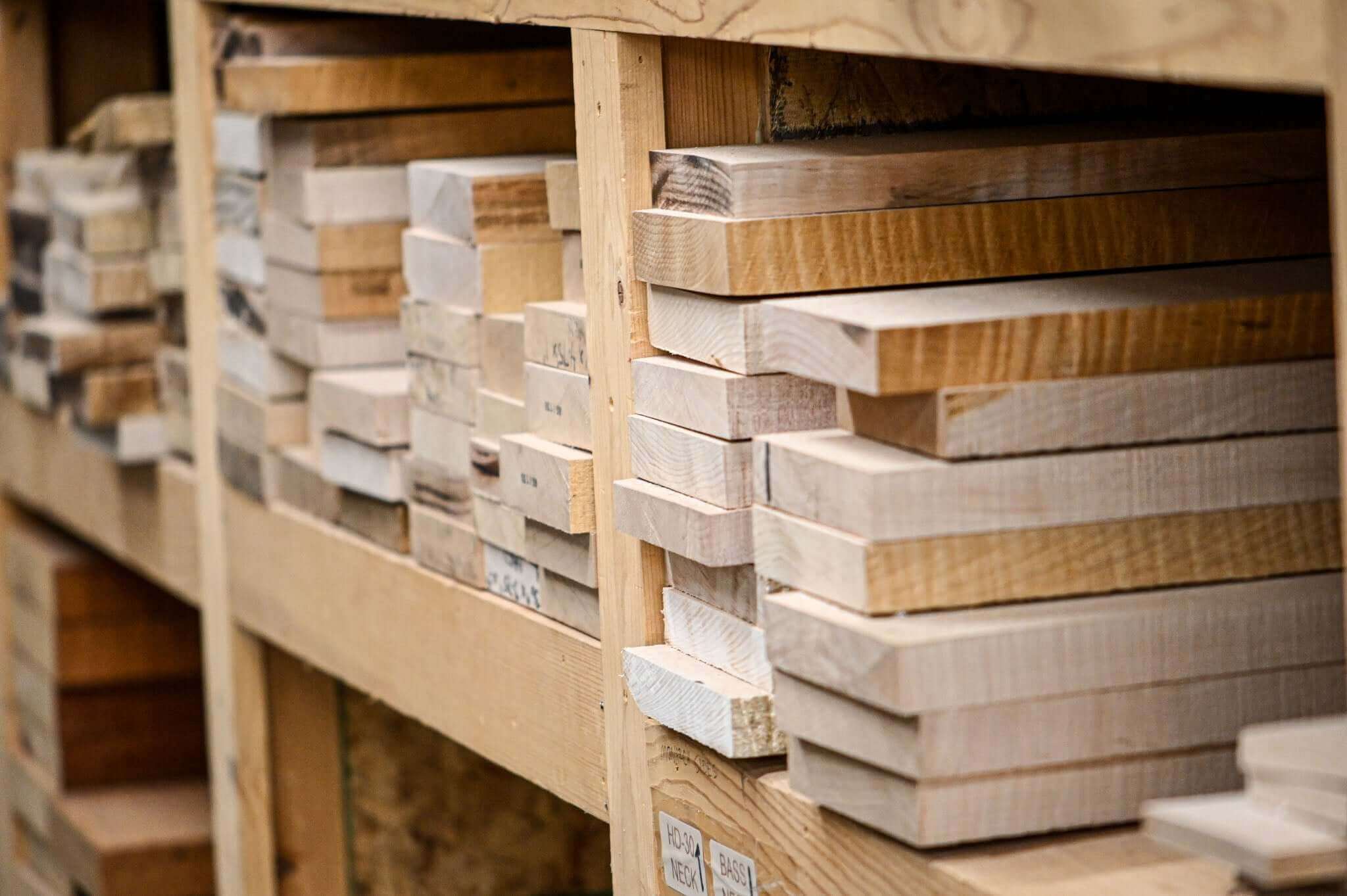
The craft does not stand still, so the learning does not stop. Materials change under regulation: when CITES tightened controls on rosewood (Dalbergia) species in 2016, every builder using those woods had to rethink sourcing and paperwork, and the rules have shifted again since. Tools change — CAD and CNC are now normal in many workshops, not exotic. Methods and measurement change as acoustics research feeds back into building. Short courses, conferences, and the published literature are how makers keep up. France's ITEMM, among others, runs a dedicated innovation pole for exactly this.
Where to learn: guitar-making schools worth knowing
There is no single ranking of lutherie schools, and reputation depends on what you want to build. The list below is established and verifiable, not exhaustive. Programs and dates change, so confirm current details with each school before you enrol.
Belforti Lutherie School — Paris, France. Modern lutherie taught on the workshop's own methods: CAD/CAM, supervised CNC, clean electronics, repeatable jigs. Formats run from three-day skills courses (professional setup, instrument design, refretting) through a three-week build of a complete guitar or bass from a kit, to a six-week custom design-to-build under one-to-one mentorship. Small groups, professional tools.
ITEMM — Le Mans, France. The Institut Technologique Européen des Métiers de la Musique, inaugurated in 1992, is the only institution of its kind: one school covering the building, repair, and tuning of guitar, piano, wind, and accordion. It runs state diplomas (CAP and the Brevet des Métiers d'Art, including a guitar option), a nine-month intensive guitar-making program, continuing-education courses, and an acoustics research pole. It won the Bettencourt "Parcours" prize in 2021.
Roberto-Venn School of Luthiery — Phoenix, Arizona, USA. Founded in 1975 and nationally accredited, Roberto-Venn is among the oldest dedicated guitar-making schools in North America. Its core program is a five-month, roughly 880-hour course covering acoustic and electric construction and repair, from wood selection through finishing.
Galloup School of Guitar Building and Repair — Big Rapids, Michigan, USA. Founded by luthier Bryan Galloup, the school runs tiered long-term programs — journeyman through master — plus short-term intensives, taught alongside a working guitar shop and repair bench. Repair is treated as seriously as building.
American School of Lutherie — Portland, Oregon, USA. Run by Charles Fox, a pioneer of modern North American lutherie teaching who founded the Guitar Research & Design Center in the 1970s. Classroom and hands-on training for builders at all levels.
Chicago School of Guitar Making — Chicago, Illinois, USA. Part of Specimen Products; courses in guitar building, guitar repair, and tube-amp building.
Summit School of Guitar Building and Repairs — Qualicum, British Columbia, Canada. Small-group instruction, one or two students at a time, in courses ranging from a single day to a full year.
Crimson Guitars — Dorset, England. Founded by master luthier Ben Crowe in 2005. In-person courses from a few days to a three-month intensive, plus a large online building academy and a substantial following built on its YouTube channel. Electric-leaning, though courses can cover acoustic.
Totnes School of Guitarmaking — Devon, England. Twelve-week courses, run several times a year, covering guitars and related instruments.
School of Musical Instrument Crafts (Newark) — Newark, England. Part of Lincoln College; a two-year classical guitar-making program alongside its three-year violin-family course.
The European Institute of Guitar Making — Granada, Spain. Founded by Stephen Hill, teaching since 1994 in the heartland of Spanish guitar making. A month-long intensive in traditional classical and flamenco (Granada-style) construction, rosette work included.
Musikinstrumentakademien — Stockholm, Sweden. A three-year program in which students build a classical, a steel-string, a modern, an electric, and an archtop guitar, with coursework in tonewood, restoration, CAD, and finishing. The most comprehensive course on this list; a strong final exam earns a journeyman's licence.
A related but separate tradition: the violin family
The most famous names in lutherie are violin schools, and they teach a different craft. France's École Nationale de Lutherie de Mirecourt, founded in 1970 at the Lycée Jean-Baptiste Vuillaume, is the country's only public school for quartet (violin, viola, cello) making — in a town that has made violins since the 1600s. Italy's Cremona, the city of Stradivari, and Germany's Mittenwald are likewise long renowned for violin-making. If you want to build guitars, these are not your schools; if you want to understand where the prestige of the trade comes from, this is where it sits.
Choosing a luthier
Forget the diploma. There is no certificate that guarantees a good instrument, and its absence disqualifies no one. Judge the work and the way the business is run.
The work. Ask to see finished instruments and completed repairs. Ask why this wood, this neck profile, this wiring. A serious maker explains choices and trade-offs in plain terms, without mysticism. Vague answers and tone-talk are a warning sign.
Reputation. Look for real customers and instruments in use, not a wall of star ratings. Other players are a better reference than a review count.
A registered, transparent business. The trade is not licensed, but the business still has to be real. In France, expect a registered company with a SIRET number, written estimates, clear pricing, and professional liability insurance. Many newer makers work under the micro-entrepreneur regime — that is legal and common, and it tells you about their tax status, not their skill. So, again: judge the work.
The workshop. If you can visit, an organised, properly equipped workshop tells you more than a website does.
Professional bodies. In France, guitar and plucked-string makers have a trade association, the APLG (Association Professionnelle des Luthiers artisans en Guitare et autres cordes pincées), founded in 2013 with around a hundred members. Membership signals that a maker is engaged with the profession. It is a signal, not a license — and plenty of excellent independents belong to nothing.
None of this requires a certificate. There is no document that guarantees a good instrument. Skill is demonstrated, not credentialed. Judge the work.
Share:
Tone & Terminology
Pickups Unveiled