



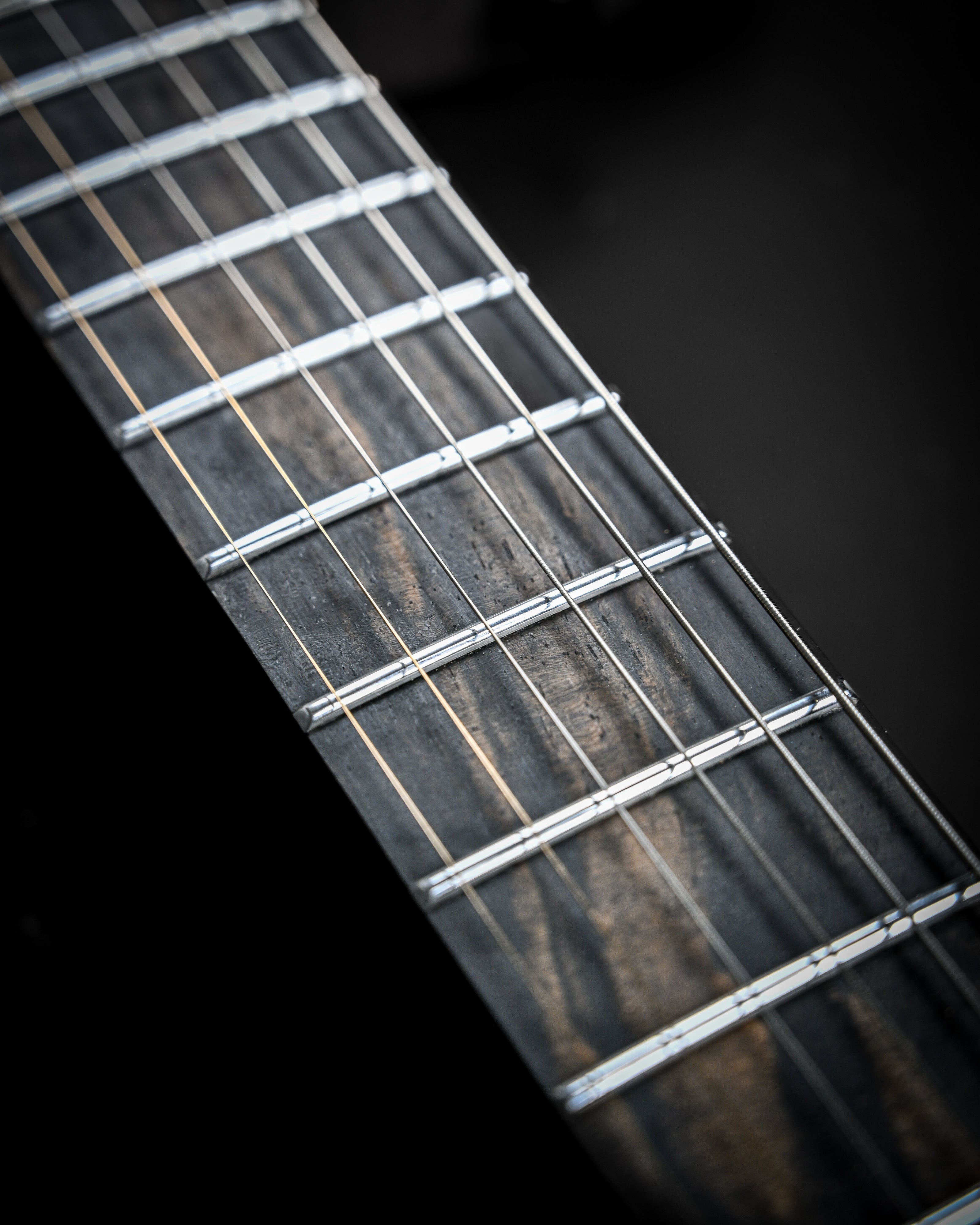
En este nuevo episodio de la serie: «Yo tengo razón, tú estás equivocado »: trastes de acero inoxidable.
Agárrate bien al asiento, que esto se va a poner movido, igual que tu diapasón.
Hay una frase que se repite, casi por reflejo, cada vez que alguien entra en una taller pregunta por un modelo nuevo o un reentrastado. Acero inoxidable. Siempre acero inoxidable. Como si elegir el metal del alambre de trastes una decisión similar a elegir la pastilla, la madera o el puente y como si la respuesta ya estuviera decidida.
No está zanjado. Simplemente se ha repetido tantas veces que ya nadie se molesta en insistir en fondo.
Pues déjame dar fondo.
trastes de acero inoxidable trastes vendido a todo el músico como una mejora universal mejora como si cualquier guitarra, independientemente de su estilo o uso, fuera simplemente mejor con ellos. Esa es la afirmación que quiero desmontar. Porque cuanto más se analiza lo que trastes hacen trastes de acero inoxidable, más claro queda que resuelven un problema que la mayoría de los guitarristas no tienen, se asientan sobre tapa estructura tapa no pueden estabilizar y, a lo largo de la vida útil del instrumento, suponen un coste significativamente mayor de lo que nadie admite.
Se lo demostraré.
Por qué los trastes de acero inoxidable son un problema

Empecemos con el problema principal, porque es el que casi nunca se discute con honestidad.
La promesa implícita de trastes de acero inoxidable trastes esa que te lleva a elegirlos para una guitarra nueva, aunque nadie lo diga en voz alta— es que estabilizan el instrumento. Que la guitarra mantendrá su ajuste durante más tiempo. Que los trastes permanecerán nivelados durante más tiempo. Que no solo estás comprando durabilidad, sino también consistencia.
No es así.
mástil de una guitarra mástil una estructura de madera. El diapasón de madera. El mástil es de madera. El alma una viga de madera alma a la tensión de las cuerdas de acero.
Todo ese sistema respira, se expande, se contrae y se desplaza con cada cambio de humedad y temperatura al que se ve sometido. Göken y sus colaboradores, en un artículo sobre el comportamiento de amortiguación de la pícea publicado en *Acta Physica Polonica A* (2014), documentan un hecho obvio, pero que habitualmente se pasa por alto: la madera es viscoelástica, y su respuesta mecánica —incluida su estabilidad dimensional— depende de la humedad. Los trastes sobre tapa ese material y se mueven con ella.
Un mástil estaba perfectamente nivelado en tu taller en enero no lo estará en julio. Eso no es un defecto. Es simplemente que la madera es así.
trastes de acero inoxidable no trastes más inmunes a esto que los de níquel. El metal no se deforma a escala molecular, pero la línea del traste sí se desplaza, porque la madera que hay debajo se desplaza. Una guitarra con trastes de acero inoxidable trastes desajustará, necesitará un ajuste y, con el tiempo, habrá que nivelarla —exactamente por las mismas razones que una guitarra con trastes de níquel, en más o menos el mismo plazo de tiempo—.
El material no importa. La arquitectura se mueve.
Esta es la parte de la conversación en la que casi nunca se es sincero. El músico al acero inoxidable esperando que toda la experiencia se estabilice. Pero no es así. Se queda con la misma guitarra, con la misma madera, haciendo lo mismo… y ha pagado un sobreprecio considerable por trastes , en su día a día como guitarrista, probablemente nunca llegarán al punto de desgaste que justificó la mejora primer lugar.
Dejarás de tocar antes
Lo que nos lleva al tema del desgaste en sí. Y es que la mayoría de los músicos tienen una percepción tremendamente distorsionada de la rapidez con la que se desgastan trastes de níquel.
Un traste de alpaca (níquel-plata), en una guitarra que se toca regularmente —varias horas a la semana, géneros variados, con bending y vibrato normales— desarrollará un desgaste visible a lo largo de varios años. No meses. Años.
La primera nivelación y coronado que suele necesitar una guitarra se realiza entre los cinco y los diez años de vida útil. Un reentrastado completo, dependiendo del músico, suele realizarse entre los quince y los treinta años. Muchas guitarras nunca lo necesitan, simplemente porque sus propietarios no las tocan lo suficiente.
Ahora, piense en quién es usted realmente.
Si tocas la guitarra una o dos horas cada noche, compones canciones, improvisas con amigos o grabas en casa, trastes más que tu interés por el instrumento. Probablemente por un margen considerable. El material de los trastes no es el factor limitante en tu relación con esa guitarra. Ni siquiera se le acerca.
Si es un profesional de gira que toca de cuatro a seis noches a la semana, durante todo el año, en un estilo que implica bending agresivos —sí. El acero inoxidable le ahorrará trabajos de retrasteado. Ese es un beneficio real y cuantificable. También es una población de músicos que representa una fracción ínfima de las personas que especifican acero inoxidable en nuevas construcciones.
El resto es ansiedad, fondo venden como una ventaja.
La culpa es de los shredders
En este caso, conviene conocer un poco de historia, ya que a nadie a quien le venden trastes de acero inoxidable trastes cuenta la historia que hay detrás de ellos.
alambre de trastes de acero inoxidable convencional no alambre de trastes nada nuevo. Durante la mayor parte del siglo XX, todas las guitarras que importaban —todas las Stratocaster, todas las Les Paul, todas las Telecaster que aparecen en todos los discos que hayas escuchado— tenían trastes de níquel-plata al 18 %. El material era lo suficientemente bueno. El desgaste que producía era precisamente el que definía la sensación que transmitía una guitarra bien tocada bajo tus dedos.
alambre de trastes de acero inoxidable alambre de trastes gracias a proveedores como Jescar y Dunlop; el discurso comercial de Jescar describe abiertamente el acero inoxidable como «el tipo de alambre de trastes más duro alambre de trastes puede encontrar», prometiendo «una mayor resistencia al desgaste para una vida útil más larga de los trastes». Según ellos, y en su aplicación original, se trataba de una solución a un problema concreto. Ese problema afectaba a un colectivo específico.
La población era el escenario del shred y del «extended-range» de finales de los años 80 y los 90. Fuertes bendings, vibrato rápido, horas al día en las mismas tres posiciones, cambios frecuentes de cuerdas con cuerdas redondas de acero inoxidable. Esos guitarristas realmente desgastaban trastes de níquel. El acero inoxidable era una herramienta de trabajo, diseñada para soportar un uso realmente intensivo.
Lo que ocurrió a continuación es la parte de la historia que se pasa por alto discretamente. El marketing siguió a la oferta. Lo «premium» se convirtió en «premium», y lo «premium» se volvió aún mejor. Para cuando el aficionado músico de a pie músico en la tienda de un fabricante en 2015 o 2020 y dijo con naturalidad «de acero inoxidable, por favor», ya nadie se preguntaba si el problema original era algo que les correspondiera resolver.
Casi nunca lo es.

Para fines legales, no incluiremos ninguna imagen de trituradora. Aquí hay papel triturado real, absolutamente no relacionado con este artículo.
Los cálculos

Ahora podemos hacer los cálculos.
Un reentrastado de alpaca, en un taller especializado, cuesta entre trescientos y quinientos euros, dependiendo de la binding, diapasón y la región. Un reentrastado de acero inoxidable reentrastado costar el doble —a menudo más—, ya que el trabajo es más complicado, las herramientas se desgastan más rápido y muchos talleres aplican un recargo simplemente porque son pocos los luthiers dispuestos o equipados para realizar el trabajo con precisión.
The Music Gallery, un reparación estadounidense, se niega a utilizar trastes de acero inoxidable trastes su máquina de nivelación Plek: este metal desgasta la rueda de corte tan rápidamente que resulta económicamente inviable. No se trata de un argumento de marketing. Es un taller en activo que señala un problema por escrito.
El nivel de los trastes en una guitarra con trastes de níquel oscila aproximadamente entre uno y doscientos. En las de acero inoxidable, también es aproximadamente el doble, ya que la misma dureza que resiste el desgaste al tocar también resiste las limas, las gubias y las herramientas de coronado que se utilizan para nivelar los trastes.
Ahora imaginemos un caso realista. Un músico toca en serio y con regularidad desde hace más de quince años. Con trastes de níquel: probablemente dos cambios de trastes y un reentrastado ese tiempo —tres trabajos, que sumarían entre ochocientos y mil euros en total—. Con trastes de acero inoxidable: ningún cambio de trastes, pero uno o dos niveles al doble de precio. Quizás entre cuatrocientos y seiscientos euros en total.
La guitarra con trastes de acero inoxidable le ahorra, en este escenario, unos pocos cientos de euros a lo largo de quince años. Quizás.
Y le cuesta, a cambio:
— Un coste inicial considerablemente mayor en una guitarra de nueva fabricación — El doble mantenimiento en cada pasada de nivelación — Oferta limitada de talleres dispuestos a trabajar en el instrumento — Mayor desgaste del diapasón la instalación y la retirada — Ninguna mejora en absoluto en cuanto a tocabilidad, la estabilidad del tono o la experiencia real de tener la guitarra
Si se analiza con honestidad, no se trata de una victoria. Es un paso lateral, con una cuota de inscripción más elevada, que se presenta como una mejora».
No se puede oír

Hay músicos que dicen que el acero inoxidable tiene un sonido más brillante. Otros afirman que produce más ataque, más sustain y más claridad. He oído esta afirmación en taller, en publicaciones impresas y en todos los foros de Internet.
Es, en el mejor de los casos, marginal. En el peor, es un placebo envuelto en una etiqueta de precio.
El tono de una nota pulsada viene determinado, en su mayor parte, por la cuerda, la pastilla, la madera del cuerpo tensión y las manos músico. El traste en sí mismo aporta una pequeña huella mecánica derivada del contacto; y sí, en condiciones de laboratorio, se pueden medir diferencias minúsculas en la envolvente del ataque entre un traste de acero inoxidable y uno de níquel.
Pero lo que se puede medir en un laboratorio y lo que se oye a través de un amplificador en una sala no es lo mismo. Cualquier músico afirme poder distinguir con fiabilidad la diferencia entre el níquel y el acero inoxidable en la misma guitarra, con el mismo ajuste y en condiciones de prueba a ciegas, o bien se encuentra en circunstancias verdaderamente excepcionales o bien te está vendiendo algo.
Si quieres que tu guitarra suene más brillante, cámbiate las cuerdas. Cámbiate pastillas. Cámbiate la tapa del potenciómetro de tono. El material de los trastes no es la palanca adecuada que hay que accionar.
Así que esos son los argumentos en contra. Los trastes estabilizan nada. La mayoría de los guitarristas nunca llegarán al punto de desgaste que justifique su uso. El cálculo de costes no sale a cuenta. El argumento del sonido es un efecto placebo.
Ahora bien, voy a ser justo con el tema, porque la postura que estoy criticando no es trastes de acero inoxidable. La postura que estoy criticando es que trastes de acero inoxidable trastes mejores en todos los casos y que siempre se deberían especificar. Son afirmaciones muy diferentes, y la diferencia es precisamente el tema central del resto de este ensayo.
De acuerdo, es bueno en tres aspectos
Seamos precisos sobre lo que hace el material, porque existen beneficios reales y prefiero nombrarlos honestamente antes que fingir que no existen.
La primera es la resistencia al desgaste. El acero inoxidable es significativamente más duro que la aleación tradicional de níquel-plata que se ha utilizado en prácticamente todos los instrumentos con trastes fabricados desde principios del siglo XX. Esa dureza hace que resista el lento surco y la corrosión que se producen en trastes de níquel trastes años de contacto con las cuerdas entorchadas bajo presión de flexión. Un traste de acero inoxidable mantendrá su perfil durante más tiempo. Una guitarra equipada con trastes de acero inoxidable, en teoría, trastes menos intervalos entre cada nivelación de trastes y entre cada cambio completo de trastes.
El segundo es la sensación al tacto. Un traste de acero inoxidable pulido ofrece una sensación ligeramente más resbaladiza y vítrea bajo los dedos al hacer bendings que uno de alpaca pulida. A algunos músicos les encanta —especialmente a los guitarristas solistas rápidos que buscan que el bending se deslice. Otros lo encuentran demasiado resbaladizo y prefieren el agarre muy ligero de la alpaca. Es una preferencia, no una mejora objetiva, pero no es insignificante.
La tercera es la resistencia a la corrosión. El acero inoxidable, como su nombre indica, no se oxida como lo hace el níquel. En una guitarra que se encuentra en un entorno húmedo, en músico manos músico una acidez especial o en un instrumento que se deja sin tocar durante meses entre una sesión y otra, trastes de acero inoxidable trastes un aspecto más limpio durante más tiempo. Es cierto. Puede que sea un factor secundario para la mayoría de los músicos, pero para algunos es importante.
Esa es toda la ventaja. Resistencia al desgaste, una sensación particular y una oxidación más lenta. Tres beneficios reales, ninguno de los cuales es ficticio.
La pregunta —la única pregunta que realmente importó— es si esos beneficios, para su forma de tocar, justifican todo lo que describí en la primera parte de este artículo.
¿Inoxidable, quién?
Hay una cosa más que el marketing rara vez le dice. No todo el acero inoxidable es el mismo acero inoxidable.
Los fabricantes de trastes de alta gama —Jescar, Sintoms y algunos otros— fabrican alambre de trastes de acero inoxidable alambre de trastes aleaciones específicas (la serie 47XXX de Jescar, por ejemplo) que realmente ofrecen la durabilidad que prometen. La resistencia al desgaste es real, la dureza es constante y el material se comporta de forma predecible durante la instalación y la nivelación. Esa fue la razón original por la que se apostó por el acero inoxidable, y eso es lo que realmente buscan los profesionales que lo eligen.
Pero "acero inoxidable" es una categoría, no una especificación.
Existe un amplio mercado de alambre de trastes de acero inoxidable genérico alambre de trastes importaciones más baratas, proveedores sin marca, aleaciones desconocidas— que se instala y se vende con exactamente el mismo nombre y con exactamente la misma mejora , pero cuyo rendimiento no se acerca ni de lejos al del original. Es más blando que el acero inoxidable de primera calidad. Menos resistente al desgaste. A veces es más difícil de trabajar y menos duradero, lo que supone lo peor de ambos mundos.
El cliente casi nunca sabe cuál le van a instalar. La palabra «inoxidable» en la ficha técnica no se lo indica. El sobreprecio tampoco se lo indica: la instalación del acero inoxidable de alta calidad y del genérico cuesta más o menos lo mismo, porque lo que encarece el trabajo es la mano de obra, no el alambre. Y una vez trastes las trastes , no se aprecia fácilmente a simple vista, ya que la diferencia visible entre el acero inoxidable de alta calidad y el genérico solo se nota tras años de desgaste comparativo.
Este es el problema secundario que mejora especificar el acero inoxidable como mejora predeterminada. Aunque realmente quieras lo que se supone que ofrece el acero inoxidable, no tienes forma de comprobar que lo estás obteniendo, a menos que lo preguntes expresamente, indiques el nombre del fabricante y confirmes qué es lo que se está instalando. La mayoría de los constructores no facilitan esa información por iniciativa propia. La mayoría de los usuarios no saben que deben preguntar.
Así que, cuando digo que el acero inoxidable es un desperdicio de dinero para la mayoría de los músicos, lo digo por partida doble. El sobreprecio no se justifica para el tipo de interpretación que la mayoría de ustedes realmente realiza. Y el sobreprecio a menudo ni siquiera compra lo que promete.
*Análisis Matizado Obligatorio
Hay músicos para quienes el acero inoxidable es la respuesta correcta, y quiero nombrarlos claramente.
Músicos profesionales en gira que dan ciento cincuenta conciertos al año, con una técnica agresiva, y que, de otro modo, tendrían que reentrastado instrumento cada dos o tres años. Músicos de sesión cuyos instrumentos deben ser fiables a lo largo de miles de tomas. Bajistas con cuerdas redondas de acero inoxidable que desgastan trastes de níquel tan trastes que el ahorro en material es considerable. Músicos que tocan en entornos extremadamente húmedos o costeros, donde la resistencia a la corrosión es una preocupación real en cuanto a la durabilidad. Músicos a los que se les ha diagnosticado alergia al níquel y para quienes alambre de trastes estándar no alambre de trastes una opción por motivos médicos.
En esos contextos, el acero inoxidable justifica su sobreprecio. Es la herramienta adecuada para un trabajo específico.
El error no está en el material. El error está en dar por sentado que todo músico «ese» músico. El guitarrista aficionado que toca una hora cada noche no es «ese» músico. El coleccionista que tiene seis instrumentos y va alternándolos no es «ese» músico. El aficionado que toca los fines de semana no es «ese» músico.
La mayoría de vosotros no sois tan músico». Y elegir acero inoxidable para vuestro próximo proyecto solo porque lo habéis leído en Internet es, en el sentido económico más estricto, un impuesto sobre la ansiedad. Estáis pagando un sobreprecio por resolver un problema que nunca tendréis.
Las Opciones que la Gran Industria del Acero Oculta

Aquí está la otra cosa en la que la conversación acero inoxidable versus níquel se equivoca: se presenta como una dicotomía. Níquel blando, acero inoxidable duro. Elija uno.
No es una dicotomía, y no lo ha sido durante mucho tiempo.
El alambre de trastes estándar con alambre de trastes vienen la mayoría de las guitarras de fábrica es una aleación de níquel-plata al 18 % —un nombre que puede llevar a confusión, ya que en realidad contiene alrededor del 18 % de níquel y el resto es principalmente cobre y zinc—. Es blando, fácil de trabajar y ha sido el estándar del sector durante décadas.
Pero los fabricantes de trastes también producen una aleación con un 22 % de níquel, que es notablemente más dura y resistente al desgaste que la estándar del 18 %, sin llegar ni de lejos a la dureza del acero inoxidable. Se instala igual que el níquel. Se nivela igual que el níquel. Cuesta un poco más que el níquel y bastante menos que el acero inoxidable. Para un músico toca con más intensidad que la media, pero que no está de gira trescientas noches al año, suele ser la solución adecuada que nadie le ha propuesto.
Luego está el EVO Gold, una aleación de cobre, titanio y estaño fabricada por Jescar. Es más dura que el níquel al 18 %, más blanda que el acero inoxidable, hipoalergénica para los músicos sensibles al níquel, y tiene un cálido color dorado que a algunos constructores les gusta y a otros les disgusta. Se puede trabajar con herramientas estándar. reentrastado de los trastes se realiza como debe hacerse. Muchos luthiers en activo la consideran el material más infravalorado que se utiliza actualmente.
El hecho de que a la mayoría de los músicos nunca se les haya ofrecido ninguna de estas opciones —que la conversación siempre se limite a níquel o acero inoxidable— dice más sobre cómo la industria comercializa el material de los trastes que sobre la gama real de opciones. La dicotomía es falsa. El punto intermedio existe. En muchos casos, el punto intermedio es la respuesta.
Sinceramente
Si está construyendo o encargando un instrumento y desea la versión honesta de la conversación, aquí la tiene.
trastes de alpaca no trastes una solución de compromiso. Tampoco suponen una pérdida de calidad. Son el material sobre el que se ha construido toda la historia de la fabricación de instrumentos de cuerda con trastes, con el que probablemente se grabaron todas esas grandes grabaciones que tanto te han gustado y que ha demostrado, a lo largo de aproximadamente un siglo de luthería profesional, que cumple su función a la perfección para la inmensa mayoría de los músicos.
Si toca de forma profesional, intensa y frecuente, especifique trastes de acero inoxidable y no vuelva a preocuparse. Se amortizarán.
Si tocas con más intensidad de lo habitual pero no estás de gira a tiempo completo, pregúntale a tu luthier el 22 % de níquel o el EVO Gold. Obtendrás la mayor parte de la mejora en durabilidad sin el mantenimiento ni los problemas de afinación que conllevan las otras opciones.
Si tocas de forma normal, como hacemos la mayoría de nosotros, elige el níquel estándar. Guárdate la diferencia. Gástalo en cuerdas, en un ajuste, en un estuche, en una clase, en cualquier otra cosa que influya más en tu forma de tocar que la aleación de los trastes. Cuando, dentro de diez o quince años, tus trastes un nivelado, págalo. Te seguirá saliendo más mejora que la mejora , y habrás pasado esos diez años con una guitarra que sonaba exactamente tan bien como lo habría hecho una de acero inoxidable.
mejora trastes no trastes la mejora». Nunca lo fueron.
¿No está de acuerdo? No importa, yo tengo razón, usted no.
Nota: Todos nuestros artículos están escritos originalmente en francés y luego traducidos. La traducción es activa, no se limita a una traducción palabra por palabra, sino que se adapta cuando es necesario para ajustarse mejor al idioma de destino. Esto puede generar un cambio en el tono o el contenido, lo cual aceptamos y aprobamos.
Compartir:
La Verdad sobre los Acabados de Guitarra
IRYW: Las guitarras vintage son una moda sobrevalorada
1 comentario
Mira este tema desde esta perspectiva. Si tienes una Gibson SG Standard vintage de 1970 (modelo del 75.º aniversario), comprada cuando era adolescente (ahora tengo 73 años), como es mi caso, y los trastes eran los de alambre de níquel-plata, bajos y anchos, de Gibson. A las guitarras que tenían estos trastes las llamabanFretless ». Después de 55 años tocándola, solo ahora me he enterado de las dimensiones de esos trastes. Durante los últimos 20 años, más o menos, he estado mirándolos trastes pensando: «Vaya, tengo que cambiar los trastes de esta guitarra». Sin embargo, al examinar detenidamente el desgaste de los trastes a lo largo de todos estos años, se observa que no es nada significativo, sobre todo si se tiene en cuenta el tipo de trastes se trata. A lo largo de las décadas, esta guitarra no ha presentado ningún problema en lo que respecta a los trastes al desgaste de los mismos.