



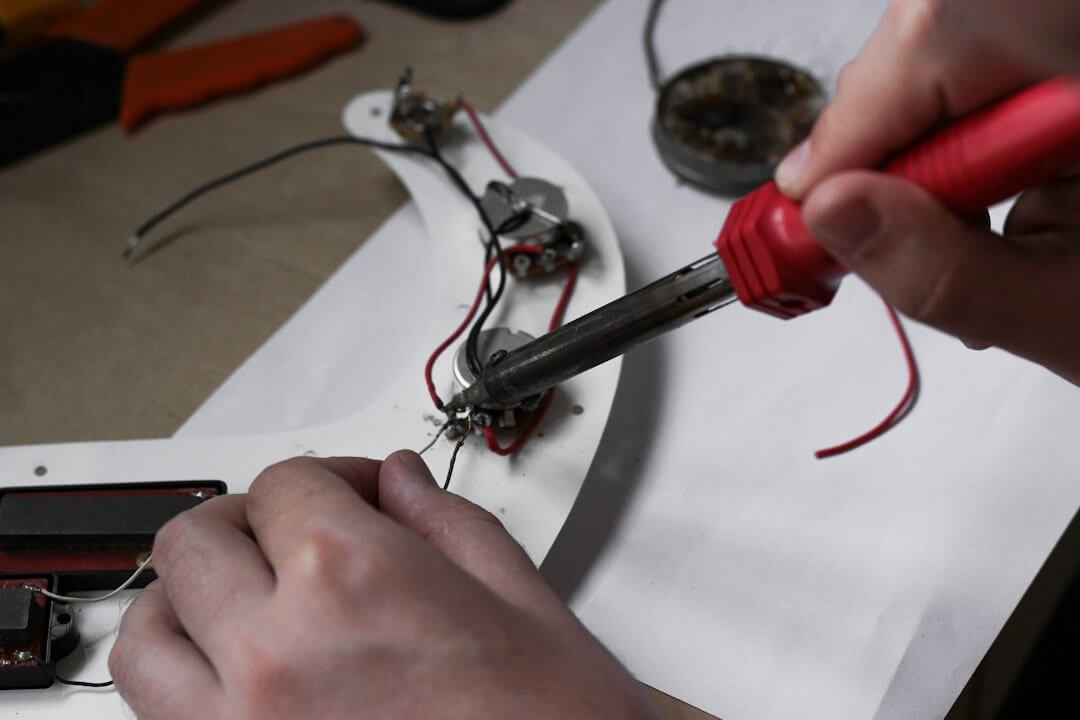
ギターのポテンショメータについて、あまり考えたことがないという方も多いのではないでしょうか。それらはピックガードの下やコントロールキャビティの中に隠れており、音がザラついたり完全に途切れたりしない限り、ただ……機能しているだけです。ノブを回せば音量が変わり、トーンが調整されます。とてもシンプルです。
しかし、実際にはそう単純な話ではありません。あの小さくて安っぽく見える部品たちは、ギターを接続している間、たとえ触れていなくても、毎秒、あなたの信号に驚くほど大きな影響を与えているのです。ポットの裏面に印字された値、内部のテーパーの種類、そしてその製造品質はすべて、あなたのトーンに直接的かつ測定可能な影響を及ぼします。それは、オーディオマニア向けのプラシーボ効果のような微妙なものではなく、 「なぜあなたのストラトキャスターは、友人の全く同じストラトキャスターよりも暗い音色なのか」という、そんな明確な形で影響するのです。
これをきちんと整理してみましょう。
ポテンショメータの実際の働き
ポテンショメータは可変抵抗器です。3つの端子と、ノブを回すと抵抗トラック上を移動する回転接点(ワイパー)を備えています。ワイパーの位置を変えることで、回路内の2点間の抵抗値を変えることができます。
ギターにおいて、ポットには主に2つの役割があります:
音量調節。このポットは、ピックアップからの信号とアースの間で分圧器として機能します。音量を下げると、信号が出力ジャックに到達する前に、より多くの信号がアースへバイパスされます。音量を上げると、信号は最小限の損失で通過します。仕組みは単純ですが、この文中の「最小限の損失」という言葉には大きな意味が込められており、これについては後ほど詳しく説明します。
トーンコントロール。ここでは、ポテンショメータがコンデンサと連動して動作します。これら2つが組み合わさることでローパスフィルターが形成されます。ポテンショメータは、コンデンサによるフィルタリング効果をどの程度適用するかを制御します。トーンノブを下に回すと、コンデンサがより多くの高域をアースに流します。上に回すと、コンデンサはほぼバイパスされます。ポテンショメータの値によって、そのフィルタリングの範囲と特性が決まります。
他にも用途はありますが(アクティブ・ベースのブレンド・ノブや、内蔵プリアンプの中域セレクターなど)、ギター用ポテンショメータの95%はボリュームとトーンに用いられているため、ここではその点に焦点を当てます。
なぜ抵抗値が想像以上に重要なのか
このセクションは、楽器に対する考え方を一変させる内容です。この記事から一つだけ覚えてほしいことがあるとすれば、それはこれです。たとえすべてのノブを10に回していたとしても、今この瞬間、あなたのポット(可変抵抗器)の抵抗値が音色を形作っているのです。
その理由はこうです。ポテンショメータは、たとえ全回転させた状態でも、依然としてアースへの抵抗経路を形成しています。ピックアップの信号は、ポテンショメータの総抵抗を負荷として「認識」します。その抵抗が低いほど、高周波成分が多くその経路を通じて漏れ出てしまいます。抵抗が高いほど、その高音成分が多く残ることになります。
これは設計上の欠陥ではなく、回路の仕組みによるものです。そして、これが、ピックアップの種類ごとに異なるポテンショメータの値が組み合わされる理由なのです。
共通の価値観とその具体的内容
250kΩ— シングルコイル・ピックアップの標準仕様です。 クラシックな仕様のストラトキャスター、テレキャスター、ジャズマスターはすべて250kのポットを採用しています。シングルコイルは本質的に明るい(時には過度に)音色ですが、250kの負荷が穏やかな高音抑制の役割を果たし、音楽性を保つために高音域を程よく丸く仕上げます。この負荷がなければ、多くのシングルコイルは、特にブリッジポジションにおいて、薄っぺらで刺々しい音になってしまうでしょう。
500kΩ— ハムバッカーの標準値です。ハムバッカーはシングルコイルよりも本質的に温かみがあり、厚みのある音色を持つため(これは文字通り、ハムノイズを打ち消す過程で高音域成分も一部打ち消してしまうという設計上の特性によるものです)、トレブル・ブリードの必要性が低くなります。 500kΩのポットは負荷が小さいため、高次倍音をより多く残すことができます。レスポールに250kΩのポットを装着すると、音色が明らかに暗く、濁ったものになります。ストラトに500kΩのポットを装着すると、音色は明るくアグレッシブになります。これは場合によっては心地よいものですが、そうでない場合もあります。
1MΩ— 異色の存在です。フェンダーのオフセット・ギター(ジャズマスター、ジャガー)の一部や、高音を最大限に生かすことを目的としたカスタム・ギターなどで見かけることがあります。 1MΩのポットはピックアップへの負荷がほとんどないため、ピックアップが生み出す音をほぼすべて聴くことができます――良い面も悪い面も。その結果、ピックアップや回路の構成によっては、ディテール豊かで鈴のような音色になることもあれば、耳障りで硬質な音になることもあります。
25kΩと50kΩ— アクティブ回路の領域です。ギターに電池駆動のプリアンプ(EMGピックアップ、アクティブ・ベース回路、オンボード・ブースト・システムなど)が搭載されている場合、プリアンプの出力インピーダンスが低いため、ポテンショメータの値はトーンにほとんど影響を与えません。これらの低い値が採用されるのは、プリアンプのバッファ付き信号と相性が良いからです。 もし誤ってパッシブギターに25kΩのポットを取り付けてしまうと、まるでアンプに毛布をかぶせたかのような音になり、高音域がほぼすべて失われてしまうでしょう。
あまり目にすることのない価値観
300kΩ— 一部のヴィンテージ・ギブソン製楽器に見られる値です。これは250kΩと500kΩの中間に位置する、音色のバランスが取れた値です。P-90を搭載したギターでは、ハムバッカーほど重厚ではなく、ストラトのシングルコイルほど鋭くもない、適度な明るさを持つサウンドが求められるため、この値を特に好んで選ぶプレイヤーもいます。
550kΩ— 現代的な改良版。CTSなどのメーカーは、標準的な500kΩのポテンショメータに代わる、高精度で高品質な代替品としてこれを製造しています。抵抗値がわずかに高いため、高音域がより豊かに再現され、公差が厳格(安価なポテンショメータに見られる±20%ではなく、±5~10%)であるため、価格に見合った性能が確実に得られます。
実社会での事例
修理台でよく見かける状況があります。ギターの音が「鈍い」とか「こもっている」と言って持ち込んできた人が、それがピックアップのせいだと確信していて、交換したいと望んでいるのです。 ポテンショメータを測定してみると、220kΩという値が出てきます。これは安価な250kΩポテンショメータの許容範囲内ではありますが、公称値よりかなり低い数値です。あるいは、オンラインで購入した交換用配線ハーネスに付属していたからという理由で、ハムバッカーに250kΩのポテンショメータを取り付けてしまっているケースもあります。
解決策は、たいてい15ドルのポット交換で済むもので、200ドルもするピックアップの交換など必要ありません。これは、エレキギターの音質に関する問題の中で、最も一般的でありながら、最も見過ごされがちな原因の一つです。
テーパー:ボリュームノブが違和感(あるいは自然な感触)を与える理由
抵抗値が信号に対してポットがどのような作用を及ぼすかを決めるのに対し、テーパーはノブを回した際にその作用がどのように現れるかを決定します。こここそが、演奏時の感覚――つまりコントロールの「手応え」――が生まれる場所なのです。
オーディオ(対数)テーパ
人間の聴覚は、音の大きさを対数的に知覚します。音圧が2倍になっても、音は2倍には聞こえず、ほんの少し大きくなったように聞こえるだけです。オーディオ用テーパポテンショメータは、この特性を考慮して設計されており、抵抗値の変化の大部分を回転角の最初の部分に集中させています。
実際には、これは次のようなことを意味します。ノブを10から7あたりまで回すと、音量は緩やかに下がり――体感音量で10~15%程度低下します。その後、7から3にかけては、より顕著に下がります。3から0にかけては、急激に低下します。
音量調節の場合、これは自然な感覚です。なぜなら、実際の音量の変化と感覚が一致しているからです。音量の上限付近で微調整すると、音にわずかな変化が生じます。ノブは全域にわたって反応が良く、操作しやすいです。
オーディオ・テーパーは、ほぼすべてのギターやベースに搭載されているボリューム・ポットの標準仕様です。ギタリストがボリューム・ノブの手触りが「ちょうどいい」――つまり滑らかで操作感が安定している――と言う場合、それはたいてい、高品質なオーディオ・テーパー・ポットを指しています。
リニアテーパー
リニアテーパーポテンショメータは、抵抗値が一定の割合で変化します。50%まで回すと、全抵抗値の50%になります。数学的には理にかなっていますが、感覚的には違和感があります。
音量調節において、リニアテーパー方式は多くのプレイヤーにとって違和感があるようです。ノブを回しても最初の3分の1ほどは変化が感じられず、中盤で急に音量が下がり、下の方になると微調整に苦労することになります。故障しているわけではありませんが、抵抗の変化が音量の変化として感じられる割合と一致していないだけなのです。
しかし、トーンコントロールにはリニア・テーパーが好まれることが多く、その理由も納得のいくものです。トーンノブを回すときは、音量レベルではなくフィルターを調整していることになります。フィルターの効き具合がリニアに変化する方が、直感的に操作しやすいと感じられることが多いのです。つまり、ノブを下げても音色が徐々に、滑らかに暗くなるのに対し、オーディオ・テーパーのトーンポットでは高音が急にカットされてしまうことがあるからです。
とはいえ、絶対的なルールというわけではありません。すべての配線にオーディオテーパーを好む人もいれば、すべてにリニアを好む人もいます。また、一部のハイエンド配線ハーネスでは、その中間に位置する独自のテーパーを採用しているものもあります。
「ボリュームノブが壊れる」という問題
これもよく耳にする話です。プレイヤーがギターを持ってきて、「ボリュームノブは、最後まで回す直前のわずかな範囲まで動かないんですが、そこを過ぎると一気に最大音量からゼロまで下がってしまうんです」と言うのです。
10回中9回は、ボリューム位置にリニア・テーパーのポテンショメータが取り付けられている。ギターの電子回路、ピックアップ、配線など、すべては問題ないのだが、その用途にはテーパーが合っていないのだ。オーディオ・テーパーのポテンショメータに交換すれば、問題は解消する。
その逆のケースも、頻度は低いものの起こり得ます。トーン位置にオーディオ用テーパーポテンショメータを使用すると、トーンコントロールがオン/オフスイッチのように感じられることがあります。つまり、音が極端に明るくなったり、急に暗くなったりして、その間の実用的な調整範囲がほとんどないのです。リニアテーパーポテンショメータを使えば、その不自然さを滑らかにすることができます。
ポットの種類:標準的なロータリー式を超えて
ギター用ポテンショメータの大部分は、ごく一般的なロータリー型ポテンショメータ――シャフトが1本、抵抗トラックが1本、回転角度が270度――です。しかし、ギターに新たな穴を開けることなく、より複雑な機能を実現できる特殊なポテンショメータも数多く存在します。
プッシュ・プル・ポテンショメータ
これらはギターの改造において欠かせない定番パーツです。プッシュプル・ポットは、標準的なロータリー・ポットに、ノブを引き上げたり押し下げたりすることで作動するDPDT(双極双投)スイッチを組み合わせたものです。ロータリー機能は通常通り(音量やトーンの調整)動作し、スイッチによって追加機能が働きます。
一般的な用途としては、コイル・スプリッティング(ハムバッカーをシングルコイルに変える)、位相反転(ピックアップの極性を反転させて位相がずれたトーンを得る)、直列/並列切り替え、ブースト回路の作動などがあります。プッシュプル式の魅力は、既存のポット穴にそのまま取り付けられる点にあります。新たな穴あけ加工も不要で、外から見ても新しいハードウェアが目立つことはありません。
その代償となるのが操作感です。プッシュプル・ポテンショメータは標準的なポテンショメータよりもわずかに高さがあるため、一部のコントロール・キャビティではクリアランスの問題が生じる可能性があります。また、引き出す動作には多少の機械的な抵抗が伴い、安価なプッシュプル・ポテンショメータでは、回転動作がぎこちなかったり、操作感が曖昧だったりすることがあります。この点において、標準的なポテンショメータよりも品質が重要になります。
プッシュ・プッシュ・ポット
プッシュ・プルと同じ仕組みですが、スイッチは引き上げる/押し下げる動作ではなく、連続して押すことで切り替わります。よりさりげない片手操作ができるため、これを好むプレイヤーもいます。曲の途中で手のひらでノブを軽く叩くだけで、意図的に引き上げる動作をすることなくコイル・スプリットを有効にできるからです。
積み重ねた(同心円状の)鉢
これらは1本のシャフトに組み込まれた2つの独立したポテンショメータで、下部の大きなノブと上部の小さなノブという2つの別々のノブで操作されます。これらは多くのアクティブ・ベースに標準装備されており、1つのポテンショメータの位置で低音と高音のEQコントロールを必要とする場合に適しています。
同心円状のポットは、スペースが限られた楽器には最適ですが、操作がやや煩わしく感じられることもあります。内側のノブは小さく、外側のノブは両方が同時に動いてしまわないよう、慎重に握る必要があります。これは機能性と操作性のバランスをとった妥協案と言えるでしょう。
無負荷トーン・ポテンショメータ
これは、フェンダーが広めた巧妙な改造です。ノーロード・ポテンショメータは、時計回りに最大まで回した位置で抵抗経路の一部が除去されています。トーン・ノブを最大まで回すと、回路に対して全抵抗を提示する代わりに、ポテンショメータが完全に断線し、あたかもトーン・コントロールが存在しないかのような状態になります。
その結果、トーンノブを全開にした際、標準的なポットに比べてわずかに明るく、開放感のあるサウンドが得られます。これは、トーンノブを全開にした状態でも生じるわずかな高音域の減衰を排除したためです。その違いは微妙なものですが確かに存在し、トーンノブを常に10の位置に設定して演奏するプレイヤーにとっては、実質的に無料で明るさを手に入れられることになります。
構造:良質なポットと粗悪なポットの違い
すべての鍋が同じように作られているわけではありません。その違いは、あなたが思っている以上に重要な意味を持ちます。
線路の材料
カーボン製トラックが標準仕様です。安価で機能も良好であり、ほとんどのギターに採用されています。欠点は、カーボン製トラックは経年劣化により摩耗し、音が出ない箇所や雑音が発生しやすくなることです。ボリュームノブを回したときにパチパチという音がする場合は、カーボン製トラックが劣化している可能性が高いです。
サーメット(セラミックと金属の複合材)製のレールは、耐久性が高く、摩耗に強いのが特徴です。高級な鍋に使用されており、寿命が格段に長い反面、価格は高めです。
導電性プラスチック製のトラックは、最も滑らかな操作感と最長の寿命を誇ります。ギターではあまり見かけませんが、高級オーディオ機器ではよく使われています。もし、絹のように滑らかで、ざらつきが全くないノブを回した経験があるなら、それはおそらく導電性プラスチック製だったでしょう。
シャフトの種類とサイズ
これは、アップグレードの際に多くの人が直面する実用的な問題です。分割シャフト(中央に溝が入ったノブ加工が施されたもの)には、シャフトに押し込むだけで装着できるタイプのノブが適合します。一方、一体型シャフトには止めネジ式のノブが必要です。ノブを交換しない限り、これら2種類は互換性がありません。
次に直径についてですが、輸入ギター(Squier、Epiphone、韓国やインドネシア製のほとんどのモデル)では6mmのシャフトが標準的なのに対し、アメリカ製の楽器では1/4インチ(6.35mm)のシャフトが標準となっています。その差はわずか0.35mmですが、間違ったノブを取り付けると緩んでしまったり、まったくはまらなかったりするほど十分な差です。 ベルフォルティでは、DIYでのアップグレードの際にこの点が原因でトラブルになるケースが非常に多いため、両方のサイズを在庫しています。
寛容
これは、地味ながらも実際に重要な仕様です。許容誤差±20%の定格500kΩのポテンショメータは、400kΩから600kΩまでの範囲で測定される可能性があります。これは非常に広い範囲であり、400kΩと600kΩでは音に明らかな違いが生じます。安価なポテンショメータは、しばしば許容誤差範囲の極端な値に収まってしまうものです。
許容誤差が±5%または±10%のプレミアムなポテンショメータは、価格は高くなりますが、一貫性があり予測可能な結果をもたらします。当店では電子回路の全面オーバーホールを行う際、取り付け前にすべてのポテンショメータを測定し、回路全体で値を調整しています。これは些細な工程ですが、操作感や反応性に大きな違いをもたらします。
受動的 vs. 能動的:異なる世界、異なるルール
音色に影響を与えるインピーダンス値やテーパーについてこれまで述べてきたことは、すべてパッシブ回路に特に当てはまります。パッシブ回路とは、ピックアップからポット、そして出力ジャックへと信号が直接流れるもので、その間に電源を必要とする電子回路が一切ない楽器のことです。
アクティブ回路――つまり、内蔵プリアンプを備えた楽器、アクティブ・ピックアップ(EMG、Fishman Fluenceなど)、あるいはバッファ付きエレクトロニクス――では、そのルールは劇的に変わります。プリアンプの出力インピーダンスが低いため、ポテンショメータの抵抗値はトーンにほとんど影響を与えません。 アクティブ回路では、25kΩのポットも500kΩのポットも本質的に同じ音になります。これは、プリアンプが十分な電流で信号を駆動しているため、ポットの負荷が問題にならないからです。
アクティブ・ピックアップが低抵抗のポテンショメータ(25k~50k)を採用するのは、音質が優れているからではなく、プリアンプの出力特性と相性が良く、高抵抗のものを採用する音響的な理由がないためです。
実用的なポイント:アクティブ回路の楽器を改造する場合は、ポテンショメータの値についてあまり気にする必要はありません。一方、パッシブ回路の楽器を改造する場合は、ポテンショメータの値を変えることが、最も大きな効果をもたらす変更の一つとなります。
実際に目にするブランド
CTS— アメリカ製およびブティック・ギターの業界標準。滑らかな動作、高い信頼性、そしてハイエンドモデルでは優れた公差精度を誇ります。ポットを交換する際、確実な選択肢をお探しなら、CTSが最適です。
Bourns— 極めて滑らかな回転と低ノイズで知られています。ボリュームのスウェルを多用するプレイヤーや、コントロールの操作感にこだわるプレイヤーに好まれています。CTSよりも若干高価ですが、重要な用途にはその価値があります。
Alpha— ミドルレンジや輸入ギターの主力部品です。機能性は申し分なく、品質も比較的安定しており、CTSやBournsよりもかなり安価です。もしあなたのギターがアジアの工場で製造されたものなら、ほぼ間違いなくAlpha製のポットが搭載されています。これらは悪くありませんが、高級品ほど長持ちせず、操作感も洗練されていません。
EMG社は、自社のアクティブ・ピックアップ・システム用に専用設計されたポテンショメータを製造しています。これらは、アクティブ回路特有の低インピーダンス環境に合わせて特別に設計されています。パッシブ・ギターでの使用は避けてください。また、インピーダンスへの影響を理解せずに、EMGシステムに標準的なポテンショメータを使用しないでください。
実用的なアドバイス:鉢替えのタイミング
すべてのギターにポットのアップグレードが必要というわけではありませんが、以下に、アップグレードによって大きな違いが生まれるケースを挙げます:
操作がぎこちなかったり、動作が不安定だったりする場合、その最も明らかな原因は、カーボントラックが摩耗していることです。コンタクトクリーナー(DeoxIT)を使えば一時的に改善できますが、問題が繰り返し起こる場合は、交換することが根本的な解決策となります。
ギターの音が本来よりも暗く聞こえます。ピックアップのせいにする前に、ポットの値を確認してみてください。定格値を大幅に下回っている、あるいはピックアップの種類に合わない値のポットは、よくある原因であり、安価に修理できるものです。
ボリュームノブが思うように動かない。テーパーが間違っているのだ。本来はオーディオテーパーであるべき場所に、ほとんどの場合リニアポテンショメータが使われている。これを交換するだけで、演奏時の感触がガラリと変わる。
ギターを改造せずにスイッチング機能を追加したいとお考えですか?プッシュプル・ポットを使えば、外観を一切変えることなく、コイル・スプリット、フェイズ・スイッチング、あるいはブースト回路を追加することができます。これはベルフォルティで最も人気のある改造の一つであり、ギターは見た目はそのままですが、隠れた多機能性を備えています。
電子部品の全面的なオーバーホールを行うのですね。すでにピックアップを交換するのなら、ポテンショメータやコンデンサ、配線も同時に交換するのが理にかなっています。新品で特性が調整された電子部品があれば、新しいピックアップが本来の性能を発揮できるようになります。
結論
ポテンショメータは、エレクトロニクスと「感触」が交差する場所に位置する部品の一つです。技術的には単純ですが、使用感においては非常に重要な役割を果たします。適切な抵抗値、適切なテーパー特性、そして十分な品質を備えたポテンショメータを選べば、ギターのレスポンスが向上し、コントロールしやすくなり、より自分らしい楽器に仕上がります。逆に、不適切なものを選んでしまうと、本来なら素晴らしい楽器であっても、何に問題があるのか見当がつかないまま、もどかしい思いをする原因となってしまいます。
幸いなことに、ポテンショメータは安価で入手しやすく、交換も比較的簡単です。特に、はんだごての扱いに慣れている人ならなおさらです。もし慣れていなくても、修理店に依頼すれば、最も手早く、かつ手頃な価格で済む作業の一つです。
もしギターの調子がイマイチだと感じたら――コントロールの反応が鈍かったり、音色が思ったより鈍かったり、音量が最大からゼロまで一気に落ちて、その間の適切な音量域がまったくなかったりする場合――その原因はピックガードの裏に隠れている可能性が高いです。そして、その修理費用は弦一セット分よりも安く済むでしょう。
お使いの電子機器に不具合があるでしょうか?ベルフォルティの技術スタッフが、ポテンショメータのトラブルを日々診断・修理しています。単純な交換から配線の全面的な見直しまで、幅広く対応いたします。お気軽にお問い合わせください。

シェア:
ギターのセットアップ:それは何か?(そして、何ではないか)
トラスロッドとネックの反り:ギターのセットアップに関するルシアーのガイド