



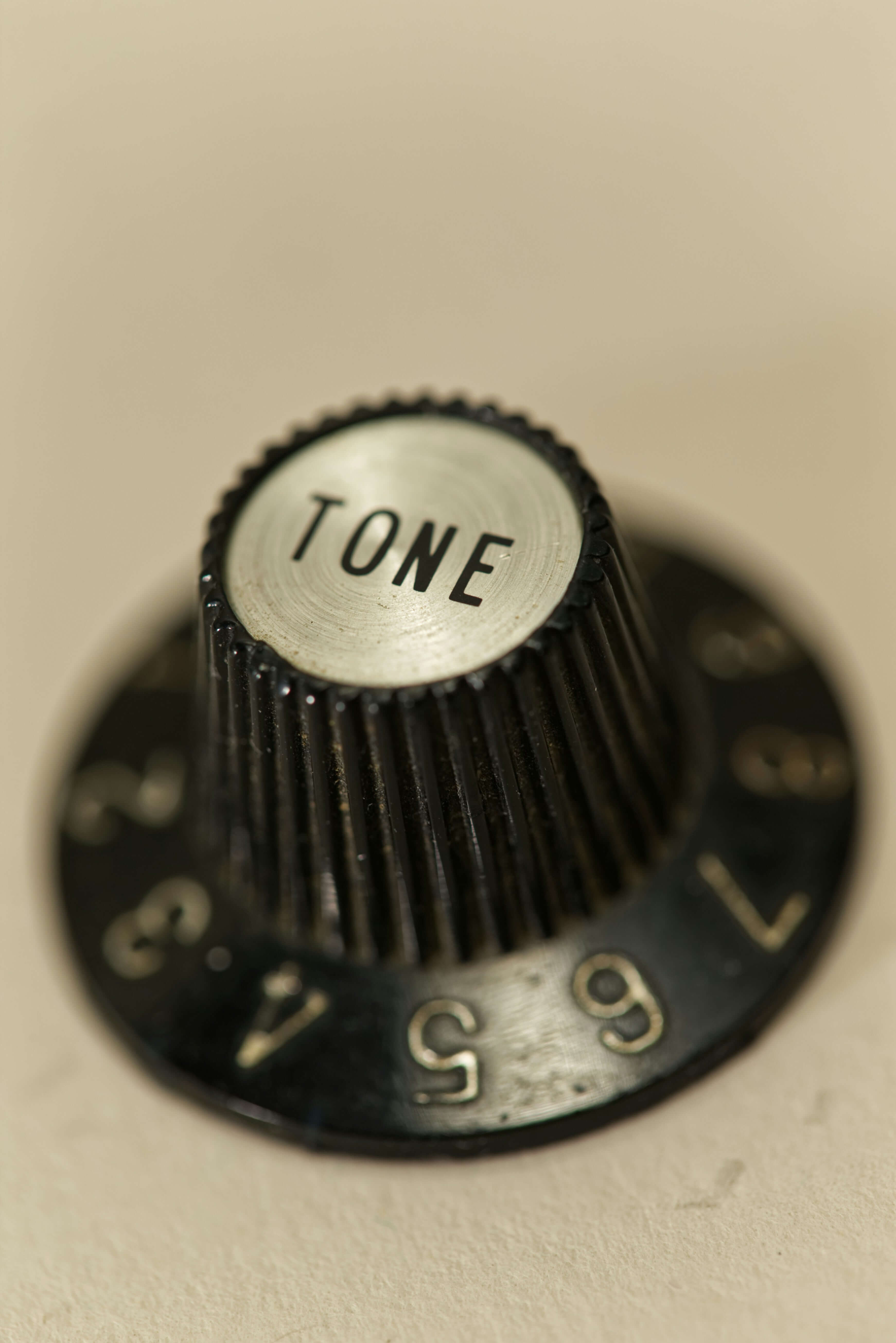
Why Tone Is So Hard to Describe
Guitarists talk about tone constantly, but rarely with much precision. One player’s “warm” can be another player’s “muddy.” A “bright” guitar might sound clear and articulate in one context, but harsh or piercing in another. Even simple words like “round,” “open,” “tight,” or “woody” often mean different things depending on who is speaking, what instrument they are playing, and what kind of music they have in mind.
This is part of what makes tone fascinating. It is technical, emotional, physical, and deeply personal at the same time. Tone is not only a frequency response or a waveform. It is also touch, intention, memory, expectation, and context.
Still, if we want to understand guitars more clearly — whether as players, builders, retailers, reviewers, or listeners — we need a better vocabulary. The goal is not to remove the poetry from tone. Quite the opposite. A good language of tone should make discussion more accurate without making it sterile. It should help us describe what we hear, understand why we hear it, and communicate more clearly about the sound we are chasing.
The Building Blocks of Tone
At its foundation, tone begins with pitch, frequency, harmonics, volume, dynamics, and timbre. Pitch is the most straightforward element: it tells us how high or low a note sounds. It is determined by frequency, measured in Hertz.
A guitar string does not produce a single pure frequency when played. It produces a fundamental note along with a series of harmonics and overtones. These additional frequencies give the note its character.
This is why two guitars can play the same note at the same volume and still sound completely different. The difference is timbre. Timbre is often described as the “color” of sound, but that word only gets us so far. In practical terms, timbre comes from the balance of frequencies, the strength of the harmonics, the way the note begins, the way it sustains, and how it fades.
Materials, construction, pickups, strings, hardware, amplification, and playing technique all contribute to it. A guitar with strong high-frequency content may be described as bright, crisp, glassy, or cutting. If those highs become excessive or poorly controlled, the same instrument might be called sharp, thin, harsh, or piercing.
A guitar with a strong low-midrange response may be described as warm, thick, full, or woody. If that same range becomes too dominant and lacks definition, it may become muddy, boxy, or muffled.
This is why tone words need context. “Dark” is not automatically bad. “Bright” is not automatically good. A dark jazz guitar can sound elegant and controlled. A bright funk guitar can sound alive and precise. A scooped metal tone may work perfectly in a dense mix, while the same EQ curve could feel empty in a solo performance.
Tone is never judged in isolation. It always belongs to a musical situation.
The Vocabulary of Tone
A practical vocabulary helps us move from vague impressions to clearer descriptions. These words are not laboratory measurements, but they can still be useful when used carefully. They give players, builders, technicians, and listeners a shared language for describing what they hear.
A bright tone has a strong treble presence. It often feels clear, lively, and forward, with enough high-frequency content to cut through a mix. Used well, brightness can bring definition and energy. Pushed too far, it can become sharp or piercing.
A warm tone emphasizes the lower midrange. It is usually perceived as round, smooth, and full, without excessive treble. Warmth is often associated with comfort and musicality, but too much warmth can reduce clarity.
A dark tone has a subdued top end. Compared with a bright tone, it feels softer, more restrained, and often more mellow. A dark sound can be elegant and controlled, especially in jazz or intimate playing contexts, but it can also become dull if it lacks enough definition.
A muddy tone has too much low-end or low-mid energy and not enough separation. Individual notes may blur together, chords can lose definition, and the sound may feel congested. Mud is rarely about bass alone; it is usually a problem of poor balance and insufficient clarity.
A crisp tone has a clear and precise attack. Notes start cleanly, with good definition, especially in the higher registers. Crispness is useful for articulate playing, funk rhythm parts, clean arpeggios, and any situation where note edges need to be clearly heard.
A sharp tone has a pointed or piercing quality, often caused by an emphasis in the upper frequencies. Sharpness can help a guitar stand out, but it can become tiring if the high end is too aggressive.
A thin tone lacks body, especially in the bass and lower midrange. It may sound weak, narrow, or underdeveloped. Thinness can sometimes be useful in a dense mix, but on its own it often feels incomplete.
A thick tone has a strong midrange presence and a sense of density. It can feel powerful, heavy, and robust. Thick tones are often effective for rock rhythm parts, lead lines, and sounds that need weight without relying only on bass frequencies.
A glassy tone has smooth, clear, sparkling highs. It is bright, but usually not harsh. The word often suggests a polished top end, with a clean and almost reflective quality.
A woody tone suggests an organic, resonant quality, often centered in the lower mids and midrange. It can evoke the natural response of the instrument itself, especially when the sound feels dry, tactile, and connected to the body of the guitar.
A metallic tone has a pronounced upper-midrange or high-frequency edge, sometimes with a bell-like or steel-like character. It can sound lively and cutting, but may also become hard or abrasive depending on context.
A round tone is smooth and balanced, with no single frequency range dominating too strongly. It often feels even, controlled, and easy on the ear. Roundness is especially valued when the goal is fluid phrasing rather than sharp articulation.
A balanced tone has an even relationship between lows, mids, and highs. It does not mean neutral or bland. A balanced guitar can still have character, but no part of the spectrum overwhelms the rest.
A boxy tone has a confined midrange quality, as if the sound were trapped in a small space. It often lacks openness and depth. Boxiness can come from the instrument, the room, the microphone position, or an EQ problem.
A honky tone has a nasal midrange emphasis. It can sound vocal and expressive in some styles, but harsh or awkward in others. Too much honk can make the guitar feel brash, narrow, or overly forward.
A piercing tone has excessive high-frequency energy that becomes uncomfortable to the ear. Unlike brightness, which can be musical and useful, piercing usually suggests that the treble or upper mids are too aggressive.
A scooped tone has reduced midrange, with comparatively stronger bass and treble. It can sound wide, modern, and powerful in isolation, especially for some high-gain sounds. In a band mix, however, too much scoop can make the guitar disappear because the midrange is where much of its presence lives.
A buttery tone is smooth, rich, and flowing. It usually suggests a soft attack, controlled highs, and a pleasant sense of sustain. The word is subjective, but it often describes a sound that feels effortless under the fingers.
An airy tone has a sense of openness, space, or breath. It may come from subtle high-frequency content, room sound, reverb, microphone placement, or the natural resonance of the instrument. Airiness can make a tone feel larger and more three-dimensional.
A resonant tone sustains naturally and seems to ring beyond the initial attack. It gives the impression that the instrument is responding as a whole, not simply producing isolated notes. Resonance can be heard, but it is also something players often feel physically through the instrument.
These descriptions are useful, but they are not absolute. They are shared metaphors. Many tone words borrow from touch, sight, weight, space, or emotion. We describe sound as smooth, rough, sharp, round, heavy, open, dry, wet, wide, narrow, soft, hard, aggressive, sweet, haunting, or intimate.
This cross-sensory language is imperfect, but it works because tone is experienced physically as much as intellectually. The key is to use these words with context. A “bright” tone is not automatically good. A “dark” tone is not automatically bad. A “scooped” tone may be perfect for one genre and useless in another. A “thin” tone may sound weak alone but sit beautifully in a dense arrangement.
The risk is that metaphor can become vague or lazy. Saying a guitar sounds “premium” means almost nothing. Saying it has a fast attack, clear note separation, controlled low mids, and a smooth top end is far more useful. Saying an instrument sounds “alive” can be evocative, but it becomes more meaningful if we explain whether that means dynamic sensitivity, harmonic richness, strong resonance, or immediate response under the hand.
A better vocabulary does not make tone less personal. It simply gives us better tools. Instead of arguing about whether a sound is “good,” we can ask more precise questions: bright where, warm how, muddy in which register, resonant under what attack, balanced for what musical role?
Tone as a System
One of the most common mistakes in tone discussions is trying to isolate one factor as if it alone defines the sound.
A guitar is a system. Its tone comes from the relationship between strings, materials, construction, hardware, electronics, setup, amplification, room acoustics, and player technique.
In an acoustic guitar, the body acts as a resonator. The soundboard, bracing, bridge, body shape, internal air volume, and wood properties all influence how string energy becomes audible sound. The instrument does not simply “contain” sound. It transforms vibration into moving air.
An electric guitar works differently. Its sound is captured by pickups, then shaped by electronics, cables, pedals, amplifiers, speakers, and often microphones or digital processing. The acoustic behavior of the instrument still matters, but it is filtered through a larger signal chain.
This is why discussions about electric guitar tone often become confused. People argue about wood, pickups, strings, pedals, or amplifiers as if one element could explain everything. In reality, each factor changes the behavior of the next.
A pickup does not hear the guitar in a neutral way. A bridge does not affect sustain in isolation. A string gauge does not matter independently of scale length, setup, player attack, and tuning. Every element participates in the final result.
The Player’s Role
Technique can transform tone more immediately than almost any piece of equipment. The way a player touches the instrument changes the sound before it reaches the pickups, the amplifier, or the room.
Pick angle, picking position, finger pressure, vibrato, bending, muting, dynamics, and articulation all matter. Play close to the bridge, and the sound becomes tighter, brighter, and more focused. Play closer to the neck, and it becomes rounder, fuller, and softer.
Use a hard pick with a firm attack, and the note may become sharp and defined. Use the flesh of the fingers, and the result may become warmer and more intimate. Even the difference between striking through the string and grazing across it can change the attack, harmonic content, and perceived volume.
Attack is the way a note begins. A fast attack can feel crisp, immediate, percussive, or aggressive. A softer attack can feel gentle, fluid, or restrained. Decay describes how the note fades after its initial peak. Sustain describes how long it remains musically present.
Articulation is the way notes are shaped and connected. Legato playing, hammer-ons, pull-offs, slides, bends, vibrato, staccato phrasing, palm muting, hybrid picking, and fingerstyle techniques all create different tonal signatures.
A guitarist does not simply trigger notes. They sculpt them in real time.
This is why the idea of “the tone of a guitar” is incomplete. There is the tone of the instrument, but also the tone of the player through that instrument. A great guitar can sound ordinary in passive hands. A skilled player can make modest equipment speak with authority because they understand how to control the beginning, life, and end of each note.
Tone in Context
The environment also changes tone. A guitar played in a reflective hall will not behave like the same guitar played in a small carpeted room. Hard surfaces create reflections and reverberation. Soft materials absorb sound. Room size, ceiling height, wall materials, microphone placement, stage volume, and monitoring conditions all affect what the player and audience hear.
In the studio, tone becomes even more dependent on context. Microphone choice and placement can radically change the recorded sound of an acoustic guitar or amplifier. Moving a microphone a few centimeters can alter brightness, low-end response, attack, and perceived space.
In a mix, the guitar may need to sound thinner or brighter on its own in order to sit properly with bass, drums, vocals, keyboards, and other instruments.
This is a critical point: a good solo tone is not always a good mix tone. A guitar that sounds huge alone may occupy too much space in a band. A tone that feels slightly lean in isolation may become perfect once placed with other instruments.
The role of the guitar changes depending on whether it is carrying the melody, reinforcing rhythm, adding texture, or cutting through a dense arrangement. A fingerstyle acoustic player may need note separation and dynamic nuance. A rock rhythm guitarist may need midrange authority and controlled low end. A lead player may want sustain, compression, and upper-mid presence. A jazz player may prefer warmth, roundness, and a softened attack.
Each musical context creates different tonal priorities.
Hearing, Bias, and Perception
Tone is not only physical. It is also psychological.
A player may hear an expensive guitar differently because they expect it to sound better. A famous brand, a beautiful top, a vintage finish, or a known wood species can shape perception before a note is played.
This does not mean tonal differences are imaginary. It means listening is human. We hear with our ears, but also with our eyes, hands, memory, and assumptions.
For luthiers and serious players, this matters. The goal should not be to reduce tone to myth, but also not to pretend that subjective experience is irrelevant. An instrument must sound good, feel good, respond well, and make the player want to play.
A frequency chart can tell us something. It cannot tell us everything.
A Better Way to Talk About Tone
The more clearly we understand the language of tone, the better we can shape it. We can choose instruments more intelligently, adjust setups more effectively, communicate with builders and technicians more accurately, and make better musical decisions.
Instead of arguing about whether a sound is “good,” we can ask better questions.
Is it too bright for the player, or only too bright in this room? Is the guitar actually muddy, or is the amplifier adding too much low end? Is the instrument lacking sustain, or is the setup choking the strings? Is the tone too thin, or is it simply sitting in a mix where the bass owns the low frequencies?
The most useful way to think about tone is as a relationship. It is the relationship between the instrument and the player, between the player and the room, between the guitar and the rest of the band, between physical vibration and emotional response.
It is partly material, partly mechanical, partly electronic, partly acoustic, and partly psychological.
This is why the search for the perfect tone never really ends. There is no single perfect tone. There is only the right tone for a player, a piece of music, a technique, a room, a recording, or a moment.
Tone remains elusive, but it does not have to be mysterious. It is not magic detached from physics, and it is not physics detached from feeling. It is where vibration becomes expression.
That is the real language of guitar tone: a mixture of sound, touch, context, and intention.

シェア:
科学、疑似科学、そしてルシアー
プロのルシアーになるための道