




Roasted wood — torrefied, thermally modified, “baked,” whatever the catalogue calls it — has become one of the most confidently marketed materials in modern guitar building. The pitch is seductive and consistent: roasting “ages” the wood, delivers a “played-in,” “matured” tone straight off the bench, adds resonance and sustain, tightens the lows, opens the highs, and throws in stability, lighter weight, and a gorgeous caramel color for good measure. All upside, no cost, available now on everything from boutique builds to entry-level imports.
When a material is described as having only benefits and no drawbacks, that is the single most reliable signal that you’re reading marketing rather than materials science. Real engineering trade-offs always cut both ways. Roasted wood is genuinely useful — more useful, in some respects, than the romance even claims — but the honest account is not the one the industry tells.
So let’s do what the series does, and go to what’s actually measured. Roasting is one of the better-studied wood treatments out there, because it’s used far beyond guitars — in flooring, cladding, and outdoor timber — so there’s real materials research to lean on rather than forum consensus.

What roasting actually is
Roasting is thermal modification: heating wood to roughly 180–220°C in a low-oxygen environment, so it cooks rather than burns. This is not aggressive kiln-drying. It chemically alters the wood at the cellular level, and almost all of the real effects — good and bad — trace back to a single change.
That change is the breakdown of hemicellulose. Wood is mostly three polymers: cellulose (the strong structural fibre), lignin (the binder), and hemicellulose (an amorphous sugar-based component). Hemicellulose is the most hygroscopic part of the wood — the part most eager to grab water from the air — and it begins decomposing well before the others, accelerating above about 180°C. Roast the wood and you drive off moisture and degrade much of the hemicellulose. Hold that fact; nearly everything below is a consequence of it.
What roasting genuinely does — and this part is real
Here the marketing and the science actually agree, and it’s worth being clear that these benefits are well-documented, not hype.
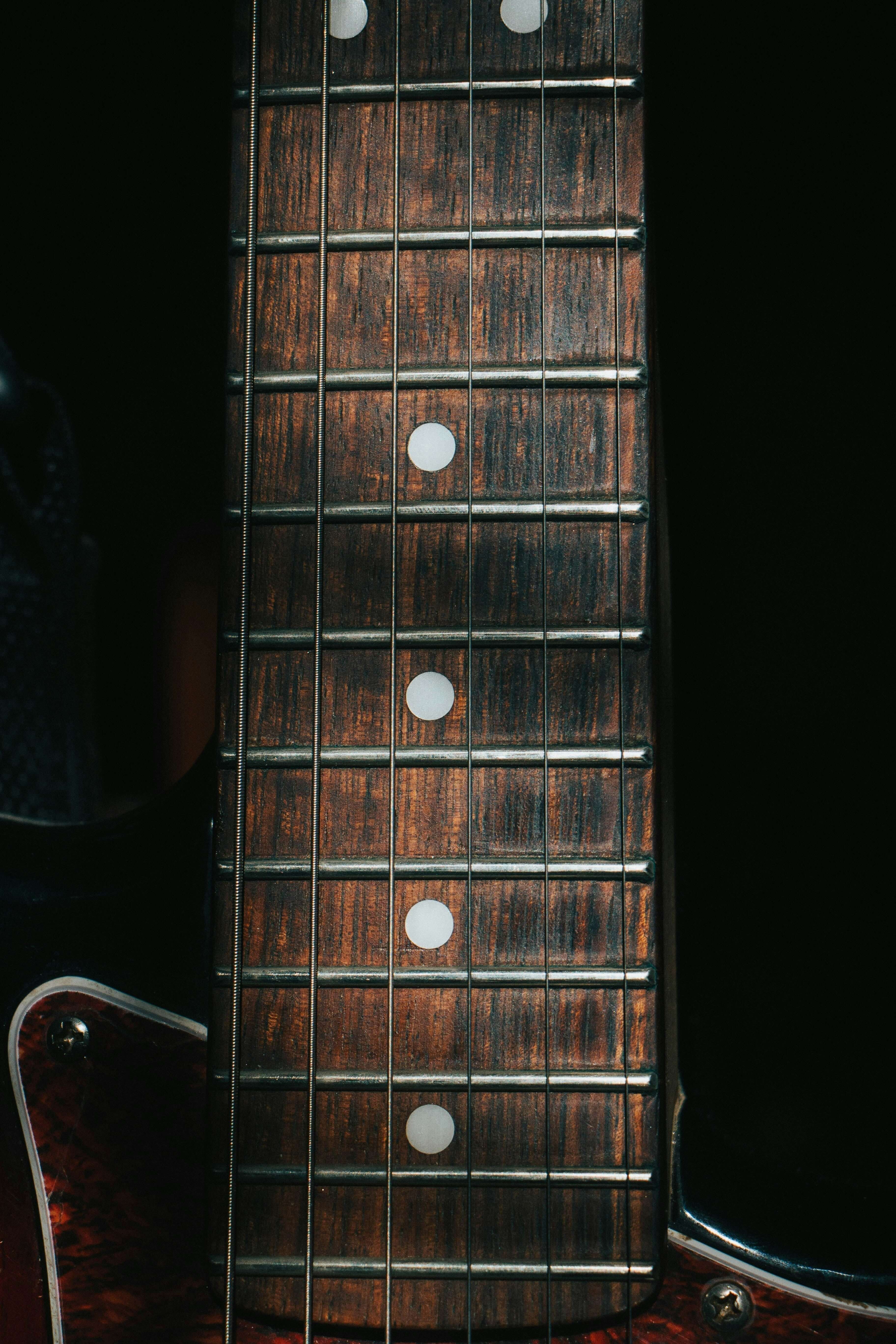
Dimensional stability — the headline benefit, and it’s earned. With less hemicellulose, the wood absorbs and releases far less moisture from the air. Its equilibrium moisture content drops, so it swells and shrinks much less as humidity swings. A roasted neck or body is genuinely more stable, less prone to the seasonal movement that throws off setups and, over time, warps necks. For a touring musician crossing climates, or anyone in a variable environment, this is a real, practical, measurable advantage — not a tonal story you have to squint to believe, but solid materials science.
Lower weight. Driving out moisture and degrading some of the wood’s mass leaves a lighter piece. On a body or neck this can mean a more comfortable instrument, and the lighter, stiffer result is part of what people are reaching for.
Decay and insect resistance. Hemicellulose is also what fungi feed on. Remove most of it and the wood becomes substantially less hospitable to decay and pests. This matters more for outdoor timber than for a guitar that lives in a case, but it’s a genuine property.
The kernel of the tone claim. Here’s where it gets interesting, because the tone story isn’t pure invention — it has a real mechanism underneath the marketing. Hemicellulose is also a major contributor to the wood’s internal damping — its tendency to absorb vibrational energy and convert it to heat. Reduce the hemicellulose and you reduce the damping, which means the wood returns string energy a little more efficiently and its stiffness-to-weight ratio rises. On an acoustic soundboard, that’s a measurable change in vibrational behavior, and it’s the legitimate physical basis for players describing roasted tops as more “open” or “resonant.” That part is not nothing.
So far, so good for the marketing. Now the parts it leaves out.
The trade-off the marketing never mentions: brittleness
Here is the cost, and it’s not a minor footnote — it’s the direct, unavoidable flip side of the exact same chemistry that delivers the benefits.
The hemicellulose you degraded to gain stability was also doing structural work. It contributes to the wood’s flexibility and toughness — its ability to absorb a sudden load without failing. Take it out, and the wood becomes more brittle. The materials research is consistent and clear on this: thermal modification reduces bending strength, and it reduces impact resistance substantially. The polymer matrix that’s left behind behaves as a stiffer, more elastic, but more brittle material — one that’s more prone to cracking or splitting under a sudden shock.
This is why roasted wood is used cautiously in structural applications that take impact or dynamic load, and it has real consequences for an instrument:
• A roasted neck is more stable against humidity, but a sharp knock — the kind a normal neck might shrug off — is more likely to crack it. The stability and the fragility come from the same place.
• Roasted wood can be fussier to work: more prone to chipping and tear-out, less forgiving under the tools.
• And note the specific claim the original marketing often makes — that roasting makes the wood harder and therefore more dent- and scratch-resistant. On impact resistance this is precisely backwards. A more brittle surface is not more resilient to a sudden hit; the research shows impact strength drops, not rises. Increased surface hardness in one sense does not mean increased toughness, and the two get conflated in the sales copy.
None of this makes roasted wood bad. It makes it a trade-off — which is exactly what an honest material is. You are buying stability and a stiffer, lower-damping piece, and you are paying for it in toughness. A good builder knows this and designs around it: it’s why roasting suits a neck (where stiffness and stability are prized and the truss rod and construction manage the load) and why a builder thinks carefully before subjecting a roasted component to stresses that reward flexibility.
The big myth: “it’s the same as aged wood”
This is the claim doing the most marketing work, and it’s the one that most deserves scrutiny: that roasting mimics aging, giving you a vintage instrument’s matured tone the day it leaves the shop, skipping the decades.
The truth is that roasting and aging are two genuinely different processes that happen to share one feature.
Natural aging is a slow business conducted at room temperature over decades: gradual oxidation, slow crystallization of cellulose, the very gradual loss of moisture and some volatile compounds. Roasting is rapid pyrolysis — minutes to hours at 200°C — that aggressively degrades hemicellulose and chemically restructures the wood in ways that gentle decades-long aging simply does not.
The single thing they share is moisture loss and some reduction of the hemicellulose that contributes to damping. That overlap is real, and it’s the seed of truth that lets the “instant vintage” story grow. But it is one shared feature between two fundamentally different transformations. Roasted wood is not aged wood that took a shortcut. It is its own material, with its own properties — some of which a vintage instrument shares, many of which it does not. “Roasted equals aged” is a useful sales metaphor, not a materials fact.
And on a solid-body electric, the tone story shrinks further
Everything about roasting’s acoustic tone benefit applies to a soundboard that vibrates as the engine of the sound. On a solid-body electric, that engine isn’t the wood — it’s the string vibrating over a magnetic pickup, routed through the amp, the speaker, and the room.
So the lower-damping, more-resonant character of roasted wood, real and measurable on an acoustic top, becomes a second-order effect on a solidbody, sitting far below the pickups and the amplifier in the order of what shapes your amplified tone. (This is the same conclusion the tonewood and finishes articles reached, by the same logic: on a solidbody, the signal chain dominates.) Roasted maple is a wonderful neck material — but the honest reason is its stability and feel, not a transformation of your plugged-in sound. A roasted neck on a solidbody will be more stable, lighter, and beautifully caramel-colored. Whether you can reliably hear it through your rig, blind, is a far smaller claim than the marketing makes.
So what should you actually take from this?
Roasted wood is a genuinely good material that the industry sells for the wrong reasons.
The stability is real and worth paying for. This is the honest headline. Reduced moisture uptake, less seasonal movement, a more stable neck — that’s solid, measurable materials science, and for a touring or climate-exposed instrument it’s a meaningful benefit. If you buy roasted wood, buy it for this.
The weight, the decay resistance, and the color are real too. Lighter, tougher against rot, and undeniably beautiful. No argument.
The tone benefit is real but modest, and mostly an acoustic story. Lower damping from hemicellulose loss genuinely changes how a soundboard vibrates. On an electric, it’s a minor character at the back of a crowded stage dominated by the pickups and amp.
“Instant vintage tone” is the metaphor, not the mechanism. Roasting shares one feature with aging and differs in many others. It’s its own material, not a time machine.
And the trade-off is brittleness — the part the sales copy omits. The same chemistry that buys you stability costs you toughness. A roasted piece is stiffer and more stable but more prone to cracking under a sharp load. That’s not a flaw; it’s a trade, and knowing it is what separates choosing the material from being sold it.
The arrival of roasted wood in lutherie is a real advance — a genuinely more stable, lighter, lovely material with a modest, honest acoustic benefit. It deserves its place on the bench. It just doesn’t deserve the mythology, and a material this good shouldn’t need it.
No fluff, no dogma — just what the heat actually did.
分享:
贝斯吉他中电子元件的作用
吉他构造剖析