



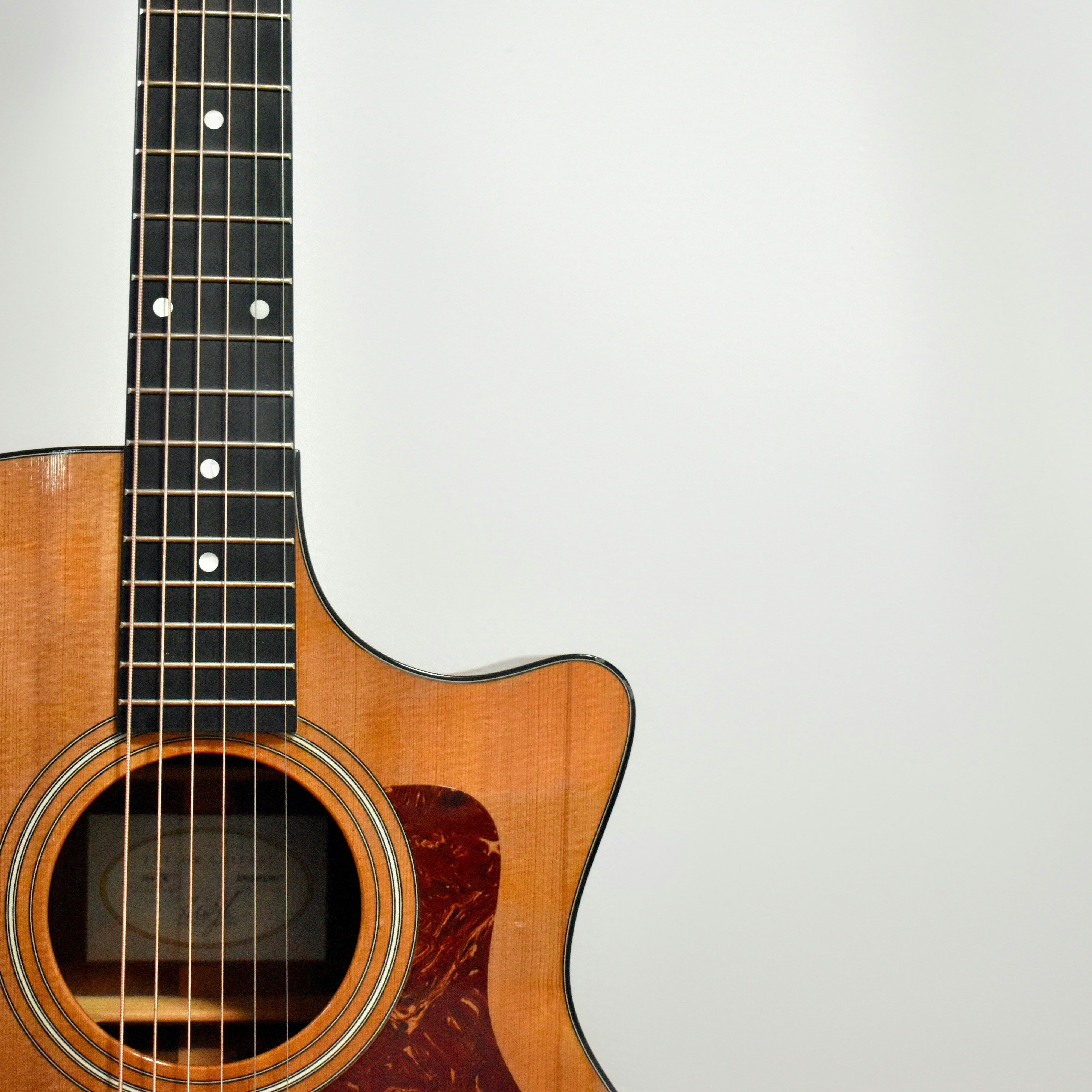
There is a sentence that gets said at trade shows, in forum threads, and — more quietly — inside the lutherie schools themselves. It goes like this: acoustics are the real test; electrics are woodworking with a soldering iron. The acoustic is the diploma. The electric is the warm-up.
It is a tidy story. It flatters the people who tell it. And it is wrong.
I want to be careful here, because this is the volume where I'm most at risk of being misread. I am not saying acoustic guitars are easy. I have built them. They are not easy.
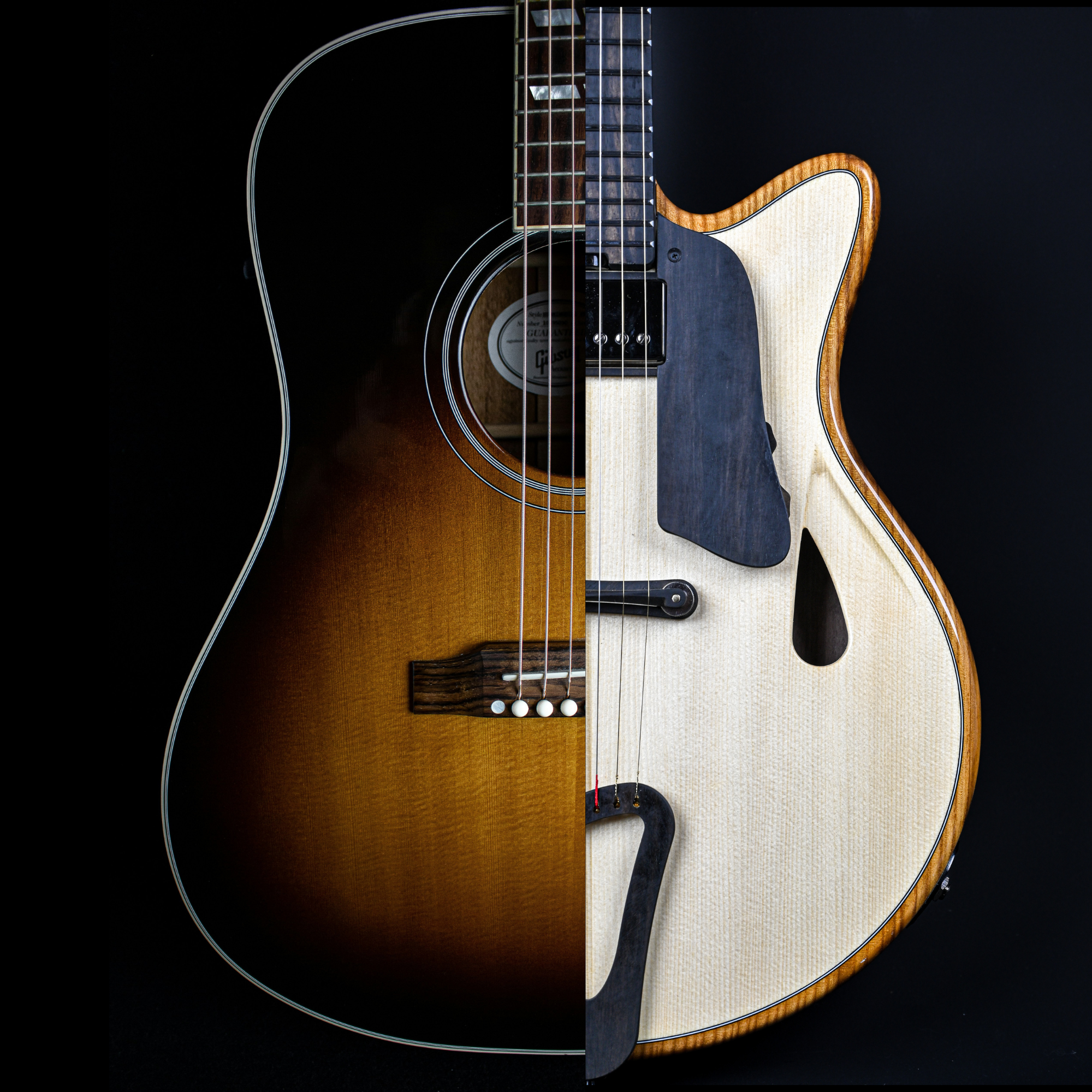
What I am saying is more specific, and I'll defend every word of it: an acoustic guitar has more steps than an electric, but the steps themselves are, one by one, most of the time, simpler. More operations. Lower individual difficulty. The complexity of the acoustic lives in the accumulation — the sheer count of careful, low-tolerance, mostly-additive gluing operations. The complexity of the electric lives somewhere else entirely: in a smaller number of unforgiving, geometry-driven, hard-to-undo operations where there is no brace to add and no second chance to hide.
People confuse more with harder. They are not the same thing. A novel has more words than a sonnet. Nobody argues the novel is the harder form.
Let me show you the work.
Before you cheat at the comparison
Before the timelines, a ground rule — the same one I set in Vol. VII. The dishonest version of this argument compares the best acoustic to the worst electric. A hand-voiced, hide-glued, individually-tuned-top steel-string against a bolt-together import with a routed slab and a parts-bin bridge. Of course the acoustic looks like rocket science next to that. But that's not a comparison of instruments; it's a comparison of care. You can build a thoughtless acoustic and a profoundly considered electric, and the difficulty inverts.
So I'm comparing like for like: a seriously-built acoustic flat-top and a seriously-built solidbody electric, both made by someone who actually cares what the instrument does. Core steps only. The real spine of each build.
Here they are, side by side.
Twenty-two ways to glue wood to other wood
These are the core operations of a steel-string flat-top, roughly in order. I'm not padding the list — every one of these is a genuine, distinct stage of the work.
- Source and dimension the top, back, and sides. Resaw, thickness, match the bookmatched halves.
- Join the top. Glue the two halves on a perfectly aligned center seam.
- Join the back. Same operation, usually with a decorative center strip.
- Thickness the plates to target. Often by tap and flex, not just by caliper.
- Rosette. Rout the channel, lay the rings or inlay, level it flush.
- Cut the soundhole.
- Brace the top. Cut, shape, glue, and voice the bracing — the heart of the instrument's sound.
- Brace the back. Glue and shape the back braces.
- Bend the sides. Heat and bend two pieces to a precise outline on a form.
- Build the rim. Glue sides to the neck and tail blocks, fit the form.
- Kerfing / linings. Glue the lining strips around both edges of the rim — dozens of small clamped operations.
- Close the box, part one. Glue the top to the rim.
- Close the box, part two. Glue the back to the rim.
- Bind and purfle. Rout the channels, bend and glue the binding and purfling around every edge, then level.
- Carve and fit the neck. Shape the profile, cut the heel.
- Set the neck. Cut the dovetail or fit the bolt-on, establish the neck angle against the body — geometry that determines everything downstream.
- Fretboard. Slot, radius, inlay, glue to the neck.
- Fretwork. Press or hammer, level, crown, dress, polish.
- Finish. Pore-fill, build coats, level, buff.
- Bridge. Locate, mask, glue the bridge to the top — the single most consequential glue joint on the instrument.
- Nut and saddle. Cut, slot, set the action.
- Final setup. String, intonate, dial it in.
Twenty-two stages. It looks formidable, and the count is real. But look at what most of them actually are: cut a part, shape it, glue it to another part, clamp, wait, level the result. Steps 1 through 14 — fully half the build — are dominated by gluing operations. Joining the top is hard to do badly if you've prepped the edge well. Gluing linings is tedious, not difficult. Binding is fussy and slow, but a careful person learns it in an afternoon and gets clean results by the third guitar.
The two genuinely hard, high-stakes operations on this list are bracing/voicing (step 7) and the neck set (step 16). Voicing a top is a real art — I won't diminish it for a second. But notice: it's one step. The neck set is geometry under future tension, and it's unforgiving — but again, it's one step. The rest is craftsmanship distributed across many low-risk, additive, recoverable operations. If you glue a brace slightly off, you can often pull it and redo it. If a lining gaps, you add a shim. The acoustic is additive — and additive processes forgive.
Seventeen ways to throw a body blank in the bin
Now the solidbody, built with equivalent seriousness. Fewer stages. Watch what happens to the difficulty.
- Source and select the body and neck blanks. Wood choice here is a tonal decision, not a cosmetic one — density, stiffness, weight all matter on a serious build.
- Body blank prep. Join the body if it's multi-piece, dimension and flatten.
- Body outline and contours. Bandsaw the shape, then carve the forearm and belly contours — freehand or template-guided sculpting in three dimensions.
- Route the cavities. Pickups, control cavity, switch, jack, tremolo recess, spring claw. Every route is subtractive and permanent. There is no un-routing.
- Neck blank prep. Dimension, mark the centerline.
- Truss rod channel and install. A buried, irreversible operation that determines whether the neck is adjustable for its entire life.
- Fretboard. Slot, radius (single or compound), inlay, glue.
- Neck profile carving. Shape the back of the neck — the single most important feel surface on the instrument, and entirely freehand on a serious build.
- Headstock. Shape, drill the tuner holes, carve the volute or scarf-joint the angle.
- Cut the neck pocket / set the neck geometry. This is the electric's version of the acoustic neck set — and it carries the same weight. Scale length, neck angle, pocket depth, and bridge height all have to agree before anything is glued or bolted, because the string path is fixed by the sum of them.
- Fretwork. Press or hammer, level, crown, dress, polish. (Identical to the acoustic — this step is common to both, and equally demanding on both.)
- Drill and align everything. Bridge posts, ferrules, string-through holes, control holes. The bridge location is set by the scale length to a tolerance of fractions of a millimeter; miss it and the guitar will not intonate, ever.
- Finish. Often more demanding than an acoustic finish, not less — solid colors, bursts, and transparent finishes over figured tops are far less forgiving than a clear coat over spruce.
- Shielding and electronics. Shield the cavities, wind or select pickups, lay out the harness, solder it, ground it correctly, eliminate hum. An entire electrical engineering sub-discipline that the acoustic simply does not have.
- Hardware install. Bridge, tuners, nut.
- Nut. Cut, slot, set the action.
- Final setup. String, set the truss rod, intonate, adjust the bridge, dial it in.
Seventeen stages versus twenty-two. Fewer — and yet I'd argue this list is, step for step, harder, because of one property the acoustic list doesn't share: most of these operations are subtractive and permanent.
Routing is permanent. The truss rod channel is permanent. The neck carve removes wood you cannot put back. The bridge holes are drilled exactly once. Where the acoustic builder adds a brace and can pull it if it's wrong, the electric builder removes material and lives with the result. Subtractive processes do not forgive. A misjudged route doesn't get a shim — it gets a new body blank.
And then there is step 14, which has no analogue at all on the acoustic side. The electric is also a piece of electrical hardware. Pickup selection or winding, signal path, pot values and tapers, capacitor choice, grounding scheme, shielding, noise rejection — this is a whole domain of expertise, and getting it wrong produces an instrument that looks finished and sounds broken. The acoustic builder never has to debug a ground loop at midnight.
More work is not the same thing as harder work
Lay the two lists against each other and the pattern is clear.
The acoustic's difficulty is breadth. Many steps, mostly gentle individually, demanding mainly in their number and in the discipline required to do twenty-two things in a row without a single careless one. Its two summit moments — voicing and the neck set — are genuinely hard. The slopes between them are not.
The electric's difficulty is consequence. Fewer steps, but a higher proportion of them are irreversible, geometry-locked, and tolerance-critical, plus an entire electrical layer the acoustic never confronts. There is no gluing your way out of a mistake. The forgiveness that the additive acoustic process grants you, the subtractive electric process withholds.
Neither of these is "harder" in some absolute sense. They are hard in different directions. The acoustic asks: can you do a great many careful things in sequence without flagging? The electric asks: can you commit to a small number of irreversible decisions and be right the first time, then make the thing also work as an electronic device?
The myth — "electrics are easier" — survives only because the acoustic's difficulty is visible and countable. You can see the twenty-two stages. You can photograph the clamping. The electric's difficulty is hidden inside tolerances you can't see and a route you only notice when it's wrong. Invisible difficulty reads, to the casual eye, as no difficulty at all.
That's the whole trick of the prejudice. It mistakes legibility for difficulty. The acoustic wears its labor on the outside. The electric hides it — in fractions of a millimeter, in a neck carve that has to feel right under a hand that hasn't held it yet, in a signal path that has to be silent. Hidden labor is still labor.
A ladder dressed up as a measurement
Step back from the bench for a moment, because the "electrics are easier" line is only the bottom rung of a much taller ladder — and the whole ladder is worth naming.
Ask around the trade and you'll get a remarkably consistent ranking, recited as though it were physics. At the top: the quartet builders — the violin, viola, cello, double-bass makers. Below them, the classical guitar builders. Below them, the steel-string and archtop builders. And at the bottom, the electric builders. A clean hierarchy of nobility, validated not just by luthiers but by armies of players who repeat it as settled fact. The violin maker is an artist. The electric builder is a guy with a router.
I want to be precise about what's true in this and what isn't. It is true that the violin family carries centuries of refinement, brutal tolerances, and a tradition so deep it can take a lifetime to absorb. Carving and tuning a violin top and back is extraordinary work. Nothing I'm about to say takes a gram of that away.
But notice what the ladder is actually ranking. It isn't ranking difficulty — we just spent two timelines showing that difficulty doesn't sort that cleanly. It's ranking prestige, and prestige in instruments tracks almost perfectly with the social class of the music the instrument was historically used to play. The quartet sits at the top of the ladder for the same reason it sits at the top of the conservatory: it's the instrument of the concert hall, the aristocracy, the institution. The electric sits at the bottom for the same reason it was once banned from those same halls — it's the instrument of the bar, the garage, the working musician. The ladder of luthier nobility is the old hierarchy of people and rooms, wearing an apron and pretending to be about the wood.
Once you see that, the ranking falls apart in your hands. A great electric is not a lesser act of making than a great classical guitar; it is a different act of making, with its own merciless tolerances and its own deep tradition — younger, yes, but a tradition all the same. A clumsy violin is not nobler than a brilliant solidbody because of the family it was born into. None of these instruments is the hardest. None of them is the easiest. All of them are art. All of them are craft. All of them are skill. The hierarchy isn't a measurement; it's a manners chart, and like most manners charts it exists mostly to tell certain people they're better than others.
I am not asking to move the electric up the ladder. I'm saying there is no ladder. There never was. There's a roomful of disciplines, each impossibly deep, none of them owed deference by the others.
The amputation nobody noticed
There's a quieter casualty of this hierarchy, and it's the most interesting part. Because the electric was filed at the bottom, an entire belief grew up around it: that the acoustic behavior of a solidbody doesn't matter. Plug it in, the amp does the work, the wood is just a mounting plank. Builders were taught this. Players were taught this. Both, mostly, accepted it.
It isn't the complete picture. A solidbody electric can be voiced. Its body and neck have mass, stiffness, and damping; they store and return the string's energy; they shape attack, sustain, and the way a note blooms and dies before a single electron reaches the pickup. A builder who understands this can treat the electric the way an acoustic builder treats a top — selecting wood for what it does rather than how it looks, controlling weight and stiffness on purpose, building an instrument that behaves like the acoustic object it actually is. I argued the physics of this at length in Vol. VII and won't relitigate it here. The point for this essay is narrower and sharper: the reason most people think the electric can't be voiced is not that it can't be — it's that the hierarchy told them it wasn't worth the trouble, and they believed it.
That's what a prestige ranking does when it goes unchallenged for seventy years. It doesn't just insult the people at the bottom. It quietly amputates a whole dimension of the craft, convinces everyone the missing limb was never there, and calls the result common sense. Tell builders the wood doesn't matter and most of them will stop listening to it. Tell players the same and they'll stop expecting it. The myth becomes self-fulfilling — not because it was right, but because enough people stopped doing the work that would have proven it wrong.
Not wrong, but not entirely right neither
Here is what I'll give the other side, freely. The acoustic top is a tuned acoustic membrane, and voicing it well is one of the deepest skills in the whole craft — arguably deeper than anything on the electric bench, taken as a single skill. If your entire definition of "complex" is "contains the single hardest individual operation in lutherie," the acoustic probably wins, and the bracing of a top is the reason.
But that's not what "more complex to build" means, and everyone knows it. A build is the whole sequence, the whole web of decisions, the total quantity of ways the thing can go wrong before a string is ever tuned. By that measure — the only honest measure — the electric is not the simpler instrument. It is the differently difficult one. And "different" is fatal to the hierarchy, because the hierarchy depends on the electric being lesser. It isn't. It's just quieter about what it costs to build.
I felt this with my own hands before I could argue it. Building my acoustics, I counted more steps — and most of them, taken one at a time, asked less of me than carving a neck to a profile I couldn't take back or committing a cavity route I couldn't undo. More work, lower per-step stakes. That's not an insult to the acoustic. It's just the truth of the two timelines, and the truth doesn't care which instrument the trade decided to ennoble.
More steps. Simpler steps. Fewer steps. Harder steps. Rank them however you like — quartet, classical, acoustic, electric — the sum never falls where the ladder insists it should. Because there is no ladder. There's just the work, and the work is deep everywhere you look.
In the end, we all know what matters - It's all about me being 100% right and you 200% wrong. Warm up your keyboards, insult me in private messages, drop comments that are off topic to show us all that you didn't read the article.
Share:
The Truth About Dead Spots
The Truth About Wood Ratings