




Nobody's instrument

Ask a Spaniard where the guitar comes from and you'll get Spain. Ask an American and you'll get a radio shop in Fullerton, California. A Neapolitan will mention Naples, a Japanese player may say Hamamatsu, and an Iraqi can point to Baghdad, where the oud was being played before any of those places had a name for it. Every one of them is partly right. That is the whole story of this instrument.
The guitar is a migrant. It has crossed the Mediterranean, the Pyrenees, the Alps, the Atlantic and the Pacific, and it changed at every border — picked up a string here, lost a course there, swapped gut for steel, grew a pickup, lost its body entirely. No other instrument has been rebuilt so many times by so many people who never met. The violin was finished in Cremona by 1700 and has barely moved since. The guitar has never been finished.
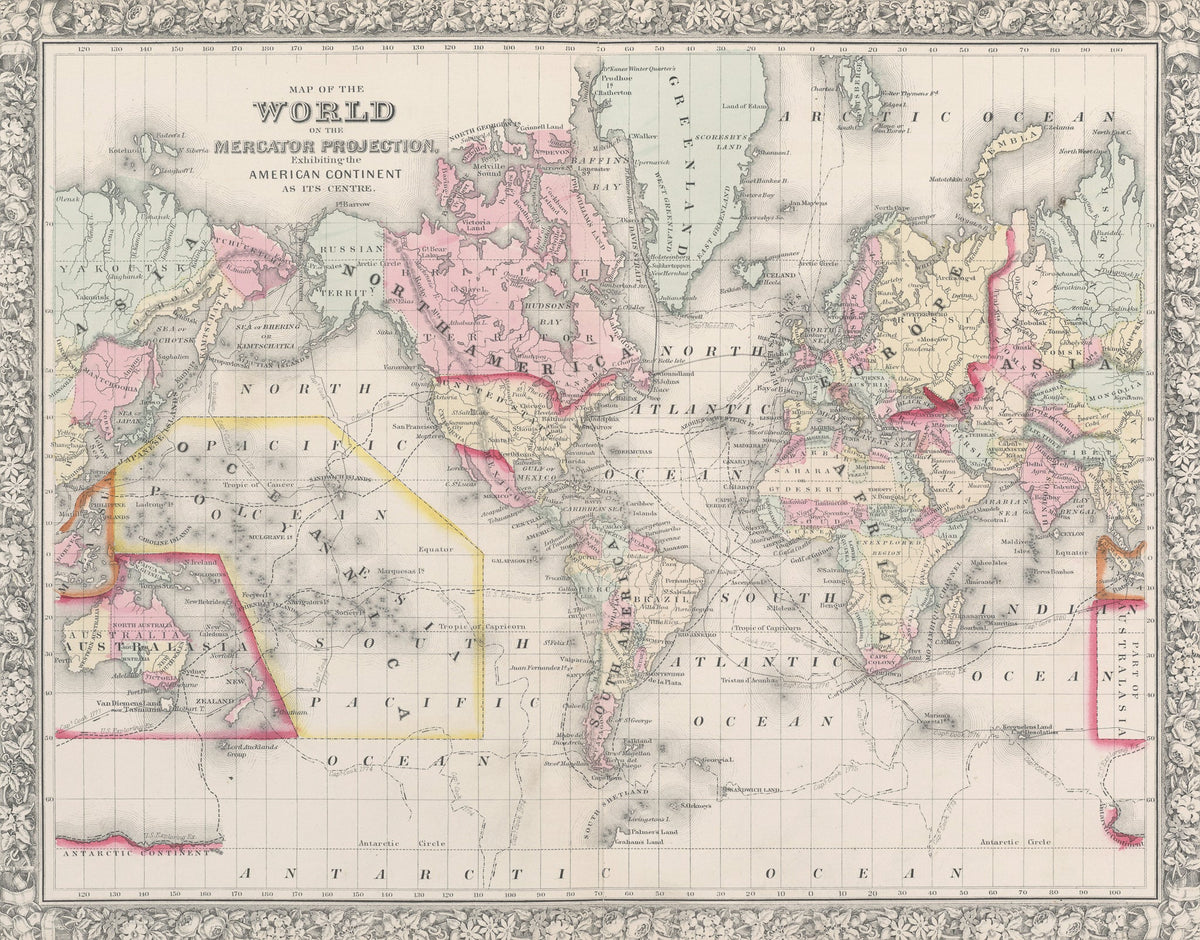
This volume follows the route. Not every stop — that's what the country episodes are for — but the jumps that made the guitar what it is: where each happened, who made it, and what the instrument gained and lost on the way. Every country episode that follows links back here. Think of it as the map in the front of the book.
A lute walks into Córdoba

The oldest ancestor anyone can point to is carved into a stone wall in Anatolia. A relief at Alaca Höyük, in what is now Turkey, shows a musician playing a long-necked, small-bodied lute, and it was cut around 1300 BCE. Similar instruments turn up across Mesopotamia and Egypt over the following centuries: a resonating body, a neck, strings stretched between the two. The idea is older than any writing about it.
The instrument that matters most to the guitar's story is the oud. Short neck, deep bowl back, fretless, played with a plectrum, it was the central instrument of Arab music by the eighth century. It traveled with the Umayyad conquest of Iberia after 711 and, over the next three centuries, settled into the courts of al-Andalus. The musician Ziryab — Baghdad-trained, arriving in Córdoba in 822 — is credited with adding a fifth string and founding a school of music there. How much of that is record and how much is legend is still argued. The direction of travel isn't: the oud came west, and Europe's plucked instruments came out of the encounter.
Two things came out, and they took different roads. The first was the lute. Al-ʿūd became laúd in Spanish and lute in English, and the European lute kept the bowl back and the bent-back pegbox but added frets — tied gut, movable, a European idea. By the sixteenth century it was the aristocratic instrument of the continent, built in Füssen, Venice and Bologna by the dynasties Vol. 1 described.
The second was the guitar, and here the name and the body took separate journeys. The word most likely came through Greek kithára and Arabic qīthārah into Spanish guitarra — but the kithara was a lyre, not a lute, and nothing of its construction survives in a guitar. The body is another story. Manuscript illuminations from the 1270s, in the Cantigas de Santa María assembled for Alfonso X of Castile, show two instruments the scribes called guitarra latina and guitarra morisca: one with a flat back and an incurved waist, one with a round back and Moorish ornament. The flat-backed one is recognizably the start of ours. A name borrowed from Greece, a body argued out between Christian and Muslim Iberia, built by people who played both. The guitar was a hybrid from its first appearance in writing.
Six strings, eventually

Spain spent the sixteenth century with two guitar-shaped instruments and a class system between them. The vihuela had six courses — pairs of strings tuned like a lute — and belonged to the court; its surviving repertoire, from Luis de Milán's book of 1536 onward, is some of the finest music ever written for a plucked string. The four-course guitarra was smaller, cheaper, strummed, and belonged to everyone else. The one with the pedigree died out. The one people actually played survived, picked up a fifth course around the end of the century, and became the baroque guitar.
That instrument left Spain and went everywhere. Italy took it first — Naples and Rome had makers and a published repertoire by the 1600s — and France made it fashionable: Louis XIV played one, and his court guitarist Robert de Visée wrote for it. The great violin shops made them too. Antonio Stradivari built guitars alongside his violins; five survive, and one of them, the 1679 "Sabionari," is still played. For most of this period the guitar was a strummed, chordal, rather lightweight thing with double strings and a small body. Nobody would have called it serious.
The move to six single strings came in the last decades of the eighteenth century, and it came in several places at once — which is itself a clue to how this instrument travels. Naples had single-strung six-strings from the 1790s, the Fabricatore family being the usual name; Cádiz and Madrid followed; Paris had René Lacôte building refined six-strings by the 1820s; Vienna had Johann Georg Stauffer, whose shop trained a young Markneukirchen cabinetmaker's son named Martin. Single strings cleared the sound and made the instrument easier to play in tune. The sixth string gave it a bass. Between them they made the guitar a solo instrument for the first time, and the early nineteenth century produced its first virtuosos — Sor and Aguado from Spain, Giuliani from Italy — playing instruments that were still small, lightly built and quiet.
Then Torres. Antonio de Torres Jurado, working in Seville from the 1850s and later in Almería, did for the guitar what Cremona had done for the violin: he found the proportions and the search stopped. He enlarged the body, deepened the waist, settled the scale at around 650 mm, and braced the top with a fan of thin struts that let a thinner soundboard move freely — and he proved the top was what mattered by building, in 1862, a guitar with a body of papier-mâché that sounded, by the accounts that survive, like a Torres. Francisco Tárrega played his instruments. Andrés Segovia, a generation later, carried the Torres design onto every concert stage in the world. Every classical guitar built since is, in its bones, one of his.
Took the boat

The guitar reached the Americas before it reached six strings. Spanish ships carried vihuelas and four-course guitars across the Atlantic in the first decades of the conquest, and the instrument spread through the colonies the way the language did — fast, unevenly, and with local accents. Over three centuries Latin America turned the Spanish guitar into a family of its own: the charango of the Andes, small enough to carry up a mountain and traditionally built on an armadillo shell; the cuatro of Venezuela and the ten-string cuatro of Puerto Rico; the tres of Cuba, three double courses, the engine of the son; the jarana and requinto of Veracruz; the deep-bellied guitarrón that gives mariachi its bass. Each is a Spanish guitar reworked for a place, a music, and a player who couldn't afford a European instrument and didn't want one.
Portugal ran its own route. The Portuguese took the guitar to Brazil, where the classical guitar still goes by its Portuguese name, violão, and where it became the harmonic center of samba, choro and eventually bossa nova — a guitar culture as deep as Spain's, grown from a different seed. At home the Portuguese guitar took a different shape entirely: pear-bodied, twelve strings in six courses, the voice of fado. That instrument belongs to the Portugal episode. It's here because it shows how quickly a guitar becomes someone else's guitar.
The strangest crossing went the other way around the world. In August 1879 a ship called the Ravenscrag landed in Honolulu with several hundred Portuguese laborers from Madeira, bound for the sugar plantations. Some of them carried a small four-string instrument called the machete, or braguinha. Within a generation it had been adopted, renamed and rebuilt in koa as the ukulele. A decade later a Hawaiian schoolboy named Joseph Kekuku began sliding a piece of steel along the strings of a guitar laid flat across his lap, and the Hawaiian steel guitar was born. When Hawaiian music swept the mainland after the 1915 Panama-Pacific Exposition in San Francisco, that slide technique went into the blues, into country, and — because a lap steel needs volume to survive a band — straight into the first experiments with a magnetic pickup. The electric guitar's first ancestor is a Portuguese instrument that went to Hawaii.
Louder, cheaper, mail order

What America did to the guitar was make it louder, make it cheap, and sell it by post. The loud part started at Martin. C.F. Martin's first American guitars were Stauffer-style Viennese instruments, but by the 1840s and 1850s his shop had settled on a different way to brace a top: two struts crossed in an X below the soundhole, instead of the Spanish fan. X-bracing is stiffer along the grain and stronger under tension, and it turned out to be exactly what the instrument would need when, half a century later, players started putting steel strings on it. Steel was louder than gut, brighter, and pulled roughly twice as hard. Fan-braced guitars folded. X-braced ones held. By the 1920s Martin was building for steel as standard, and the American flat-top had become a different instrument from the Spanish one it descended from — louder, tighter, with a bass that cut through a band.
Gibson went at the same problem from the violin side. Orville Gibson's carved tops of the 1890s led, under Lloyd Loar in 1922, to the L-5: an archtop guitar with f-holes, carved like a cello, built to be heard across a dance hall. The archtop became the jazz guitar and the big-band rhythm instrument, and it stayed loud enough until the saxophones got louder. Martin answered volume the flat-top way: in 1916 the shop built an oversized guitar for the Ditson company, and in 1931 put its own name on it. The Dreadnought — named after a class of battleship — became the American acoustic guitar, and most steel-strings in the world are still some version of it.
The cheap part happened in Chicago. Lyon & Healy's Washburn line, Harmony, Kay and Regal turned out guitars by the hundreds of thousands, and Sears sold them through the catalog to anyone with a few dollars and a mailbox. The instrument stopped being something you bought from a maker and became something that arrived in a crate. It went into the hands of Delta sharecroppers, Appalachian farmers and Texas cowboys — the people who would build the blues, country, and everything that came out of them — because it was the cheapest thing in the catalog that could play a melody and a chord at the same time. The quality was often terrible. The consequence was the twentieth century.
Then someone found a socket

The volume problem didn't go away; the band just kept growing. The answer came from outside lutherie — Vol. 1 made that point — so this section stays on the where and the when.
The where was Los Angeles. In 1931 George Beauchamp, a Texan steel guitarist, wound a magnetic pickup and fitted it to a cast-aluminum lap steel; the Ro-Pat-In company, soon renamed Rickenbacker, put it into production the next year, and players called it the Frying Pan. It was a Hawaiian instrument first — a lap steel — which is why Hawaii is in this volume at all. Gibson followed in 1936 with the ES-150, an archtop with a pickup, and Charlie Christian played one in Benny Goodman's band, which is roughly when the guitar became a solo voice in jazz. Those were hollow instruments with a pickup bolted on. The next idea was to get rid of the hollow.
Within four years the instrument that had taken three millennia to arrive at a hollow box abandoned the box.
Les Paul built his "Log" in 1941 — a four-by-four of pine with a neck, a pickup, and two halves of an Epiphone body glued to the sides so audiences wouldn't laugh — and spent a decade failing to sell the idea. Paul Bigsby built a solid-bodied guitar for Merle Travis in 1948 that looks, from across a room, like what came next. And in 1950 Leo Fender, in Fullerton, started shipping the Esquire and then the Broadcaster — a slab of ash, a bolted maple neck, a pickup in a steel plate — renamed the Telecaster in 1951. Gibson, which had turned Les Paul down, put his name on a solid-body in 1952. Fender's Stratocaster followed in 1954. Within four years the instrument that had taken three millennia to arrive at a hollow box abandoned the box.
What the electric guitar took from lutherie was almost nothing: the scale, the frets, the tuning. What it took from radio and industry was everything else — and the fact that it was designed to be manufactured, repaired and modified by people with no training is why it went around the world faster than any instrument before it. A Spanish guitar needs a guitarrero. A Telecaster needs a screwdriver.
Flattery, at scale
The guitar's last migration was to the places that would build most of them. In the 1960s Europe caught the electric boom on its own terms — Höfner and Framus in Germany, Hagström in Sweden, Eko in Italy, Burns and Vox in Britain, Egmond in the Netherlands — and some of those instruments were good and most were cheap, and that story is the whole of Season 1. The decisive move happened further east.
Japan had been building guitars for decades. Hoshino Gakki, which became Ibanez, began by importing the Spanish luthier Salvador Ibáñez's guitars in 1929 and kept the name; Yamaha in Hamamatsu was making classical guitars by the early 1940s. In the 1970s the Japanese factories — Fujigen, Matsumoku, Tokai, Greco, Fernandes, Ibanez — started building copies of American electrics, and the copies kept getting better while the originals, under CBS at Fender and Norlin at Gibson, kept getting worse. In 1977 Gibson's parent company sued Ibanez's American distributor over a copied headstock; the case settled, the headstocks changed, and the "lawsuit era" became a collector's category. Five years later Fender did the obvious thing and had Fujigen build Fender Japan. The copies had become the reference.
Korea took the next tier in the 1980s — Cort and Samick, building under their own names and for everyone else's — and Indonesia and China took the one after that from the 1990s. Today the overwhelming majority of the world's guitars are built in Asia, and the best of them are very good. Meanwhile the instrument kept finding new homes as a musical object rather than a manufactured one: it entered West Africa with Kru sailors from Liberia and became palm-wine music; it reached the Congo and by the 1950s was the foundation of Congolese rumba, arguably the most influential African popular music of the century; it carried the desert blues of Mali onto world stages. None of those scenes built guitars. All of them changed what the guitar was for.
And then, having been made cheap everywhere, the guitar turned back toward the bench. From the late 1960s in California and over the next forty years everywhere else, small shops began building electrics, steel-strings and classicals to standards the factories couldn't afford — the boutique renaissance Vol. 1 described. The trade that had spent three hundred years treating the guitar as a sideline now treats it as its highest expression. That's the world the country episodes are about to walk through.
No ancestors

Everything in this volume so far had a parent. The electric bass didn't. It was invented, in the plain sense, by a few people in the twentieth century who wanted a bass that could be carried and heard — and it is the only instrument in this series with no roots older than its makers' grandparents.
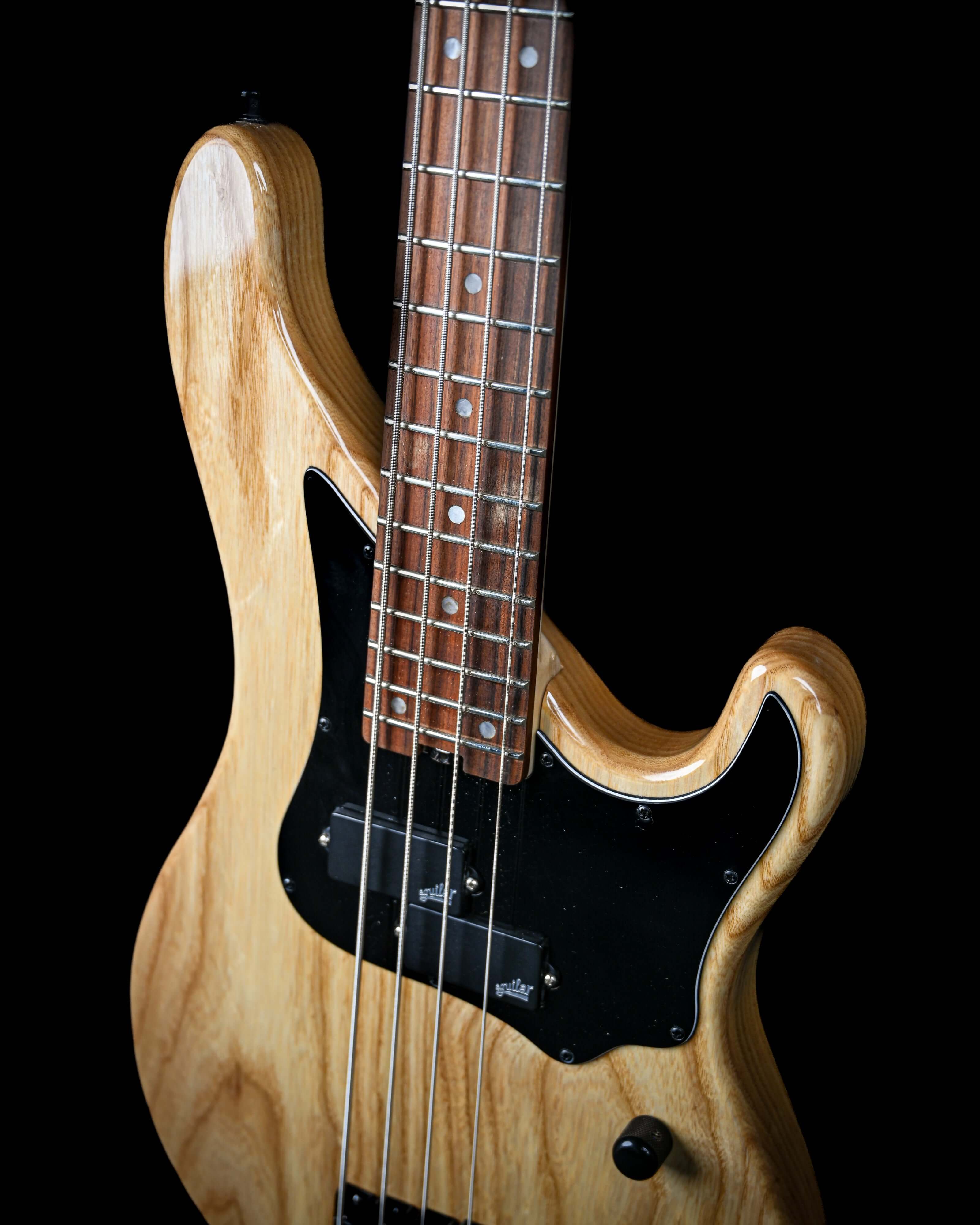
The first attempt was in Seattle. Paul Tutmarc, a musician and teacher, built a solid-bodied, fretted, guitar-shaped electric bass around 1936 and sold it through his Audiovox company as the Model 736 Bass Fiddle. It worked. Almost nobody bought one, and the idea sat for fifteen years. Then Leo Fender, having shipped the Telecaster, looked at the upright players in the Western swing bands around Fullerton — carrying an instrument the size of a wardrobe to play notes the audience couldn't hear over his guitars — and in 1951 shipped the Precision Bass. Frets, so a guitarist could play it in tune; a 34-inch scale; a pickup; a body you could put in a car. Within a decade every band in the world had one. The Jazz Bass followed in 1960 with a narrower neck and two pickups, and between the two Fender had defined the instrument so completely that most basses built since are variations on one or the other — a fact every bass builder has to make peace with.
The rest of the bass's history is short and fast. Höfner's violin-shaped 500/1 of 1956 ended up in Paul McCartney's hands and on every television in the world. Rickenbacker's 4001 gave rock a bass with teeth. In the 1970s the boutique builders got to the bass before they got to anything else — Alembic's active electronics for the San Francisco bands, then Music Man's StingRay in 1976 putting a preamp into a production instrument — and by 1980 Ned Steinberger had removed the headstock altogether. Sixty years from invention to its first radical rethink. The guitar took three thousand.
From the bench
Here's what I take from all of that, as someone who has to decide, on every instrument, which of those three thousand years to keep.
The guitar is a palimpsest. Every layer was written by someone solving a local problem — a court that wanted refinement, a plantation that needed something cheap, a dance hall that needed volume, a bass player with a bad back — and every layer was written over the last without erasing it. When I set a scale length, I'm choosing between Torres and Leo Fender. When I brace a top, I'm choosing between Seville and Nazareth. When I build a bass at all, I'm working inside a shape one man in Fullerton drew in 1951. None of those choices are neutral and none of them are mine. The most a builder can do is know which ones he's making.
And every jump cost something. That's the part the romantic version leaves out. The lute lost the oud's fretless voice when it gained frets. The six-string lost the shimmer of courses when it gained clarity. The steel-string lost the Spanish guitar's intimacy when it gained volume. The electric lost its body. The tradition-versus-innovation argument that fills guitar forums is a false one — every tradition in this volume was an innovation that won, and every one of them threw something away to do it. The honest question for a builder isn't whether to change things. It's whether he can name what he's trading, and whether he'll answer for it.
That's the test I'd apply to anything built this year, including mine. Not whether it's traditional, not whether it's new — which stop on the route it's standing at, and what it left behind to get there.
Vol. 3 asks the question that falls out of this one: why the same instrument came out differently in Seville, Nazareth and Hamamatsu. What actually makes a school.


Share:
IRYW : Guitars don't age like wine
The World of Lutherie, Vol. 3 — What makes a school