



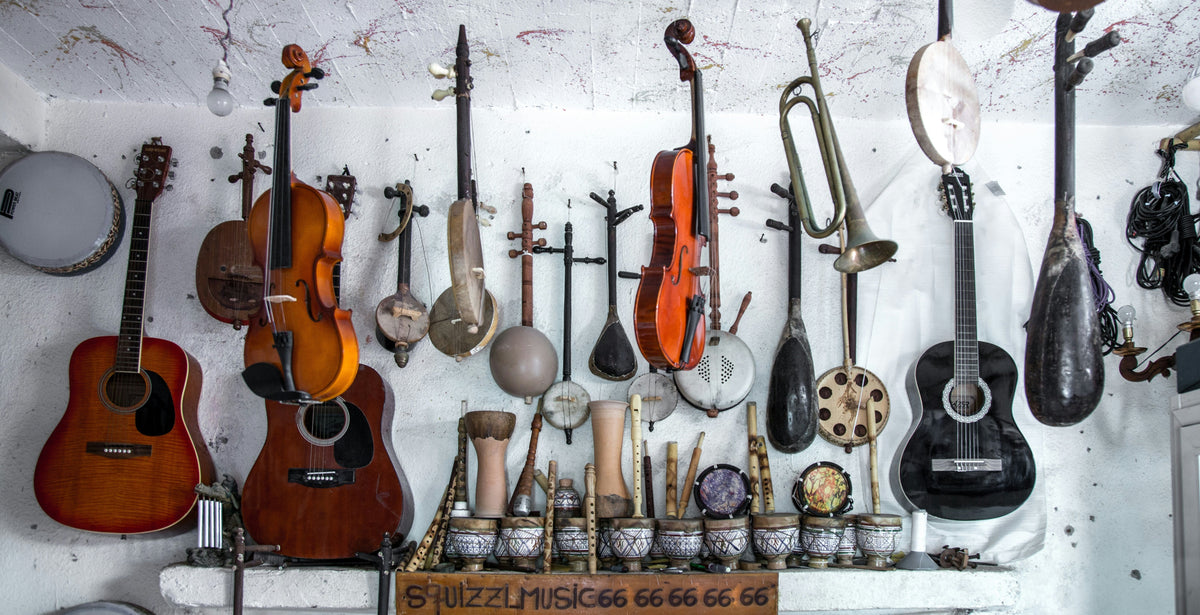
Deutsch Qualität
In 1937 Andrés Segovia — the man who had carried the Spanish guitar onto the world's concert stages — took delivery of the instrument he would play for the next quarter century. It was built by Hermann Hauser, the son of a zither maker, in Munich. Segovia had let him study his Madrid-built guitar some years earlier, and Hauser had gone home and built a Spanish guitar better, by Segovia's own account, than anything the Spanish were making. That guitar now lives at the Metropolitan Museum in New York. It is a Spanish guitar in every respect that matters, and it never saw Spain.
Which raises the question this volume is about. If a German could build the defining Spanish guitar of his generation, what does "Spanish" mean? Why do we talk about a Spanish school, an American school, a Japanese school, as if the passport of the builder decided the sound of the instrument?
It doesn't, and it does. A school isn't a nationality. It's a set of inherited answers — to what wood, what bracing, what scale, what neck, what finish, what the instrument is for — that a group of makers share because they learned from the same people, bought from the same timber merchants, built for the same players and sold into the same market. Those answers usually cluster in a place, because the forces that produce them are local. But the answers can travel, and Hauser proved it: he didn't become Spanish. He learned the answers.
The country episodes will be full of schools, so before we walk into them, here are the forces that make one, a section each. By the end you'll have the questions we'll ask of every place in the series, and a way to ask them of any guitar you pick up.
Good ol' times
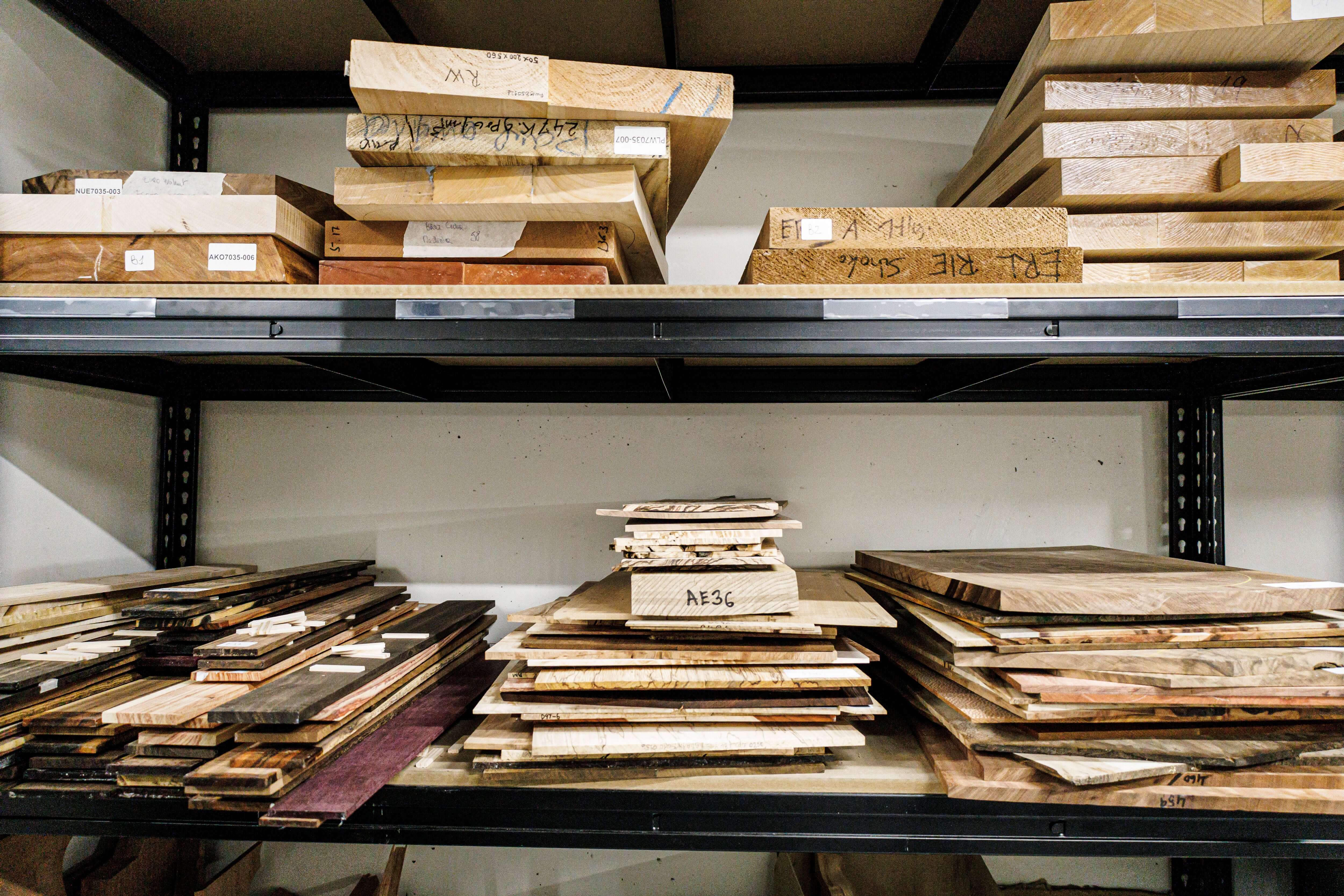
The first force is the dullest and the strongest: a school builds with what it can get. Before refrigerated containers and online tonewood dealers, a luthier's wood came from the nearest forest or the nearest port, and the sound of a whole tradition followed from that one fact.
Central Europe sat under the Alps, and the Alps grew spruce — slow-grown, tight-grained, light and stiff, the best soundboard material on earth. The violin makers of Cremona bought theirs from the Val di Fiemme, and the Vogtland's makers from the forests on their own doorstep. That is why the European tradition is a spruce-topped tradition, and why the words "European spruce" still carry a premium on a guitar built in California.
The back and sides came off ships. Spain and Portugal had colonies in the tropics, and Brazilian rosewood arrived in Iberian ports long before anyone thought of it as precious; Torres and his successors used it because it was there, it was dense, and it rang. Cypress, which grows all over Andalusia, went into the cheaper guitars — and into the flamenco guitar, which is the subject of the next section. In America, Martin built with Central American mahogany and Brazilian rosewood until 1969, when export restrictions pushed the company onto Indian rosewood; a generation of players learned to hear the difference, and a generation of collectors learned to pay for it. In 1950s California, Leo Fender built with swamp ash and then alder, not because they sounded best in some abstract sense but because they were cheap, light, plentiful, machined cleanly and took a spray finish well. The Fender sound is partly the sound of the American lumber trade.
Climate is the quieter half of the same force. Wood moves with humidity, and a guitar is built to the air it was made in. Andalusian builders worked in dry heat and built light, with thin tops that sing in that climate and can crack when they're shipped somewhere damp; northern European instruments, built in wetter air, tend to be heavier and more conservative. Every builder learns this the expensive way — usually from an instrument that left the shop perfect and came back from another continent with a crack along the top.
The forces are still at work, just through paperwork. Brazilian rosewood has been on CITES Appendix I, the strictest listing, since 1992; every rosewood came under international control in 2017, and finished instruments were exempted again in 2019, but the timber itself still moves under permit. Ebony and several mahoganies are under pressure too. What a school builds with today is decided less by the nearest forest than by the nearest customs office — and the most interesting work in the trade is happening in builders who have gone back to their local forests on purpose: European maple, walnut, fruitwoods, torrefied spruce. It's the oldest answer in the trade, rediscovered as an innovation.
Built to order
The second force is the customer, and the customer is a kind of music. Instruments get built the way they do because somebody needed them to do a specific job, and the clearest proof is that one tradition, in one city, produces two different guitars depending on who is going to play them.
Walk into a Spanish workshop and ask for a guitar, and the first question is which kind. The classical guitar is built for the concert hall: a rosewood back and sides, a top braced to project a long, warm, singing note to the back row. The flamenco guitar is built for a dancer's feet and a singer's voice: cypress back and sides, lighter overall, a lower action so the player can attack the strings, a bright, percussive note that dies quickly so the rhythm stays clean, and a clear plastic tap plate — the golpeador — because the player is going to hit the top with his fingers. Same builders, same bench, often the same week. Different job, different instrument.
The pattern repeats everywhere music made demands. In Paris in 1932, Mario Maccaferri designed a guitar for Selmer that could cut through a jazz band with no amplifier — a big cutaway body, a steel-strung top, at first an internal resonator — and Django Reinhardt made it the sound of an entire genre, which still builds it largely unchanged. In America, bluegrass bands needed a guitar that could be heard against a banjo, and the dreadnought became their instrument because it was the loudest flat-top made. Big-band rhythm players needed volume and chop, and got the archtop. Country players on the Bakersfield circuit wanted a bright, snapping note that cut through a honky-tonk, and the Telecaster became the country guitar more or less by accident. In 1980s Los Angeles, the players coming out of the San Dimas and Hollywood scenes wanted to play faster and bend further than any guitar allowed, and the shops around them built the superstrat: thinner neck, 24 frets, high-output pickups, a locking tremolo.
None of those designs was arbitrary, and none of them was a matter of taste. Each was a specification written by a music and delivered by a builder. When you see a strange feature on a regional instrument, the useful question is almost never who thought of this. It's who needed it.
The OG's

Uh, not him again....
Wood and music set the conditions. They don't build anything. Every school we'll meet in this series has, somewhere near its start, one maker or one shop whose answers to those conditions were good enough that everyone around them stopped looking for others. Biologists call this the founder effect — a population that descends from a few individuals carries their traits for generations, including the accidental ones. Lutherie works the same way.
The pattern is consistent enough to be useful. Spain's founder is Torres: his body shape, his scale and his fan bracing became the classical guitar, and for a century after his death the Spanish school was largely the business of interpreting him. America's flat-top founder is Martin, whose X-bracing and body sizes defined the steel-string so completely that the industry still names guitars after his shapes. The electric's founder is Fender — not because Fender was first, but because his answers were the ones that got copied. Germany's classical school runs through Hauser. The modern Madrid concert guitar runs through José Ramírez III, who in the 1960s moved his shop to cedar tops and a longer scale to give Segovia more projection, and whose shop trained a generation of the city's builders.
A founder's answers include his mistakes and his habits, and those get copied too. Plenty of features that look like deep tradition are one man's workaround that nobody questioned: a headstock angle set by the tools he had, a bracing pattern chosen for a top he couldn't get thinner, a body size that fitted the case maker down the road. That's not a criticism of tradition. It's a reminder that a tradition is a set of decisions, and decisions can be examined.
The founder effect also explains why schools are so stable — and why they break so suddenly. A school copies its founder until someone with enough authority builds something different and the players follow. Ramírez III did it in Madrid; in Australia, Greg Smallman's lattice-braced classical guitars of the 1980s did it to the whole concert-guitar world. Both were heresies before they were schools.
It's complicated
A founder only makes a school if his answers outlive him, and for most of history that meant one thing: people. The Spanish school passed from bench to bench through families and workshops — the Ramírez dynasty in Madrid, the makers who trained there and set up on their own, the apprentices who trained under those. You can draw the Madrid school as a family tree, and builders there still introduce themselves by whose shop they came from. That is a school working as it should: knowledge carried in hands, corrected every generation, never written down entirely.
It also means a school can travel in a single person. In 1960 a young Tokyo builder named Masaru Kohno went to Madrid and worked alongside Arcángel Fernández, then went home and built classical guitars that concert players in Japan and abroad took seriously within a decade. A Spanish school with a Japanese address. Hauser in Munich was the same thing a generation earlier. Borrowing is not the opposite of tradition — it is how most traditions started.
And it means a school can be broken by anything that breaks people's lives. The German guitar trade is the clearest case. Schönbach, in Bohemia, was a German-speaking instrument-making town for centuries. In 1945 and 1946 its German population was expelled; many of its makers resettled in the Franconian village of Bubenreuth, and Höfner and Framus — the companies that would build Germany's guitar boom — were rebuilt there by refugees. Schönbach itself became Luby, in Czechoslovakia, and its workshops became a state enterprise. Across the border in Markneukirchen, the East German state merged the private shops into nationalized combines, and a three-hundred-year-old tradition spent forty years building to a plan. Some of it survived. A lot of the knowledge that lived in family workshops didn't.
The twentieth century's answer to fragile transmission was the school in the other sense — the classroom. Vol. 1 told that story: written-down knowledge, teachable to anyone, available in Michigan or Cremona to a student from anywhere. It made the trade far more open and far less local. A builder today can learn Spanish bracing in Arizona and American setup in Paris. Which means the old schools are now, for the first time, a choice.
Money Money Money

The last force is the least romantic, and the one builders talk about least in public. A school builds for whoever pays for it, and the price that buyer can afford decides more about the instrument than any theory of tone.
The pattern is visible in every chapter of Vol. 2. The vihuela was built for a court, so it was refined, ornamented and expensive — and it died with the court's taste. The four-course guitar was built for everyone else, so it was cheap and strummed — and it survived. Markneukirchen and Schönbach became guitar towns because they built for export, at volume, for the American and British markets; their instruments were designed to be made quickly by a village of specialists, each doing one part. The Chicago factories built for the Sears catalog, and the catalog decided the price, and the price decided the build. Japan's postwar factories built for export to America, which is why they started by building American guitars.
The rule still holds. Most of the world's guitars are now built where labor is cheapest and sold where incomes are highest, and the design of those guitars is set by the price point in the second place, not the tradition of the first. The boutique trade lives at the other end of the same logic: small shops cluster near players who can afford them — Los Angeles, Nashville, London, Paris, Berlin, Tokyo — and build for buyers who want what a factory can't sell them. Neither end is more honest than the other. Both are building to their market.
Where a school meets its market now is the show circuit. NAMM in California is the industry's trade fair; the Holy Grail Guitar Show in Berlin is the European boutique builders' gathering; Guitar Summit in Mannheim, the Paris Guitar Show and a dozen regional shows fill the rest of the calendar. A builder from a small town can stand at a table in Berlin next to builders from thirty countries, and a school that once took a century to travel can be seen, heard and copied in an afternoon. That changes how fast schools form and how fast they blur. It's one of the questions the country episodes will keep running into: in a world where everyone has seen everyone's work, what's still local?
Quintessentially
Put the five forces together, add the one that runs through all of them — what a place took from somewhere else — and you have the six questions this series will ask of every country it visits.
None of them works alone. Wood without music gives you a timber trade, not a school; a founder without transmission gives you one great maker and a shop that closes when he dies; money without a founder gives you a factory that copies someone else's founder. A school is what you get when all six line up in one place long enough for the answers to harden into habit.
Two things follow for how to read the country episodes. First, the forces explain differences better than nationality does. When a German guitar sounds different from a Spanish one, the useful explanation is rarely "German" — it's spruce and humidity, an export market, a founder, a war that broke the chain. Second, the forces can be asked of any single instrument, not just of a country. Pick up a guitar and ask where its wood came from, what music it was built for, whose design it inherits, who taught its builder, what it borrowed, and what it was built to cost. You'll know more about it in a minute than its spec sheet will tell you in a page.
That's the method. From the next volume on, every episode applies it to a place.
Who am I ?

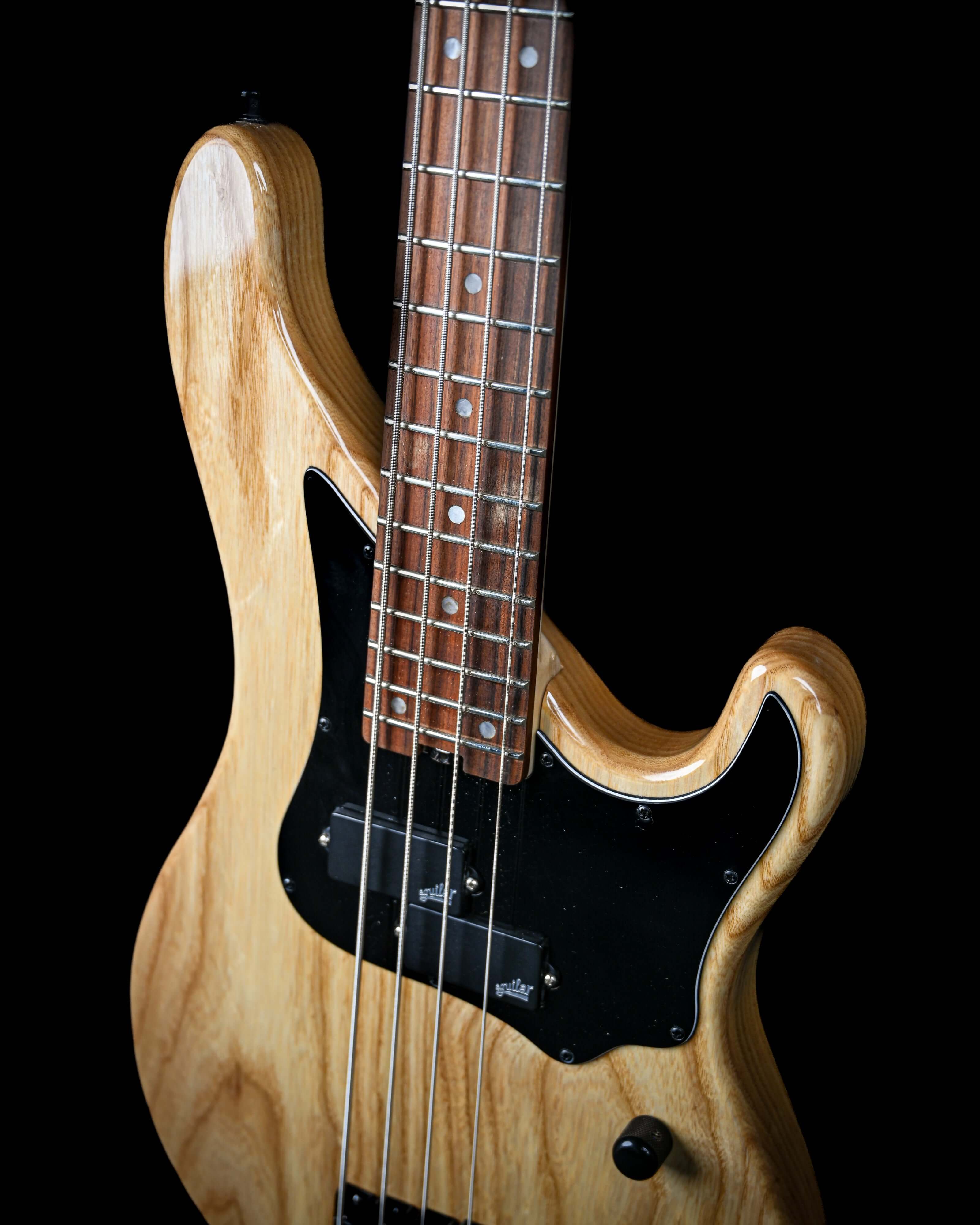
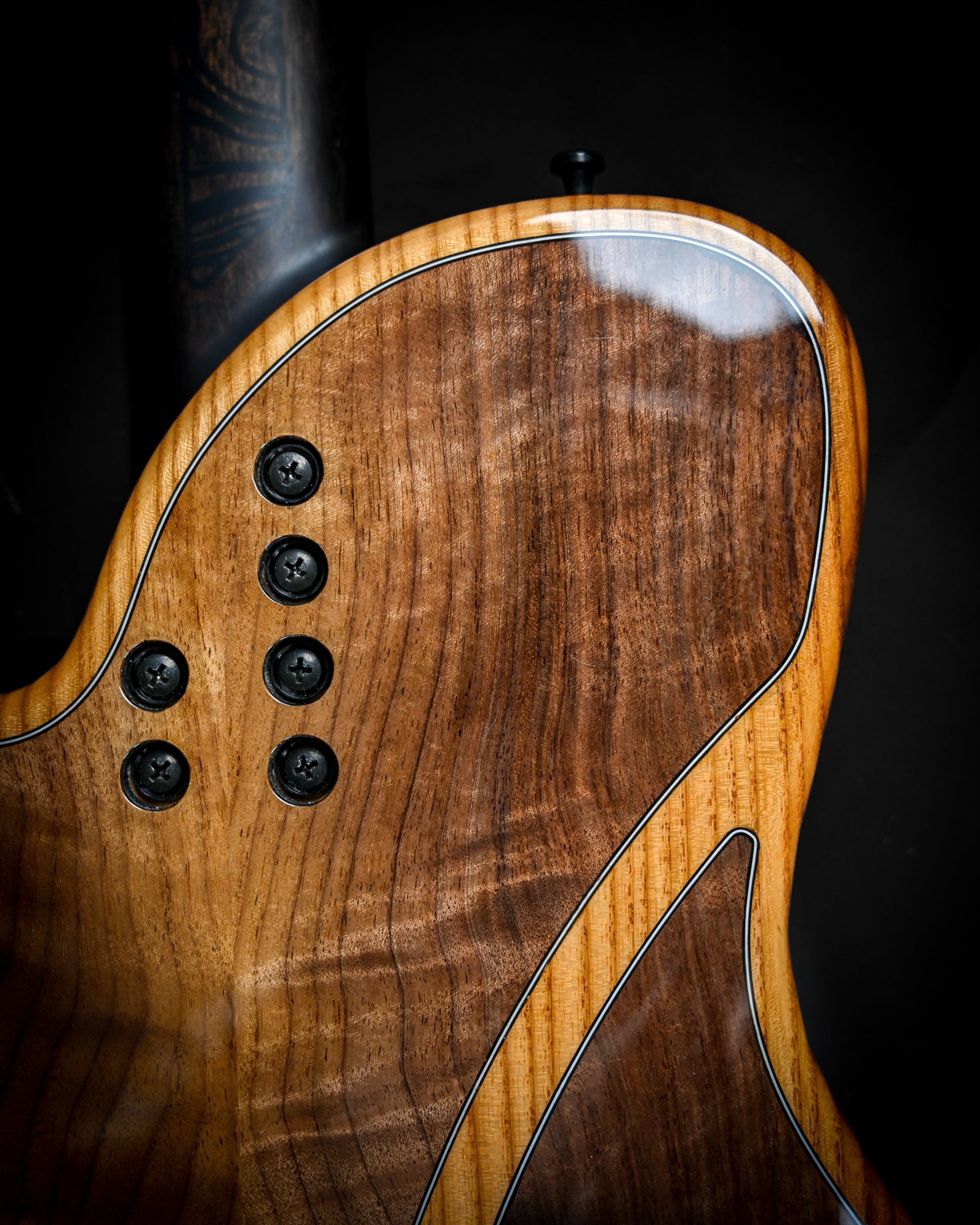
I'll answer it with the six questions, because I'd be a hypocrite not to. I learned the trade in Michigan, in an American school, from teachers whose own lineage runs back through the repair benches of the Midwest. I build in Paris, a city with a guitar tradition I'll spend a whole episode on and a violin tradition two hundred years deeper. My wood comes from European forests and from dealers who ship across the world, under permits. The music my customers play is mostly electric and mostly modern, and the bass player who orders a five-string from me is working inside a shape drawn in California in 1951. My founders, if I'm honest, are Fender for the electric and a long list of people for everything else. My market is anywhere a parcel can reach.
That's not a school. That's a catalog. And it's the condition of nearly every builder of my generation: we don't inherit a school any more, we choose one — or several — from a world where every tradition is visible at once. It's an enormous freedom. It's also the risk I worry about most in the trade right now: instruments that come from everywhere and therefore from nowhere, technically excellent and placeless.
My own answer — still being worked out, twenty instruments at a time — is to choose deliberately and say so. To know which answers I took from Seville, which from Nazareth and which from Fullerton, keep the ones I can defend, change the ones I can't, and let the place I build in show up where it honestly can: in the wood I choose, in the finish, in a certain French taste for things that work without making a fuss about it. Whether that adds up to a school is not for me to say. Schools are named by other people, usually after the founder is dead.
The introduction ends here. Next stop is a continent — Europe, where most of these answers were first written down.



Share:
The World of Lutherie, Vol. 2 — How the guitar went around the world
The World of Lutherie, Vol. 4 — Europe