




Ah, tone. That mystical quality that makes guitarists spend thousands on vintage gear and argue endlessly on forums about whether brass or steel bridge pins make a difference.
We all know what good tone is, right?
Well. Maybe not as much as we think.
The Golden Ear Myth
A controversial opening statement: most of us can't actually hear what we think we can hear. You know that guy who swears he can tell a 1959 Les Paul from a 1960 just by listening? He's almost certainly wrong.
Before the pitchforks come out, this isn't an insult. It's just how brains work.
When we evaluate tone, our ears receive sound waves, the auditory cortex processes them, and then the prefrontal cortex integrates that signal with our memory, expectations, and biases. We feel like we're forming an opinion about sound. We're actually forming an opinion about sound plus everything we already believed about the source of that sound. The technical term is expectation bias, and it's been documented in music perception studies for decades.
The most famous example is the Fritz study¹. In 2012, professional violinists were asked to distinguish Stradivari instruments from modern ones in a blind test. Not only did they fail to reliably identify the old Italians — many of them preferred the modern instruments when they couldn't see what they were playing.
The effect isn't unique to strings. A 2008 study in the Journal of Wine Economics² found that even expert wine tasters were significantly influenced by price tags and labels — exactly the way guitarists react to brand names and vintage years. Our brains literally process the same sensory input differently based on what we expect it to be.

The Wood Doesn't Lie (But We Do)
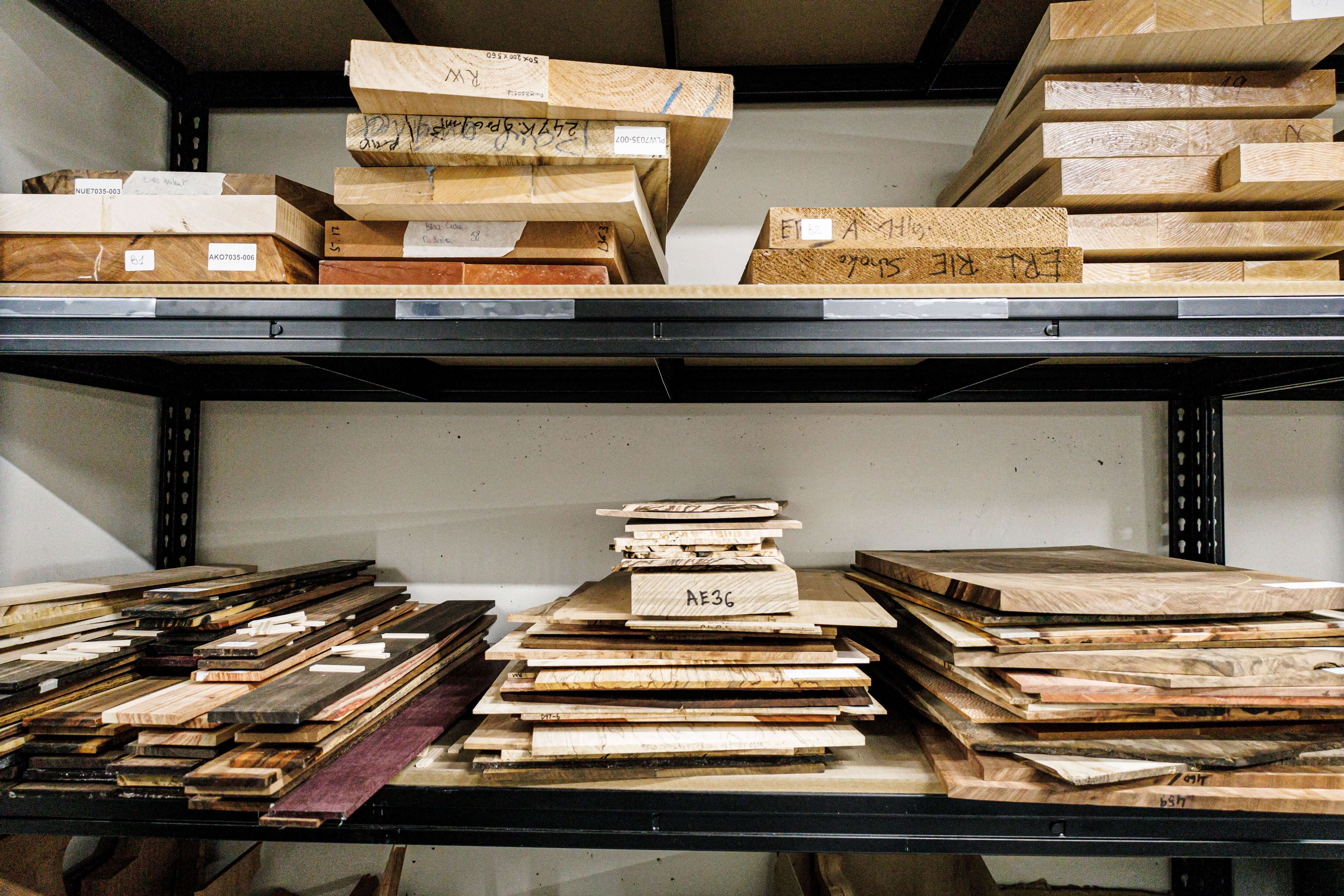
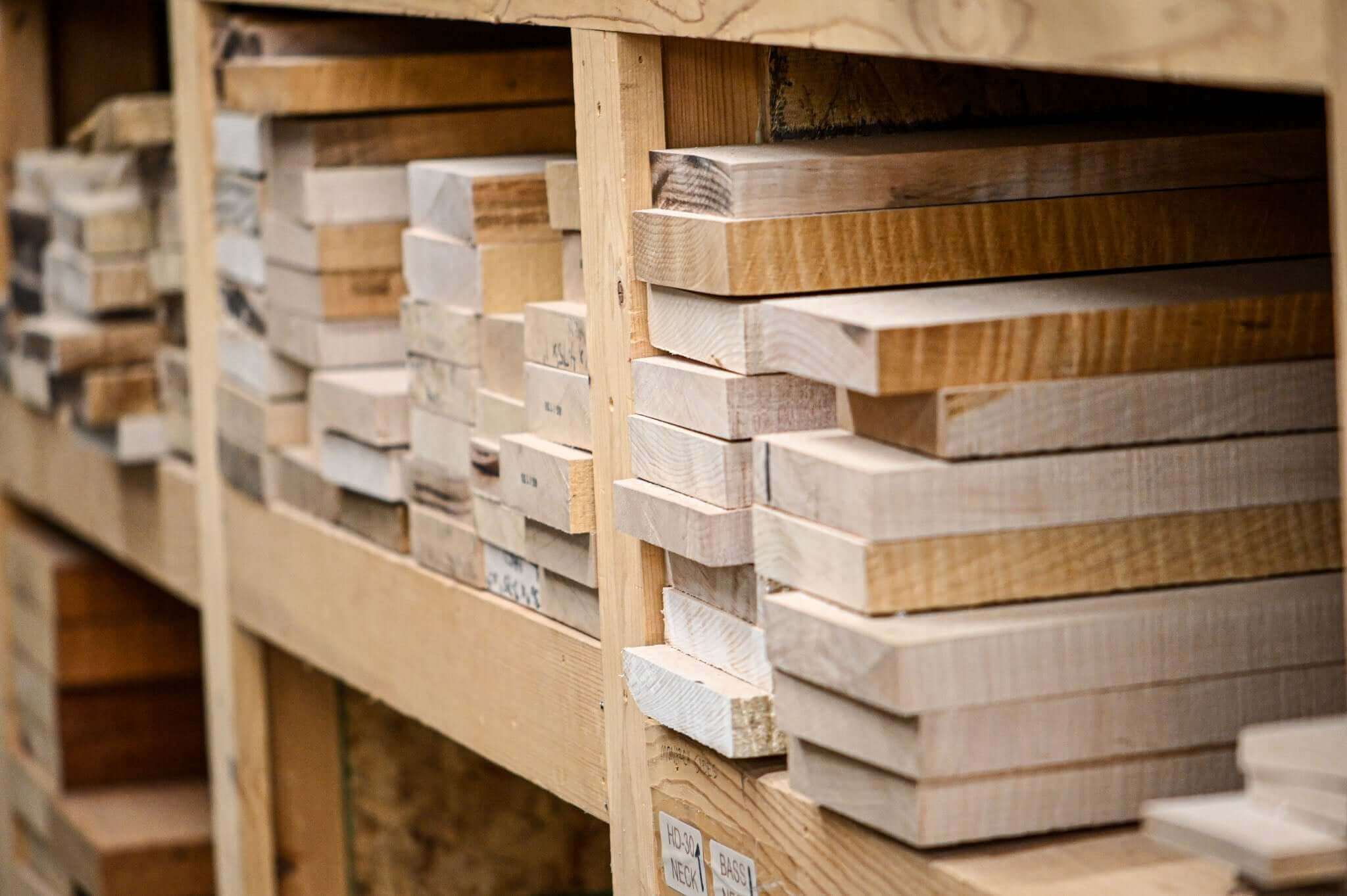
Let's talk about tonewood - everyone's favorite argument starter. Recent scientific research tells us something fascinating about wood properties that most tone-obsessed guitarists completely ignore.
The species myth: when averages lie
Guitar forums love to debate whether maple is "brighter" than mahogany, or whether Indian rosewood has more bottom end than Madagascar. These conversations all share a fundamental statistical error: the variation within a species is usually larger than the average difference between species.
Think about human height. Dutch people are, on average, taller than Italian people. But if you picked one random Dutch person and one random Italian and bet your savings on the Dutch one being taller, you'd lose plenty of those bets. The within-group variation swamps the between-group average.
Wood works the same way. Brémaud³ found that the coefficient of variation for mechanical properties within a single species could reach 30%, while the average differences between similar species were often less than 10%. Translated: two pieces of maple from the same tree can differ more than maple and mahogany from different continents.
So when someone tells you "maple sounds brighter than mahogany," they're making the same kind of generalization as "Dutch people are tall." Possibly true in aggregate. Nearly meaningless when you're holding two specific pieces of wood.

Moisture: the variable nobody argues about
A 2018 study in Acta Physica Polonica A⁴ examined how moisture content affects the acoustic behaviour of spruce. Some of what it found:
• Wood moisture content directly affects damping — how the wood absorbs and transmits vibration.
• Small changes in relative humidity significantly alter these properties.
• The effect is particularly pronounced in spruce, the most common soundboard wood on the planet.
• Professional luthiers dry their soundboards to roughly 6% moisture for optimal performance.
The difference in damping between properly and improperly moisturised wood is often larger than the difference between species that guitarists spend years debating.
Old wood also behaves differently. The same study found that 130-year-old spruce released moisture more uniformly than new wood, and demonstrated lower damping overall — which is part of why aged instruments often have longer sustain and more complex harmonic content. Professional luthiers know this. Most guitarists are too busy arguing about Madagascar versus Indian rosewood — a distinction smaller than a 5% shift in moisture content.
The marketing problem
This statistical reality creates an awkward situation for guitar marketing. "Premium Honduran mahogany" sells. "We selected wood samples based on individual mechanical properties regardless of species" does not. So the industry has spent decades training players to fetishise origin labels while obscuring the variables that actually matter.
Studies of wood mechanics give a sense of the scale we're talking about:
• Density can vary by up to 30% within a single tree.
• Elastic modulus (stiffness) can vary by 25% or more.
• Damping properties can differ by up to 40%.
These intra-species variations routinely dwarf the species averages they get hidden behind.
The Variables Nobody Talks About
The Göken study⁴ found that wood damping (tan δ) is:
• Almost completely frequency-independent across the range relevant to guitars (0.3–70 Hz).
• Highly dependent on strain — how hard the wood is bending during vibration.
• Heavily affected by moisture, especially in aged wood.
In plain English: how hard you play, and how well you maintain your instrument's moisture environment, matter more than most of the species differences we obsess over.
The Science of Wood Selection

When manufacturers (the ones who actually measure anything, which is a small minority — trust me) evaluate tonewood, they look at a handful of properties:
Density (ρ) — measured in kg/m³. Spruce ranges roughly 350–500, maple 580–750, mahogany 500–600. Individual samples regularly fall outside these ranges.
Dynamic Young's Modulus (E) — stiffness. Generally 10–20 GPa for tonewoods, with within-species variation of up to 40%. Measured via vibration testing, stress-strain analysis, or ultrasound.
Damping (tan δ) — how quickly vibrations decay. Usually 0.005–0.02 for quality tonewood. Measured by free-free beam vibration tests, forced vibration analysis, or dynamic mechanical analysis.
Some makers combine these into a single index — most commonly K = √(E/ρ³) — where higher values generally indicate better acoustic performance. But, predictably, K varies more within species than between them.
The Tap Testing Myth

This is how the writer sees tap testers.
Now for the romantic part. You've seen it: luthier holds a piece of wood, taps it with a knuckle, listens thoughtfully, pronounces judgment. Beautiful. Traditional. Largely meaningless as a measurement.
The problems with tap testing, in order of severity:
Where you hold it matters. Wood plates have specific vibration modes with nodes (no movement) and antinodes (maximum movement). Holding the wood anywhere but a node damps the vibrations. Most tap testers don't locate nodes before testing — so the same piece sounds different depending on where it's gripped. Measured variations of 20–30% in response from tap location alone are typical. Up to 50% from different holding positions.
Repeatability is awful. Tap force varies between tests. Tap location isn't consistent. Holding pressure drifts. Room conditions change. The same tester gets different results on different days.
Human hearing isn't a measurement instrument. Our ears are logarithmic, not linear. We can't accurately compare frequencies that are separated by time. Our perception is heavily influenced by room acoustics. And our memory for tonal quality is, to put it kindly, unreliable.
Tap testing is to acoustic measurement what wine tasting is to chromatography. Fun. Traditional. Genuinely useful for getting a feel. Not a reliable way to quantify anything. Manufacturers who care about repeatability use controlled vibration testing, accelerometers, frequency analysis, and standardised holding fixtures.
This isn't an attack on luthiers who tap. Tap-testing is a perfectly good first filter, and experienced makers do extract real information from it. It's an attack on the idea that tap-testing alone is sufficient evidence for any claim more specific than "this piece is alive."
The Selection Premium
Here's where premium instruments actually earn their price tag. When you buy a high-end guitar, you're not really paying for the species of wood. You're paying for selection — for someone having tested and rejected a hundred pieces of "premium" wood to find the one that performs.
Sproßmann et al.⁵ found that only about 10% of commercially available tonewood actually meets the criteria for premium instruments. The best-performing samples often weren't from the species marketed as premium. Careful selection within "ordinary" species can produce instruments that match or beat anything cut from the prestigious names.
The species is the marketing. The selection is the instrument.
Try This at Home
Want to test your own golden ears? Easy experiment:
1. Record yourself playing the same riff on different guitars.
2. Wait a week — long enough to forget which is which.
3. Listen blind. Try to identify them.
4. Prepare to be humbled.
Most people perform barely above random chance. Even experienced players regularly fail to distinguish their precious vintage instrument from a competent modern equivalent when they can't see what they're hearing.
So What Actually Matters?
If our perception of tone is this unreliable, where should attention actually go? The research is clear, even if it's deeply unfashionable:
Maintenance and moisture. Wood stability depends on a well-controlled humidity environment (around 6–9% wood moisture content for most tonewoods). A well-maintained budget guitar will genuinely outperform a poorly-maintained premium one — not as opinion, but as measurable physics. Damping properties change with moisture; vibration characteristics follow.
The room. Room modes can boost or cut frequencies by up to 12 dB. Early reflections substantially shape your perception of tone. Most rooms have a larger effect on what you hear than any pickup swap you'll ever make.
Technique. Biomechanical studies of guitar playing show that picking angle alone can shift harmonic content by up to 15 dB in certain bands. Picking position has more impact on harmonic content than most pickup-selector switches. Picking force overwhelms most subtle equipment differences entirely.
Setup. Bridge height, neck relief, nut slot depth. These mechanical fundamentals affect vibration transfer five to ten times more than boutique component upgrades. A guitar with the right setup will sound right. A guitar with a beautiful Brazilian rosewood bridge and a poorly cut nut will not.
The Liberation of Being Wrong

Realising we might be wrong about tone is, ultimately, freeing. It means you don't need to spend a fortune to get good tone. It means you can focus on playing rather than on endless gear acquisition. And it means you're free to like what you like, without needing anyone's permission.
The real secret to good tone isn't in your gear. It's in your head and in your hands. The best tone is the one that makes you play better and express yourself more fully — and whether that comes from a custom-shop masterpiece or a well set-up budget guitar genuinely doesn't matter as much as the marketing wants you to believe.
So the next time someone tells you that only Brazilian rosewood produces "authentic tone," or that you absolutely need vintage PAF pickups for "that sound" — remember: they think they know. They probably don't.
And neither do you. And that's okay.
P.S. If this article made you angry, that's a very good sign. That means you are experiencing what is called contradiction, and contradiction is good for all of us.
Except me — because remember, I'm Right, You're Wrong.
Footnotes
1. Fritz, C., Curtin, J., Poitevineau, J., Morrel-Samuels, P., & Tao, F. C. (2012). Player preferences among new and old violins. Proceedings of the National Academy of Sciences, 109(3), 760–763.
2. Goldstein, R., Almenberg, J., Dreber, A., Emerson, J. W., Herschkowitsch, A., & Katz, J. (2008). Do more expensive wines taste better? Evidence from a large sample of blind tastings. Journal of Wine Economics, 3(1), 1–9.
3. Brémaud, I. (2012). Acoustical properties of wood in string instruments soundboards and tuned idiophones: biological and cultural diversity. The Journal of the Acoustical Society of America, 131(1), 807–818.
4. Göken, J., Fayed, S., Schäfer, H., & Enzenauer, J. (2018). A study on the correlation between wood moisture and the damping behaviour of the tonewood spruce. Acta Physica Polonica A, 133(5), 1241–1260.
5. Sproßmann, R., Zauer, M., & Wagenführ, A. (2017). Characterization of acoustic and mechanical properties of common tropical woods used in classical guitars. Results in Physics, 7, 1737–1742.
Note : All our articles are written in French then translated. The translation is an active translation that doesn't simply translate word by word, but takes on when needed to better suit the targeted language. This can create a shift in tone or content that we accept and agree with.
Share:
IRYW : You don’t need to be a great musician to be a great luthier
IRYW : Beautiful Guitars Sound Better