



When I tell people I build guitars for a living, the first thing I usually hear is some version of: you must be an amazing player. It's meant as a compliment, and I take it as one. Then I disappoint everyone by explaining that the two things have almost nothing to do with each other.
I play. I am not the reason any guitar that leaves the bench is good. Those are separate sentences, and only one of them is about my hands.
The assumption underneath the compliment is that building is downstream of playing — that you carve a great neck because you've felt a great neck, that virtuosity somehow leaks out through the chisel. It's a lovely idea. It is also the wrong axis entirely. What decides whether an instrument is any good is not whether the maker can perform on it. It's whether the maker can listen, measure, and engineer.
That's the whole argument. The rest is evidence.
Couldn't Tune the Damn Thing

The authors reaction when he discovered
Leo Fender could not play guitar. Not modestly — at all. He took a few piano lessons as a child, messed around on saxophone, and by his own often-repeated account couldn't play a single note on the instrument he was about to redraw for everyone else. The recollection from George Fullerton, his longtime collaborator, is blunter still: Fender couldn't reliably tune one either. He was a radio repairman and a former accountant who fell in love with electronics — an inventor, not a musician.
He designed the Telecaster, the Stratocaster, and the Precision Bass. Three instruments that, between them, define what most working players mean by "electric guitar" and "electric bass." He arrived at them by understanding electronics cold and by handing prototypes to players and listening — hard — to what came back. The feedback loop was the method. His own hands were never part of it.
So before we go any further, the strong form of the myth is already finished. The most consequential electric-instrument designer of the twentieth century could not play the things he invented. If playing were a requirement, the Telecaster could not exist. It exists.
We Wanted a Wizard

Never late huh ?
Where does the myth actually come from? Not from the workshop. It comes from the story we like to tell about craft.
The romantic version of the luthier is a kind of mystic: someone who plays like an angel and then, in the same stroke of genius, carves the instrument that lets them. Popular culture adores this figure — the artisan whose own virtuosity pours into every cut. Musicians reinforce it from the other direction, often assuming that only a peer who plays at their level could possibly understand what they need.
It's a better story than the truth. The truth is more procedural and less magical: a person who is very good at a specific technical craft, who has learned to ask the right questions and read the answers carefully. The romance isn't harmless, either. It quietly tells every player who can't build, and every builder who can't shred, that they're missing the real gift. They aren't. They're just looking at the wrong skill.
The Engineer Can't Drive Either

Players almost never compare what they think they're comparing. Here, the confusion is between two different skills wearing the same word: "understanding" the instrument.
The Formula 1 engineer who designs a championship-winning car does not need to drive it at the limit, and almost none of them can. Their expertise is in mechanics, materials, aerodynamics — and in extracting useful information from the one person who does operate at the limit. The same is true in aviation: the aerospace engineer who designs an airframe is not the test pilot, and we'd be alarmed if the job description got confused. Nobody finds this strange in motorsport or flight. In lutherie, somehow, we still expect the designer to also be the driver.
Wrong and Furious

In fairness, the myth has a real intuition behind it, and it deserves the strong form. It goes like this: you can't build for an experience you've never had. Feel can only be understood by feeling. A maker who doesn't play is, at best, guessing at the thing that matters most — how the instrument behaves under a real player's hands in a real musical moment.
That's the best version of the argument. It's worth taking seriously, because it's half right. Then it gets the mechanism backwards.
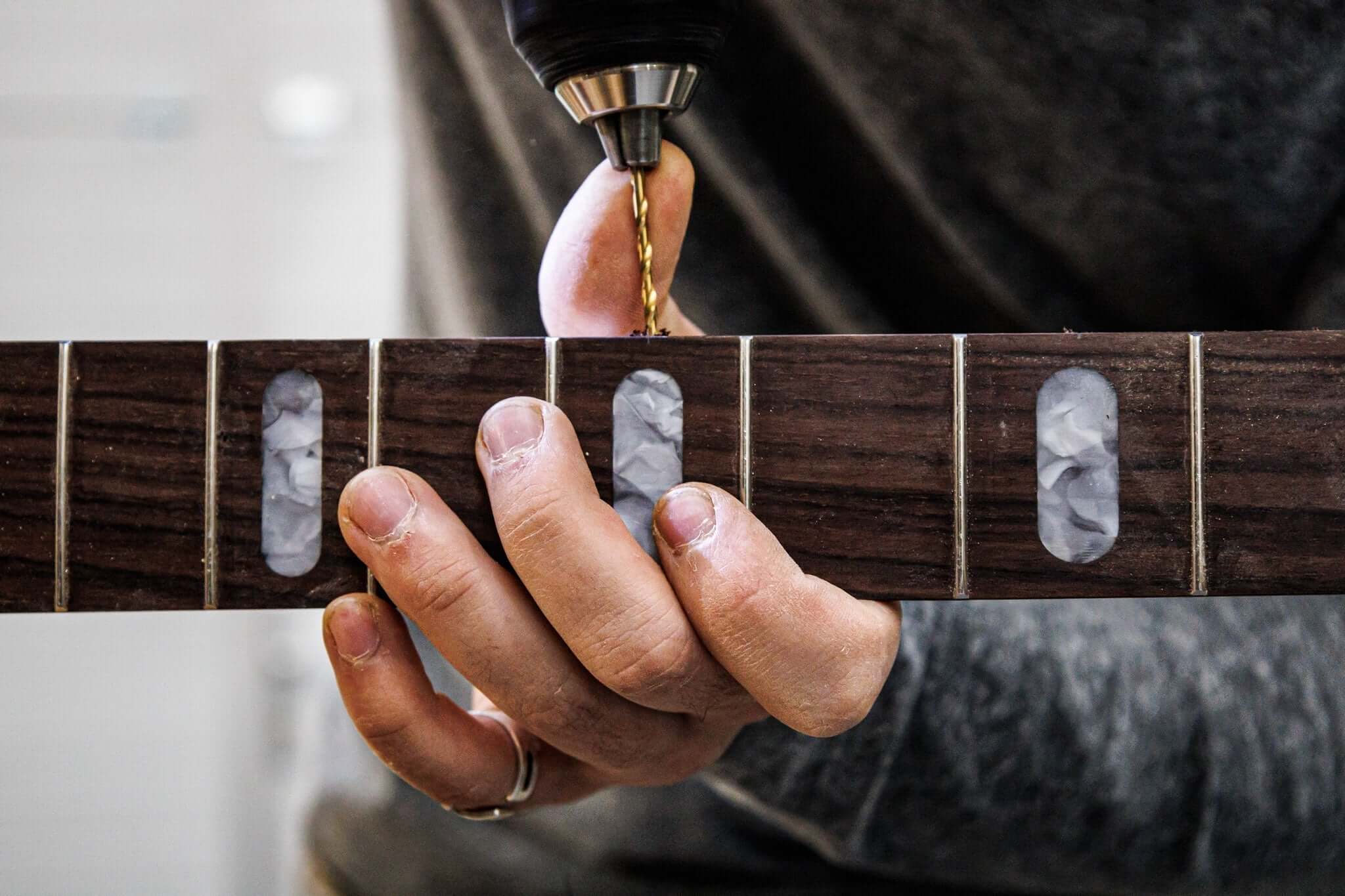
Give me a hand

Here's the real explanation. What transfers from a great player to a great instrument is information, and information moves through listening and measurement — not through the maker's own fingers.
A player tells you the neck "fights" them past the twelfth fret. That sentence is not music. It's a diagnostic. It points at relief, or unlevel frets, or nut slots cut high, or a neck angle that's set the action where it shouldn't be. The job is to translate the complaint into a geometry, then execute that geometry to a tolerance without introducing three new problems. None of that requires the builder to play the passage that exposed the fault. It requires the builder to know what the complaint means and how to resolve it.
The toolkit that does this work is unromantic: a straightedge, a set of feeler gauges, calipers, a notched rule, a careful interview with the person who'll own the thing. The player supplies the symptom. The builder supplies the diagnosis and the fix. Motor skill in the maker's hands is simply not the channel any of that runs through.
2 Wrong, 2 Furious

It would'nt be an IRYW if there wasn't a completely nonsensical illustration
I have to be careful here, because honesty is the entire point of this series.
The lazy way to make this argument is to roll out a list of revered makers who "couldn't play." It's a tempting list. It's also mostly wrong, and getting it wrong would hand the other side an easy win.
Take Lloyd Loar, the acoustic engineer behind Gibson's L-5 archtop and the F-5 mandolin. He gets cited as the patron saint of non-playing genius. He was nothing of the kind. By the time he reached Gibson he was a nationally known virtuoso mandolinist who had toured the United States and Europe, classically trained, equally at home on viola. His instruments are masterpieces of applied acoustics — violin-style arching, tuned and graduated plates. He also played beautifully. Both things are true at once.
Robert Benedetto, the most important archtop builder alive, is the same story. He's a professional jazz guitarist who started gigging at thirteen and still does. Acoustic Guitar magazine put it plainly: he's a musician himself, but what set him apart was how he listened to the players around him — Chuck Wayne, Johnny Smith, Bucky Pizzarelli, Kenny Burrell.
So the honest data does not say "great builders can't play." It says playing isn't the variable. Fender couldn't, and built the most copied instruments on earth. Loar and Benedetto could, and their gift still ran through their ears and their engineering, not through performance. The makers who play and the makers who don't converge on the exact same method.
Oh no, More Nuance

What does a good build actually look like, then, if not a player channeling themselves into wood? It looks procedural, and the procedure is where quality lives.
It starts with an interview, not a riff. What does the player's reach look like, how big are their hands, where do they fatigue, what do they hate about every instrument they've owned. Then measurement: scale length, neck profile mapped to the actual hand, fret size, string gauge and the tension it pulls. Then execution to thousandths of an inch on a fret plane, a nut, a setback. Then a setup pass, then another.
The modern proof of this is hiding in plain sight on boutique price tags. Fodera's Yin Yang basses — the ones most people picture when they picture Victor Wooten — were developed, in Fodera's own words, in close consultation with Wooten, who comes into the shop to demo tonewood combinations and choose the build. The player brings the ears and the demands. The shop brings the engineering. That division of labor isn't a compromise. It's the design process working as intended.
50 Shades of Neck Angles

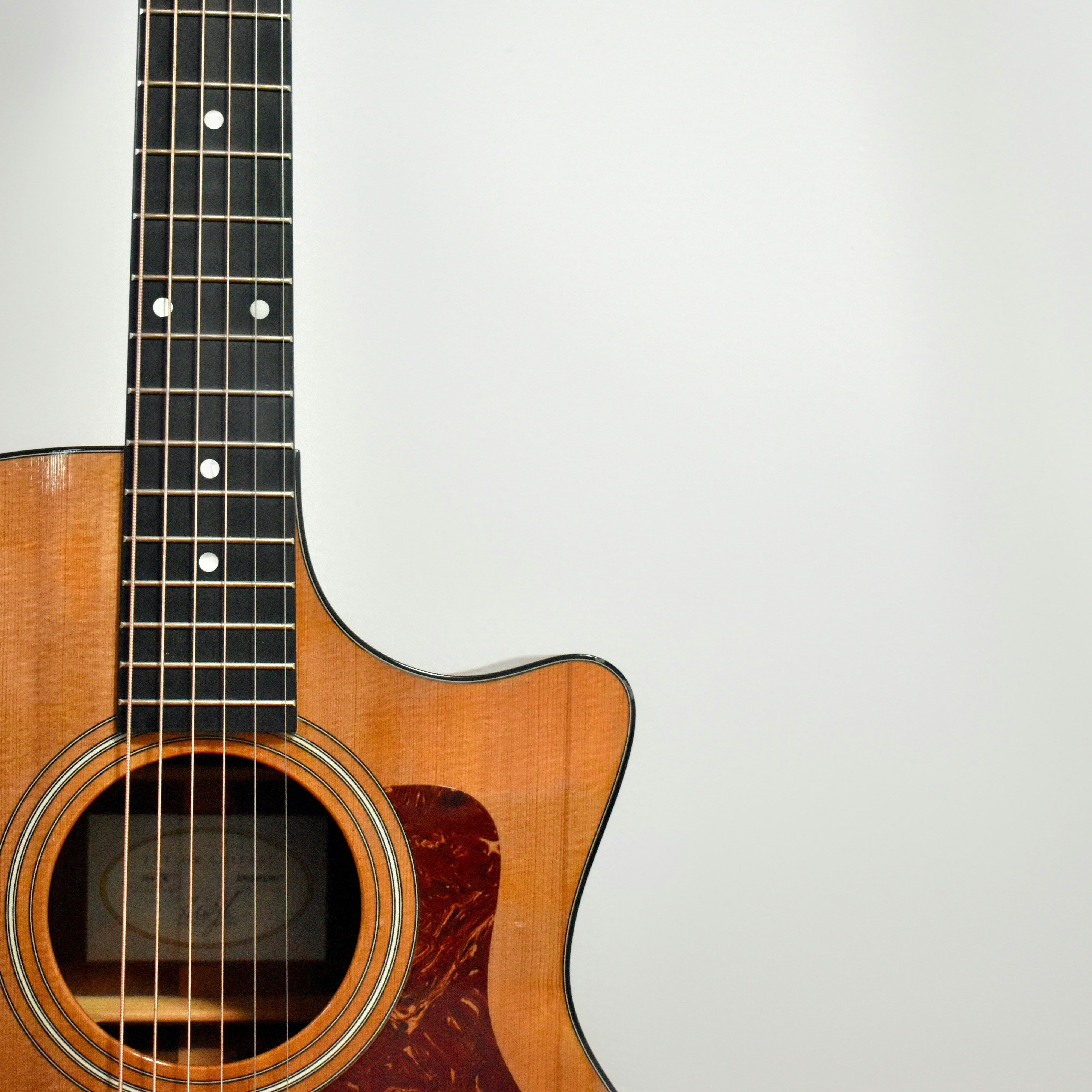
As a Taylor-authorized repair bench, the shop sees instruments every week that someone else built and someone else plays. The work is almost never musical.
A guitar comes in buzzing and choking out as you climb past the body join. The fix lives in a straightedge and a set of feeler gauges — relief, fret level, nut height — not in my ability to play the run that found the buzz. The run was the customer's job. The diagnosis is mine.
A custom client says the neck feels "stiff." Stiff is not a measurement. The work is converting that one word into numbers — string gauge, nut slot depth, relief, the tension the scale is pulling — and adjusting until "stiff" stops being a complaint. They never hand you a spec. They hand you a feeling, and you do the translation.
And the counter-case, which settles it: a genuinely brilliant player hands you an instrument they built themselves, and it's a mess. Lovely hands, wrong neck angle, a nut cut by someone in a hurry. The playing didn't save the build. It never does.
Toadying

You can show someone Leo Fender and watch them hold onto the myth anyway. That's worth understanding, because it's the same reflex that made beauty stand in for tone a few volumes back: we believe what makes the better story.
The wizard version flatters everyone in the room. It flatters the player, who gets to believe only a fellow virtuoso could serve them. It flatters the buyer, who'd rather own a piece of magic than a well-executed set of tolerances. And it flatters the maker, who would, frankly, prefer to be seen as an artist channeling genius than as a technician taking careful measurements. Evidence doesn't compete well against a story that makes three parties feel good. It just happens to be true.
Fine, Playing Helps

Now the part where the other side has a real point, because it does.
A builder who plays has a feedback channel a non-player simply doesn't. You feel the neck profile fill your hand as you shape it. You catch a sharp fret end before the customer ever will. You feel the precise moment relief goes wrong under a barre chord, at the bench, at two in the morning, without booking anyone. You can audition your own work in real time. Loar and Benedetto both had that channel, and it plainly cost them nothing. It's a genuine advantage and I'm not going to pretend it isn't.
All of that is true. And all of it feeds the listening — it's one more way to gather information about the instrument in front of you. None of it is the thing that makes the instrument good. The advantage lives in the ears and the measurements it produces, never in the hands themselves. Playing is an input to the diagnosis. It is not a substitute for the engineering, and it was never the source of the quality.
What's this thing for ?

Strip the romance away and a guitar is a tool built to disappear in someone else's hands. The maker's whole job is to serve a performance they will personally never give — to build something so right that the player stops noticing it and starts noticing the music.
That is a job about empathy and precision, not about chops. It rewards the person who asks the best questions, reads the answers most accurately, and holds the tightest tolerances. The bench is where the instrument is decided. The stage is only where it gets used.
So
Playing is neither necessary nor the active ingredient. Fender is the proof that it isn't necessary — he couldn't play and built the templates everyone else copies. Loar and Benedetto are the proof that it isn't the ingredient — they had it in abundance and still built through their ears and their engineering. The maker who can't play and the maker who can both arrive at quality by the same route: ask, listen, measure, build, measure again.
If you want to know whether someone can build you a great guitar, ask how they take a measurement and how they handle a player's feedback. Don't ask what they can play. It's the wrong question — a polite one, but the wrong one.
The guitar is built at the bench. Whether the builder can also play it is a fun fact, not a spec.
You know the drill I'm Right, You're Wrong.
Note : All our articles are written in French then translated. The translation is an active translation that doesn't simply translate word by word, but takes on when needed to better suit the targeted language. This can create a shift in tone or content that we accept and agree with.
Share:
I design guitars from the perspective of a bass builder
IRYW - Tone : you think you do, but you don’t