



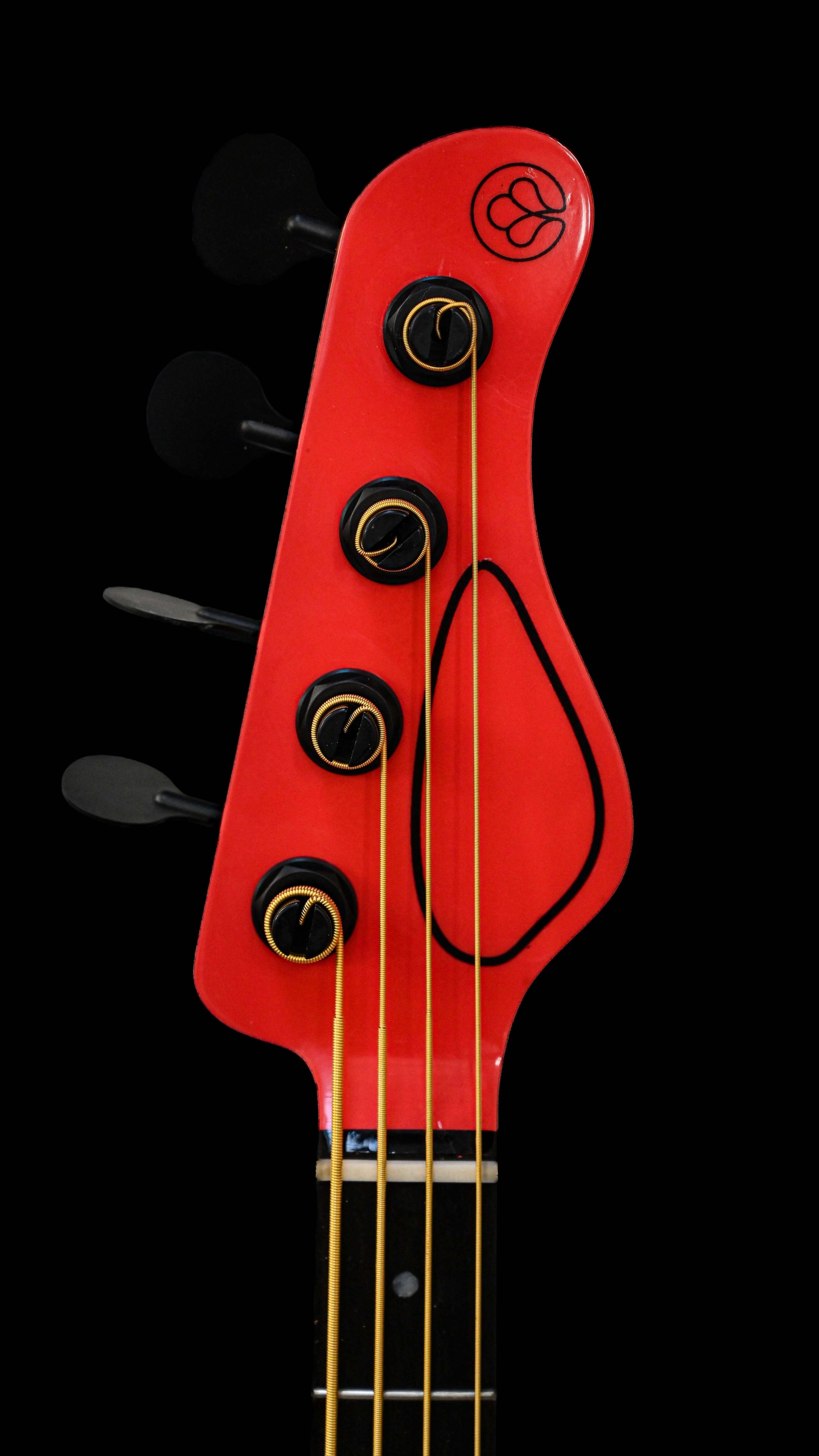
琴弦是乐器上争议最大、更换最频繁、也最容易被误解的部件。它们同时也是最便宜的,这正是相关营销之所以如此奏效的原因:一套琴弦的价格甚至比一顿饭还便宜——当然,贝斯手除外。因此,人们极易相信选对琴弦就能彻底改变音色,而验证这一信念的成本又低得几乎人人都会尝试。
本文与本系列的其他文章一样,旨在区分琴弦实际起到的作用——无论是对音色、手感还是调音的影响——与产品目录描述和论坛讨论中所认为的作用之间的差异。
大多数制作细节都是真实存在的,值得深入了解。材质的差异确实存在,尽管可能比人们想象的要小。而在整个讨论中,影响音色最大的单一因素,却几乎没人会向你推荐,因为你早已拥有它:琴弦的使用年限。
我们稍后再说这个。先说说零件。
琴弦究竟是由什么制成的
琴弦的材质是真实存在的,能被听见,也确实很重要——但它的实际重要性远低于营销宣传所暗示的程度,而且在原声吉他上的重要性远大于电吉他。以下是真实的情况。
On an electric, the string has to be ferromagnetic so the pickup can sense it, which immediately rules out bronze and nylon. Within the magnetic materials, the differences are real but modest:
• 镀镍钢芯之所以成为默认选择,自有其道理:钢芯负责提供输出和攻击力,镀镍层则起到柔化音色的作用。音色均衡、用途广泛,中频略微下切。这正是大多数乐手所听到的“标准”音色。
• Pure nickel is warmer and softer in the top end, with a gentler attack. It’s the “vintage” choice, and the difference from nickel-plated is audible — but it’s a shift in flavour, not a different instrument.
• 不锈钢琴弦音色更明亮、音量更大,且耐腐蚀性更强,但手感稍显生硬,且会加剧品丝磨损。放克和金属乐手青睐它,正是看中其清脆的弹性和穿透力。
• 钴及其他特殊合金号称具有更强的磁响应和更大的输出功率。其中部分效果确实可以测得。但在通过真实混音系统连接真实功放进行的盲测中,这些效果能保留多少,其实际表现远不如宣传所暗示的那样显著。
On an acoustic, the material matters more, because there’s no pickup and amp to swamp the differences — the string’s own character is most of what you hear:
• 80/20青铜刚拆封时色泽清亮,但氧化速度快,因此这种亮度持续时间较短。
• 磷青铜通过添加微量磷来增强耐腐蚀性,从而呈现出更温暖、更均衡且更持久的音色。它之所以成为原声吉他的行业标准,是因为它真正解决了实际问题,而非出于营销考量。
• 丝绸与钢材的结合降低了张力,从而呈现出更柔和、更圆润的指弹音色。
至于古典吉他和弗拉门戈吉他,你完全是在尼龙弦和氟碳弦的范畴内——透明尼龙弦能呈现传统的柔和音色,黑色尼龙弦音色稍暗,更适合弗拉门戈风格;氟碳弦音色更明亮、更集中,且调音稳定性更好。
The honest summary: the alloy sets the flavour. It is a real ingredient. But on an electric especially, it is dwarfed by the pickups, the amp, and — the thing this whole article is building toward — whether the strings are fresh or dead.
解剖学:发生变化的部位比音色更能传递情感
琴弦不仅仅是一根金属丝。其结构细节才是决定手感差异的关键所在——而手感正是演奏者最常误认为是音色的因素。
芯线有两种形状。六角芯能牢牢夹紧缠绕线,带来更明亮的音色、更快的起音速度以及更佳的调音稳定性——这是现代的标准做法。圆芯则是复古风格:更具柔韧性,音色更圆润、更温暖,但安装起来更费工夫,因为稍不留神就会滑脱。这两者的差异是真实存在的,主要体现在手感上。
绕线是你在演奏的每一秒都能从指尖感受到的细节:
• 圆弦—— 默认选项。音色明亮、富有层次感、充满活力,但手指摩擦声更明显,且品丝磨损更快。
• Flatwound — wrapped in flat ribbon for a glassy-smooth surface and a darker, subdued voice. The jazz and fretless-bass and vintage choice. The smoothness is the point.
• 半包弦/磨平弦—— 将圆包弦磨平,以求折中。这是一种真正的折中方案,而非营销噱头。
芯材与包覆层的比例使制造商能够调节板的刚性和响应性:芯材越厚,板身越紧绷;芯材越薄,板身越柔韧,脚感越温暖。
Ball ends, taper cores, and exposed cores matter most on bass and extended-range instruments. A tapered or exposed core at the saddle reduces mass right at the contact point, which genuinely improves clarity and intonation on a low B — this is real engineering solving a real problem, not a tone-fairy story. It’s the same physics that justifies multiscale construction: get the low string to behave, and the clarity follows.
请注意其中的规律。本节中的几乎所有内容都会改变琴弦的手感以及发音的清晰度——实际的音色在其中所占的比重,远不如目录所描述的那样大。
简要说明一下物理原理,因为这能一举破除三个误区
You don’t need the equation to play, but you need it to stop believing nonsense. A vibrating string’s pitch is governed by three things: its tension, its vibrating length (the scale length), and its mass per unit length (mostly its gauge). Pitch goes up with more tension, down with more length, down with more mass.
就是这样。而这三者共存于一段关系之中,正是打破了最常见的民间传说:
It explains why gauge is mostly a tension-and-feel choice, not a tone choice. A heavier string at the same pitch and scale is under more tension — so it feels stiffer and pushes back harder. That’s the dominant thing you’re buying when you go up a gauge. The tonal change is real but secondary, and most of it follows from the tension, not from some inherent “fatter tone” in the wire. (This is the exact same point the scale-length article made from the other direction: tension is a product of gauge, scale, and pitch together, and players constantly credit the string for what is really a tension difference.)
It explains inharmonicity — why thick, short, stiff strings drift slightly sharp in their overtones and never sound perfectly in tune up the neck. It’s not a defect in the set; it’s physics. Heavier-gauge and very low strings carry more of it, which is part of why a sloppy low B sounds “off” even when it’s tuned correctly.
这解释了为何“天下没有免费的午餐”。你无法同时获得更高的张力、更低的音高和更轻的质量。每种琴弦的选择都是一种三方权衡,而那些暗示某套琴弦能打破这种权衡的营销手段,不过是在向你兜售一种并不存在的几何结构。
弦径:最被高估的音色选择,最被低估的手感选择
这是整个话题中最为干脆利落的破除迷思之一。
迷思:琴弦越粗,音色越好。人们认为,既然史蒂维·雷·沃恩(Stevie Ray Vaughan)都用电话线弹琴,那么琴弦越粗,音色就越好。
事实是:弦的粗细选择主要取决于手感和张力,音色因素仅是次要的。 弦径变粗后实际带来的更多是张力——手感更硬、按弦时阻力更大、响应更紧凑,在低音调弦时弦音失真前的动态余量也更大。这些都是真实存在的,也是我们这么做的原因。人们所描述的音色“改善”,大多是更高张力带来的结果(而且很多时候还因为同时安装了全新的琴弦),而非弦径本身所固有的特性。
因此,请根据具体任务选择合适的线径:
• 较细弦(.008–.038,.009–.042):按弦和弯音轻松,音色柔韧,起音迅速,音色更明亮且略显清亮。适合主奏、轻柔弹奏及初学者。
• 中号(.010–.046,.011–.049):明智的默认选择。张力均衡,音准稳定,音色更饱满。大多数演奏风格都适合这一规格。
• Heavy (.012–.054+): more tension, more finger strength required, tighter low end. The reason to use them is drop tunings and aggressive picking, not a magic tone upgrade.
For bass, light sets start around .040 and heavy five- and six-string sets run to .130 and beyond, where balanced tension across the set becomes a real design problem — which is why extended-range and multiscale instruments often need custom or tapered sets rather than an off-the-shelf pack.
And the practical trap worth naming: changing gauge changes your setup. A jump in gauge changes neck relief and string height, so the truss rod and action need adjusting and the intonation needs resetting. Swap from 9s to 11s and skip the setup, and you’ll blame the strings for buzz and tuning problems that are actually a neck that hasn’t been re-balanced for the new tension.
根据乐器和演奏风格选择琴弦
关于“哪种琴弦适合哪种乐器”的问题,大部分答案其实就是将上述内容结合常识加以应用,因此这里提供一个简明扼要的版本,而非详尽的对照表。
电吉他需要磁性材料,因此弦材通常采用镀镍(全能型)、纯镍(音色更温暖,复古风)或不锈钢(音色更明亮、更坚韧、音色更清晰)。默认采用圆绕弦;若您特别想要那种顺滑、低沉、带有爵士或复古风格的音色,并希望减少杂音,则可选择扁绕弦。
在音色表现方面,材料的选择至关重要:80/20青铜音色明亮锐利(但高音持续时间较短),磷青铜音色温暖且耐用(这是稳妥的选择),而丝钢弦则能带来低张力带来的醇厚音色。
低音弦有圆绕弦(音色明亮有力)、平绕弦(音色柔和醇厚,是雷鬼、灵魂乐和爵士乐的标配)以及带状绕弦(音色更显深沉,类似立式低音提琴的闷响),而锥形/裸露芯弦则在低音弦中独占一席之地。
古典吉他通常使用尼龙弦或氟碳弦,且不能与钢弦互换——将钢弦装在专为尼龙弦张力设计的古典吉他上,会损坏乐器,绝非一种音色实验。
由此,各流派的配弦方案便不言自明:爵士乐倾向于平直而温暖的音色,金属乐倾向于厚重、明亮且稳定的音色,放克乐倾向于明亮且富有响应感的音色,民谣和指弹则倾向于磷青铜或丝钢弦。这些只是起点和默认选择,而非硬性规则——关键在于理解每种配弦组合之所以成为惯例的原因,这样当你打破常规时,才能清楚自己究竟在取舍什么。
脊柱:关键在于新鲜度,而非品牌
现在到了所有内容都在引向的这一部分。
If you blind-tested a player on two identical guitars — same model, same pickups, same amp, same gauge — and put a fresh set of mid-priced nickel-plated strings on one and a fresh set of boutique strings on the other, most players, most of the time, could not reliably tell you which was which. The differences are there, but they’re small, and they’re swamped by everything downstream.
Now run a different test. Put a fresh set on one and a three-week-old set of the same strings on the other. Almost anyone can hear it instantly. The fresh set is brighter, more harmonically alive, with a clearer attack and better intonation. The old set is dull, thuddy, and slightly out of tune with itself, because grime, corrosion, and microscopic dents at the fret contact points have added uneven mass along the string and killed its high harmonics.
这就是全部的奥秘。在关于琴弦的讨论中,影响音色的最大变量并非合金成分、品牌、涂层或价格——而是琴弦的使用年限。一套崭新的廉价琴弦,无论何时都能完胜一套老化严重的昂贵琴弦,其音质差距之大,远超两套崭新琴弦之间的任何差异。琴弦行业中最昂贵的产品,很大程度上只是针对一个问题的复杂解决方案,而这个问题其实通过更频繁地更换琴弦也能轻松解决。
这彻底改变了我们的视角:
• The player chasing “more brightness” through pricier strings is very often just a player who’d been playing dead strings, and would have got the same result from a fresh five-dollar set.
• 关于 镍弦与不锈钢弦的争论 确实存在,但这本质上是一场关于音色的争论,参与者往往难以达成共识,因为他们比较的其实是不同使用年限的琴弦。
• 花更多钱购买琴弦的 真正原因 ,几乎从来都不是音色。而是耐用性、一致性和调音稳定性——花这笔钱,是为了让新弦的音色在逐渐消退前能保持更久。
这正是涂层发挥作用的地方。
包胶琴弦:该品类中最遭人误解的产品
误区:包皮弦的音色更差——更沉闷、更死板、缺乏生机。
事实是:现代包覆弦虽然在初期音色明亮度上略有牺牲,指尖触感也略有不同,但其使用寿命却能延长数倍。鉴于弦的“年龄”是影响音色的主要因素,这种取舍远比那些挑剔之士所认为的要好得多。一套包覆弦在其漫长的使用周期中大部分时间都能保持不错的音色,而一套未包覆弦虽然在短暂的使用初期音色极佳,但随后很长一段时间里音色都会变差——因为人们很少像应该的那样频繁更换琴弦。
聚合物涂层(PTFE 或类似材质)能保护琴弦免受汗水、油脂和污垢的侵蚀,这些物质会破坏音色。早期涂层确实会明显削弱音色明亮度,因此名声不佳;但如今的涂层对音色的影响已微乎其微,对大多数演奏者而言,在绝大多数情况下,其耐用性带来的优势更为显著。如果你体内的汗液呈酸性,或者居住在潮湿地区,那么涂层琴弦绝非妥协之选——它们才是最佳选择。
Maintenance: how to make the variable that matters work for you
Once you accept that freshness is the whole ballgame, maintenance stops being a chore and becomes the cheapest tone upgrade available.
Strings die from corrosion (sweat, humidity, skin oils — acidic sweat is brutal), from fretting wear (flat spots and dents where string meets fret), and from debris packing into the winding and adding dead mass. The signs are familiar: lost brightness, won’t stay in tune, uneven intonation, discoloration, eventually breakage.
The maintenance that actually works is unglamorous and cheap:
• 每次练习结束后,请用干布擦拭琴弦。这个简单的习惯比任何护理产品都能更有效地延长琴弦的使用寿命。
• Wash your hands before playing — you’re removing the oils and salt before they get on the string, which is more effective than cleaning them off after.
• 请将乐器存放在环境稳定、湿度不宜过高的场所。
• 如果您所在地区的化学环境或气候条件对琴弦有较大影响,请使用包覆弦。
Rough lifespans: uncoated sets give one to four weeks of regular play before they noticeably fade; coated sets two to six times that, often months. But “lifespan” is personal — a heavy-handed player with acidic sweat in a humid room will kill a set in days, while a light player who wipes down religiously can stretch the same set for weeks.
For builders and setup, this is non-negotiable: an instrument must be voiced, set up, and demoed on fresh strings. Dead strings misrepresent everything — the intonation, the response, the tonal character the instrument was built to have. A customer trying an instrument on tired strings is hearing the strings, not the guitar. Every instrument should leave the bench on a fresh, appropriate set, because anything else is testing the wrong variable.
那么,你究竟应该从中得到什么启示呢?
字符串很重要——但它们的重要性在于特定的顺序,而市场营销部门却总是把这个顺序搞乱。
新鲜度是首要因素,而且优势非常明显。新弦与旧弦之间的差异,远比本文中所有其他因素的总和还要显著。如果你希望明天能获得更好的音色,而你已经用了同一套琴弦两个月,那么你不需要换个更好的品牌——你需要的是新的一套琴弦,以及养成更频繁更换的习惯。
弦的制作主要关乎手感。缠绕方式、芯线形状和线径对乐器在指尖的手感以及音符的清晰度影响远大于对基本音色的改变。选择弦时应着眼于演奏体验和实际需求——平绕弦追求顺滑手感,较粗的线径则适合降调——而非为了追求某种想象中的音色转变。
Material is a real but secondary flavour — and more of one on acoustic than electric, where the pickups and amp dominate. Nickel versus stainless is a genuine choice. It is not the choice that’s holding your tone back.
而多花钱的真正原因在于耐用性,而非什么神奇魔力。涂层和优质合金主要能延长新弦音色的保持时间——考虑到上述所有因素,这实际上是最值得花钱的地方。只是别指望花这笔钱就能换来一把截然不同的乐器。
Strings are the first point of contact between the player and the instrument, the membrane where motion becomes tone. That makes them genuinely important. It does not make them magic. Change them often, match them to the job, and let the instrument be heard.
没有花哨的修辞,没有教条——只看数据线在做什么。
分享:
关于品槽的真相
吉他调试 什么是吉他调试?(以及它不是什么)