



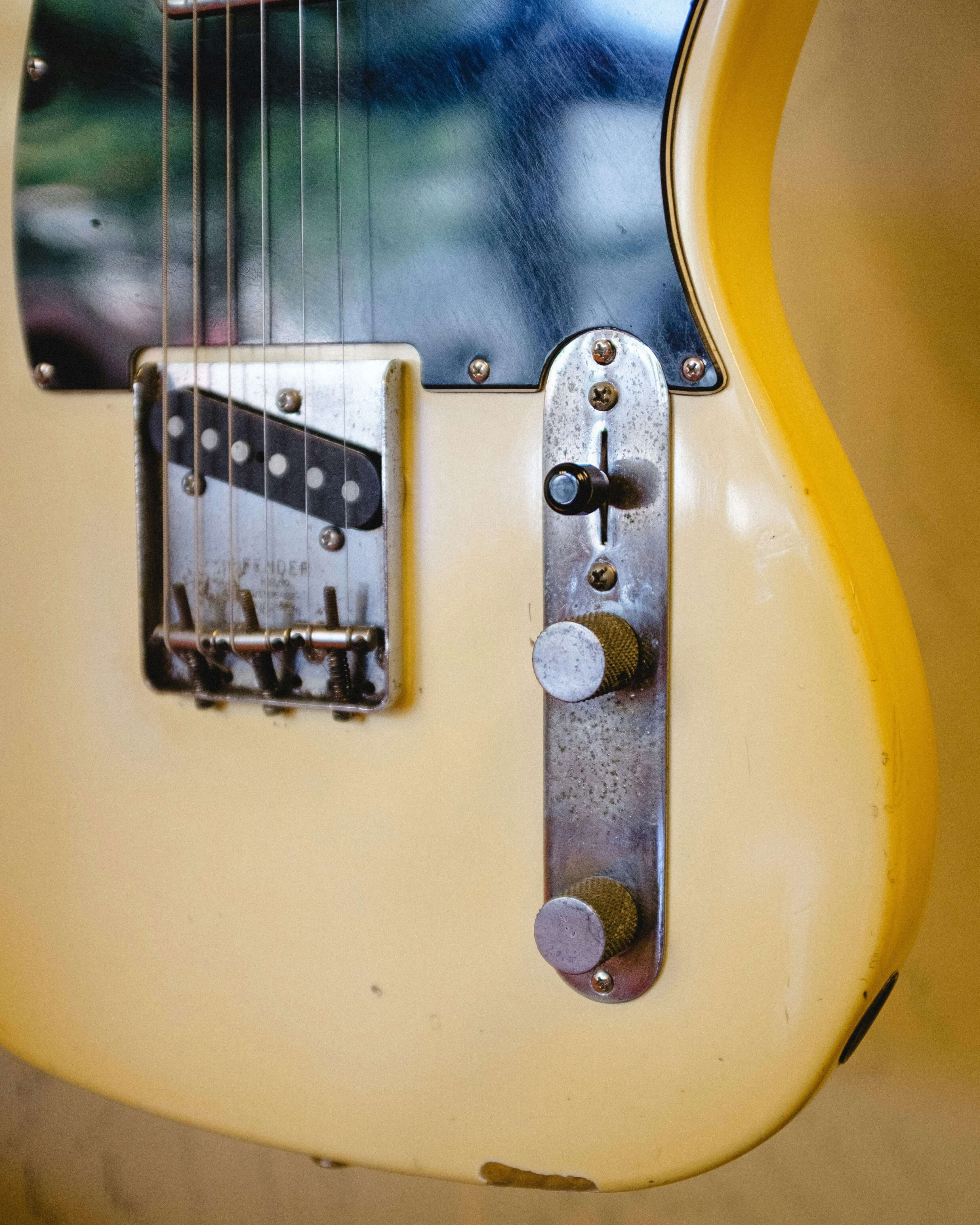
There's a sentence you hear in guitar shops, in collectors' forums, in the hushed register dealers use when leaning over a case. They don't make them like they used to. It's delivered as if it closes the matter. It's the founding scripture of vintage guitar culture, and it's wrong in ways that are measurable, interesting, and extremely profitable for the people who keep repeating it.
This is not an attack on old guitars. Many of them are wonderful. Some are the best a working factory could produce in a given decade, and they've aged in ways that are genuinely irreplaceable. That part is true. The rest of the story — where a 1959 Les Paul costs more than an apartment, where a pre-war Martin reportedly crossed a million dollars last summer — is not a story about instruments. It's a story about scarcity, nostalgia, and four cognitive biases doing the heavy lifting while everyone stares at the wood.
The instrument is not what's being priced. That is the entire essay.
Blindfold the soloist

Start with the most uncomfortable evidence, because it sets the burden of proof for everything that follows.
In 2010, the acoustician Claudia Fritz and the violin maker Joseph Curtin ran a double-blind test at the International Violin Competition of Indianapolis. Twenty-one experienced violinists played three fine new violins against two by Stradivari and one by Guarneri del Gesù — the old instruments worth roughly ten million dollars combined, about a hundred times the new ones. The results, published in PNAS in 2012, were not subtle. The most-preferred violin was new. The least-preferred was a Stradivari. Players couldn't reliably tell whether the instrument in their hands was old or new, and only eight of the twenty-one chose an old violin to take home.
Fritz and her colleagues ran a larger follow-up, published in PNAS again in 2014: ten soloists, six old Italians, six new. Same pattern. Most-preferred, new. Least-preferred, a Stradivari. They were careful about sample size, and so am I — these are small studies. But they are the only controlled tests of the single most prestigious claim in the instrument world, and they point the wrong way for the trade.
Guitars don't get an exemption. The closest direct evidence is Carcagno and colleagues, in the Journal of the Acoustical Society of America in 2018: a luthier built six steel-string acoustics identical in every dimension except the back and side wood — Brazilian rosewood, Indian rosewood, sapele, walnut, mahogany, maple. Under blind conditions, players couldn't reliably discriminate between several of them, and their own ratings didn't even hold up from one session to the next. The differences the trade insists you can hear were, in controlled listening, very hard to hear at all.
Halo Wars

What did you expect, accurate illustrations ?
Now the cleanest bias in the literature, because it explains more of the premium than any other.
During the war, the statistician Abraham Wald was asked where to add armor on bombers, based on where returning planes showed the most damage. His insight was that the damage on the survivors marked the places a plane could be hit and still come home. The armor belonged where the returning planes were not hit — because the planes hit there hadn't returned to be measured. Judge a population by its survivors and you will reliably reach the wrong conclusion.
Now look at the 1959 Les Paul Standard. Around 1,700 sunburst Standards left Kalamazoo across 1958, '59 and '60, only a few hundred of them in '59 itself. Here is the part the trade omits: nobody wanted them. They were heavy, they lost the decade to thinner Fender solid bodies, and through the sixties a real Burst could be had for pocket money by anyone who actually wanted one. Plenty were refinished, modified into other models, stripped for their parts, broken in vans, or simply played to death.
The Bursts changing hands at the top of the market today are not a sample of 1959 production. They're a sample of the ones that survived sixty-five years of indifference, then thirty of appreciation, then twenty of speculation — which is to say the unusually well-built, well-loved, well-stored, and lucky ones. Every filter selected for quality. The average examples got recycled; the poor ones got destroyed. The survivors define the category, and the category is, by construction, the best of what 1959 could do.
"They don't make them like they used to" is half right. They also don't keep them like they used to. We threw most of the population away, then spent sixty years comparing what remained against factory averages from later eras. That's not the wood. That's the selection.
Jimmy touched one

WWJD
Once a few examples become famous, the rest of the category drafts behind them.
The halo effect lets one strong trait bleed into every other judgment. A guitar that played on a famous record becomes famous; a famous guitar makes its model famous; a famous model lifts every instrument born in that factory in that decade. Jimmy Page's main Burst is a 1959 Standard. Page is a legend. So a 1959 Standard — any 1959 Standard — carries the aura, including the one a dentist in Cleveland bought in 1961 and played at three weddings.
Provenance is the trade's word for famous prior owners, and it stacks a second multiplier on top. "From the estate of," "played on," "toured with" — none of that describes the instrument. It describes the cultural object the instrument became. The wood didn't change. The story did.
Big Anchors aweigh

Heavy
Two more biases finish the job. Anchoring is our habit of judging a new number against the first one we heard, however arbitrary that first number was. Once a Burst sells at a headline price, every later Burst is read against it: one below feels like a steal, one above feels normal. The reference point was set by two specific people in one specific room, and it now governs an entire category. That's how markets price collectibles. It is not how they price tools.
Confirmation bias does the rest. A buyer who has spent six figures conducts every later listening session knowing the guitar is special — and hears accordingly. The vintage instrument outperforms the modern one in the next room because the buyer paid for it to. Swap the labels and the descriptions swap with them. This isn't lying; it's how auditory perception works once expectation is loaded into it. The brain is part of the signal chain. I argued the same mechanism about tone wood and about beauty in earlier volumes, and it is the same mechanism here.
Nobody wanted them

Here's the origin story the price tag hides. The vintage market is a commercial accident mistaken for a verdict on quality.
The Burst wasn't treasured when it was new — it was a slow seller Gibson discontinued. The pre-war Martin D-45 is rarer still: only ninety-one were built between 1933 and 1942, and roughly seventy-two are traced today, a third of those refinished. These instruments became holy after the players who'd ignored them grew up, got nostalgic, and got rich. The reverence is real. It just postdates the manufacturing by forty years, and it attached to objects from a specific past, not to any measurable property of the build.
Apples, meet relic

Players almost never compare what they think they're comparing.
The vintage instrument in the comparison is a cherished, professionally set-up, mythologized survivor. The modern one is whatever was hanging on the wall, set up by whoever, bought with a fraction of the attention. That's not a test of old versus new. It's a test of a beloved reference against a stranger, with price, condition, setup and expectation all confounded into a single impression. A fair comparison would control every one of those. The shop floor controls none of them.
It was the pickups, detective

So where does the vintage "magic" actually live? On the evidence, in the parts you can measure and remake.
The trade quietly runs its own experiment. "Conversion Bursts" — fifties Goldtops rebuilt to sunburst spec — are a well-known practice, and original PAF humbuckers are bought, sold and hunted as components in their own right, often for sums that rival a used car. Builders and players consistently locate much of the prized tone in the pickups and hardware rather than the aged timber. I'll flag that last point as craft observation, not controlled data — but it lines up with the blind-test evidence and with basic physics. Pickups, magnets, pot values and capacitors are measurable and reproducible. They can be, and routinely are, built today. The mystical bond between sixty-five-year-old wood and the sound at the amp is, on this evidence, weaker than the price gap implies.
The wood did change (a little)

Honesty is the whole point of this series, so here is where the vintage side has real ground. Wood does age, and the aging is measurable.
The acoustics literature is consistent that old wood damps less than new. Noguchi and colleagues, comparing wood between 121 and 296 years old against freshly cut stock, found lower damping in the aged samples, attributed to structural change over time. The chemistry tracks: Tomasetti and others report that hemicellulose diminishes with age — in spruce older than about 210 years, roughly a third of it is gone — while Tai's group characterizes dry aging as hemicellulose decomposition, lignin oxidation, and reduced equilibrium moisture. Lower damping means a top that gives energy back a little more freely.
But read those numbers again. They come from wood one to three centuries old. A 1959 guitar is sixty-five. Fengel found hemicellulose loss in roughly three-hundred-year-old pine while the cellulose fraction barely moved — which is why I won't repeat the popular claim that "cellulose crystallinity" transforms the tone of a vintage guitar; the sources don't support it at guitar-relevant ages. The aging is real. Over the lifespan of a vintage electric it is also small, and nobody has cleanly measured how small.
The study that doesn't exist

Scientists in 2026 creating the first artificial TONE
Which names the gap at the center of all of this. There is no published, controlled, blind old-versus-new comparison of steel-string guitars — the one test that would actually settle the trade's central claim.
We have it for violins. We have it for guitar back woods. We do not have it for vintage versus modern guitars: old top against new, played and rated blind by enough players to mean something. Build it — twenty-plus instruments matched for type and setup, genuine pre-war and golden-era pieces against the best current work, blindfolded players, a controlled room, ratings checked for consistency across sessions. Until someone runs that, the claim that vintage guitars are acoustically irreplaceable rests on exactly zero controlled measurements. The other side has asserted it for fifty years. I have the analogous tests, and they point the other way. That doesn't prove the case. It flips who has to defend their position.
Fine, you're half right

So let me hand the vintage crowd everything it's actually owed, because it isn't nothing.
Some materials are genuinely gone. Brazilian rosewood — Dalbergia nigra, the wood behind pre-war Martins — has been CITES Appendix I protected since 1992, the strictest tier there is; Brazil banned log export back in the late sixties, and legal stock today is pre-Convention or it's nothing. Old-growth Adirondack spruce and the Honduran mahogany that filled fifties Gibson necks are harder to find than they were. When you pay a premium for an instrument made of wood that can't be bought anymore, the premium is honest.
Some techniques died with the factories that used them — specific glues, finish chemistries, bracing patterns kept for a few years and dropped for cost. They're recoverable only by reverse-engineering surviving instruments. And time does its small, real work on the wood, as above. Add those three together and there's a defensible reason to pay more for some vintage instruments than for new ones. The honest premium exists. The only question is what fraction of the market it accounts for, and the answer is: not most of it.
There's also the part that needs no defense at all. Wanting an instrument made before you were born, by hands no longer alive, in a factory that no longer exists, is a real kind of value. It is simply not an acoustic one.
A Basquiat with frets

Here's the structural claim the whole essay was walking toward. The vintage guitar market doesn't behave like an instrument market. It behaves like an art market.
Provenance setting value, famous specimens anchoring whole categories, price detaching from function and orbiting narrative — this is the grammar of fine art, classic cars, and vintage watches. A 1959 Burst left the factory at around $250. It now trades in the mid-six figures, with the headline multiples running into the thousands-of-times-retail range. A pre-war D-45 retailed at $250 too; clean originals now sit around $350,000 to $500,000, a restored 1939 example brought $187,500 at Heritage in 2025, and Martin's own newsletter reported one passing a million dollars in a private sale — a transaction, worth noting, that nobody outside the room has documented.
Meanwhile a current Custom Shop reissue of that same '59 Les Paul — built to specs drawn from teardowns of the originals, and arguably more consistent than the originals ever were — costs a few thousand dollars. The gap between the reissue and the original is two orders of magnitude. It is not a gap in the instrument. It's the price of the cultural object.
None of which is a moral failing. A first-edition Hemingway isn't a better read than the paperback. A Patek doesn't tell better time than a Casio. The point isn't that collectors are foolish — it's that the vintage guitar market sits next to the collectibles market now, not the instrument market, and the trade language pretends otherwise.
The benches have eyes

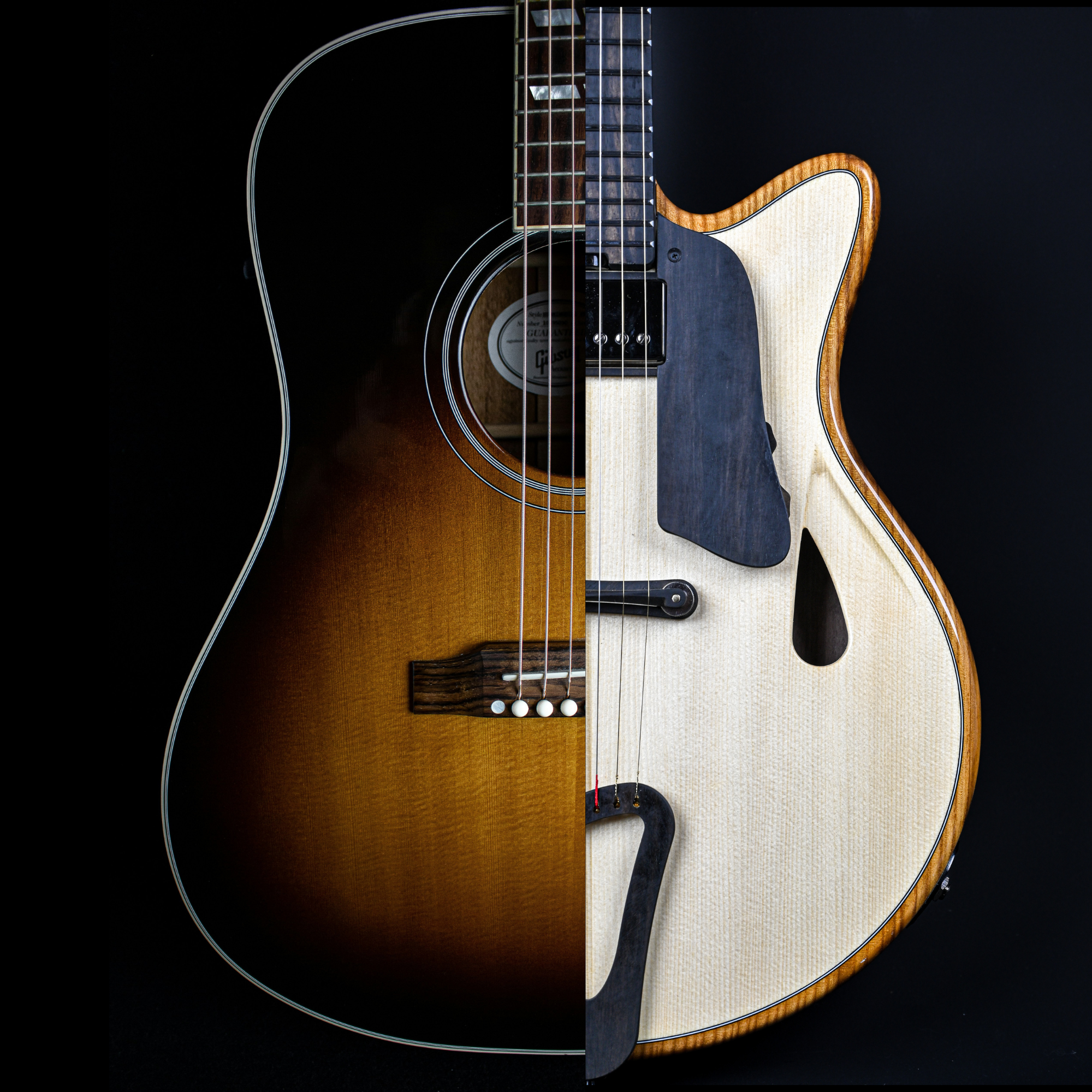
This is the part only a working luthier can say without flinching. We are not competing against vintage instruments. We are competing against the story attached to them.
Contemporary builders, factory and boutique alike, have better material characterization, better adhesives, better finishes, and fret tolerances no pre-CNC factory could hold, plus seventy years of accumulated knowledge about what works and what doesn't. The best modern instruments are, by every property you can actually measure, built better than the average golden-era factory output. They have to be — a small shop can't lean on cultural narrative to forgive a flaw. In my own workshop the number is twenty to thirty instruments a year, and not one of them gets to hide behind a legend.
I'll stay honest about the limit. I can't point you to a controlled blind test where modern steel-strings beat pre-war Martins, because, as above, nobody has run it. What I can tell you is what comes across a repair bench: vintage instruments are not a different and unreachable species. They're wood, wire, glue and hardware, executed to the standard of their day. Today's standard, on the bench, is higher.
Brace yourselves, the Truth
Vintage guitars are not bad. Some are extraordinary, preserved by luck and selection through decades of neglect and then speculation. A thoughtful buyer can defend the honest premium — for materials that can't be replaced, for techniques that died, for the slow real changes time makes in wood.
The rest is hype. Survivor bias handed us the best examples and let us mistake them for the average. Halo and provenance lifted whole categories on the backs of a few famous specimens. Anchoring set the prices, and confirmation bias confirmed them in the listening. Somewhere along the line the market stopped pricing the thing that makes the sound and started pricing the thing that carries the meaning.
Buy what you love. Pay what you want. Just know which one you're buying.
As always, I'm right, and you my friend, you're wrong. Especially on this one
注:本站所有文章均先用法语撰写,再进行翻译。这种翻译属于主动翻译,并非简单地逐字对应,而是在必要时进行调整,以更好地适应目标语言。这可能会导致语气或内容的微妙变化,对此我们表示理解并予以认可。
分享:
IRYW:为什么不锈钢品丝 浪费钱
我从贝斯制造者的角度设计吉他