



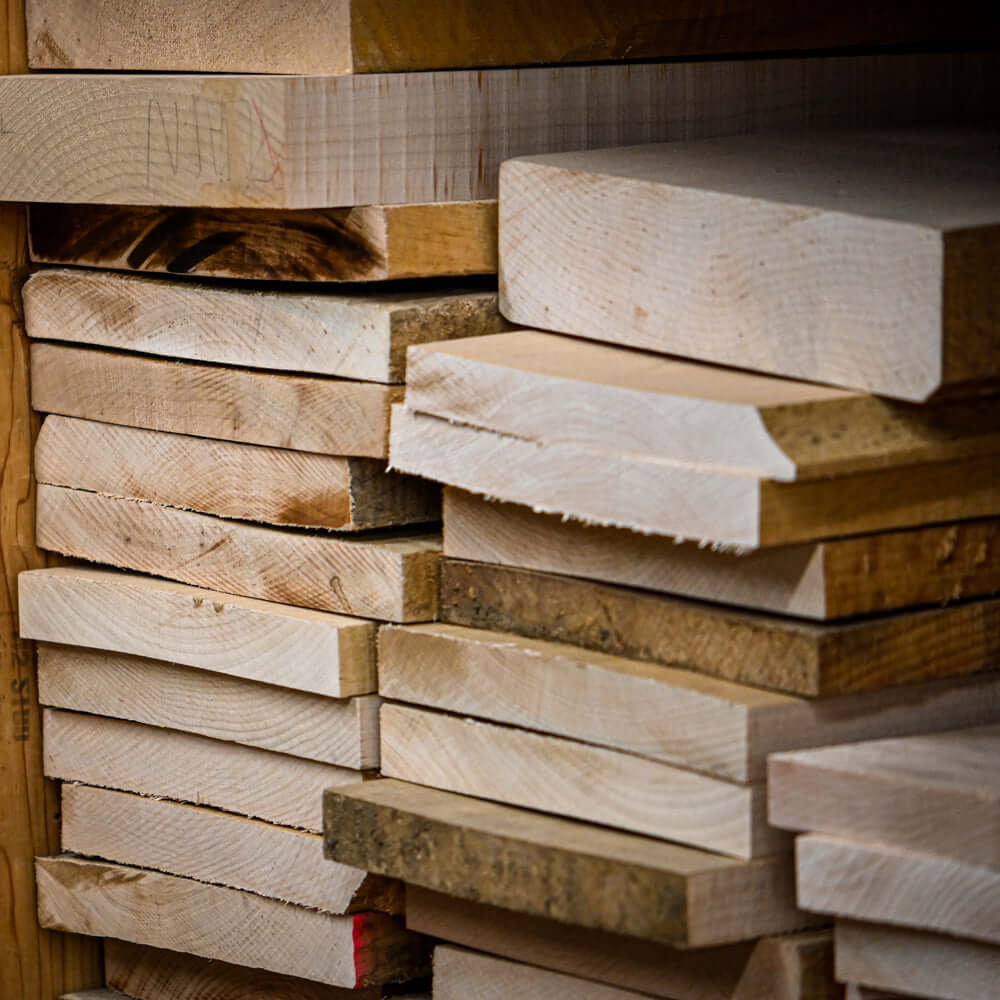
Wood has always carried a certain mythology in musical instrument making. Players talk about it with passion. Builders defend their choices with experience, instinct, and sometimes science. And somewhere between tradition, physics, and personal perception lies the real story of tonewood.
In its simplest form, a tonewood is a wood selected because its physical properties make it useful for a musical instrument. That does not mean every wood “sounds magical.” It means density, stiffness, damping, stability, weight, grain structure, and workability all matter depending on where the wood is used and what the instrument is supposed to do.
A spruce soundboard on a violin or acoustic guitar is not chosen for the same reason as a rosewood back, a mahogany neck, an ebony fingerboard, or an alder electric guitar body. Each part of an instrument has a different job. Some pieces need to vibrate efficiently. Others need to resist deformation. Some must reflect energy. Others must feel stable under the player’s hand for decades.
This is where tonewood becomes interesting: not as folklore, but as a practical dialogue between material, desi
gn, construction, and perception.
Why Traditional Tonewoods Became Traditional
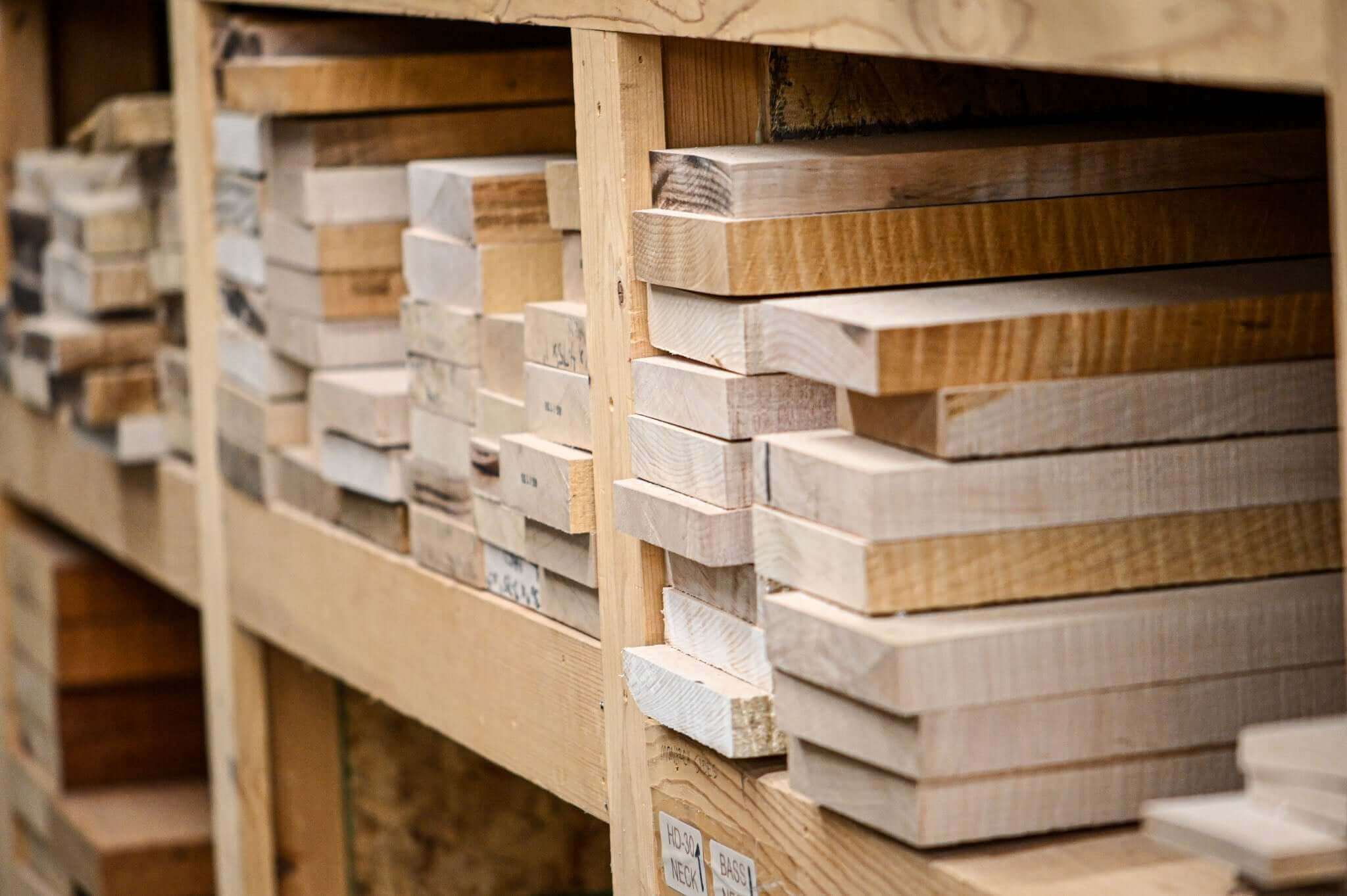
The most famous tonewoods did not become famous by accident. Spruce, mahogany, rosewood, maple, ebony, ash, alder, cedar, and many others earned their place through centuries of trial, error, availability, and musical expectation.
Spruce is a classic example. It is light, stiff, and responsive, which makes it ideal for soundboards that need to convert string energy into audible sound. That balance of low weight and high stiffness is one of the reasons spruce has been central to violins, classical guitars, steel-string acoustics, and many other instruments.
Mahogany became widely used for necks and bodies because it is stable, workable, and relatively strong. In guitars, it is often associated with warmth, midrange focus, and a balanced response. Rosewood, especially in acoustic guitars, became valued for backs and sides because of its density, sustain, reflective character, and complex overtone content.
But these choices were never purely scientific. They were shaped by local resources, trade routes, colonial histories, workshop habits, and the preferences of musicians. Luthiers used what they could access, listened carefully, refined their craft, and passed their knowledge forward.
Over time, certain woods became linked to certain sounds. Then those sounds became expectations. And once expectations become part of musical culture, tradition becomes very powerful.
The Science Behind Tonewood
To understand why different woods behave differently, we need to look at their physical properties. Luthiers do not always speak in laboratory terms, but the concepts behind the craft are deeply connected to material science.
One of the most important properties is density. Density affects weight, resonance, sustain, and how energy moves through the instrument. A low-density wood can be very useful for a soundboard because it can vibrate freely without requiring too much energy from the strings. A denser wood may be better suited to parts of the instrument where reflection, mass, or structural stability are more important.
Stiffness is another major factor. Young’s modulus describes how resistant a material is to bending or deformation. In practical terms, a stiff piece of wood can transmit vibration efficiently and maintain structural integrity under string tension. For soundboards, the relationship between stiffness and weight is especially important. A good soundboard material often needs to be light enough to respond quickly but stiff enough not to collapse or absorb too much energy.
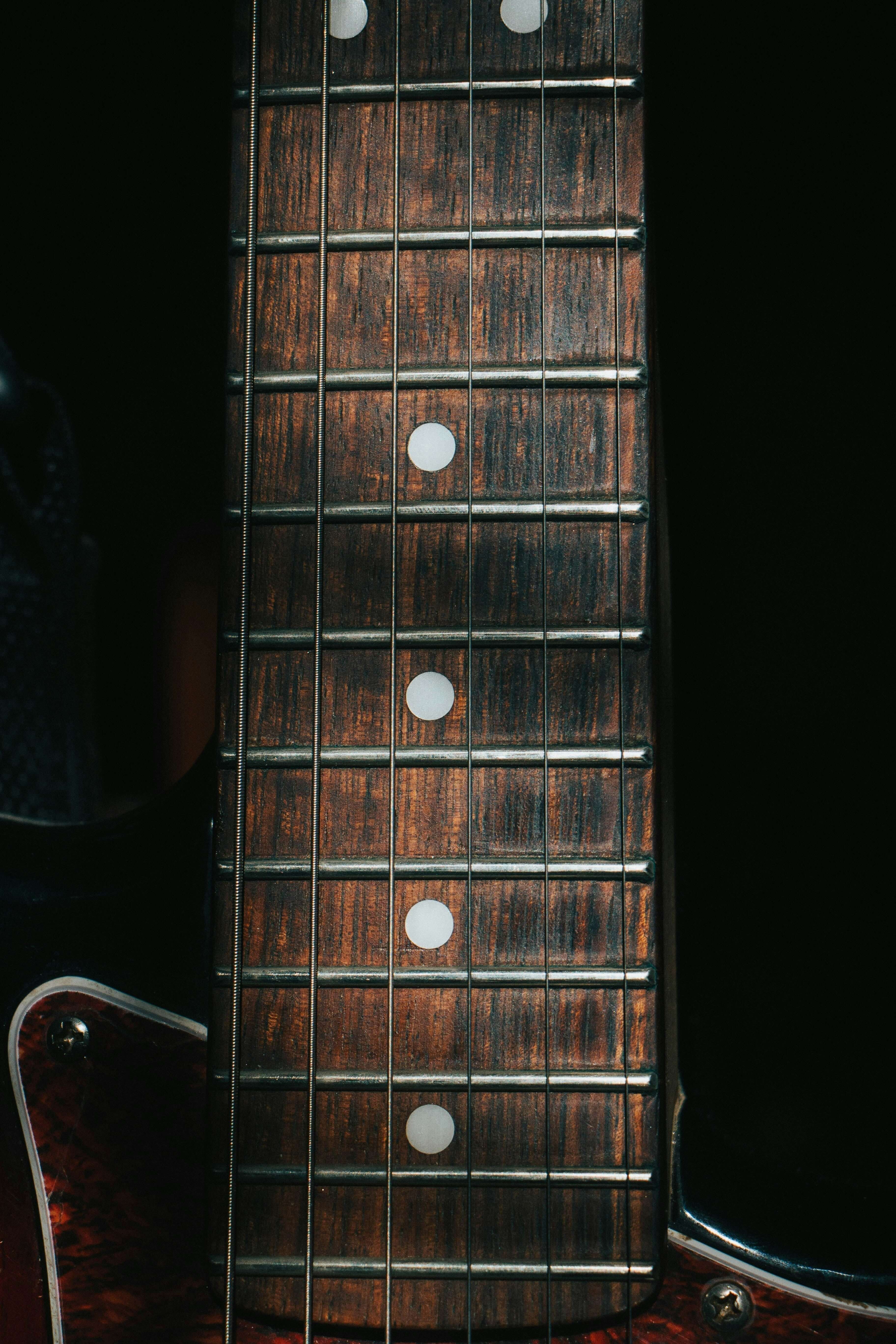
Hardness matters too, though not always in the way players assume. A fingerboard wood, for example, must resist wear from strings and fingers. That is why dense, hard woods such as ebony or rosewood have traditionally been preferred. In this context, hardness is less about tone in the abstract and more about durability, feel, attack, and long-term consistency.
Other acoustic parameters also matter: damping, wave speed, quality factor, vibration efficiency, and energy transmission. These help explain why two pieces of wood with similar names can behave very differently. “Spruce” is not a single sound. Neither is “mahogany” or “rosewood.” Species, cut, moisture content, age, grain orientation, and individual variation all influence the result.
This is one reason experienced builders do not select wood by species alone. They tap it, flex it, weigh it, measure it, compare it, and judge whether a specific piece is suitable for a specific role.
Tonewood Is Not One Thing
A common mistake is to talk about tonewood as if the entire instrument reacts in one simple, uniform way. In reality, the same wood can be excellent in one part of an instrument and inappropriate in another.
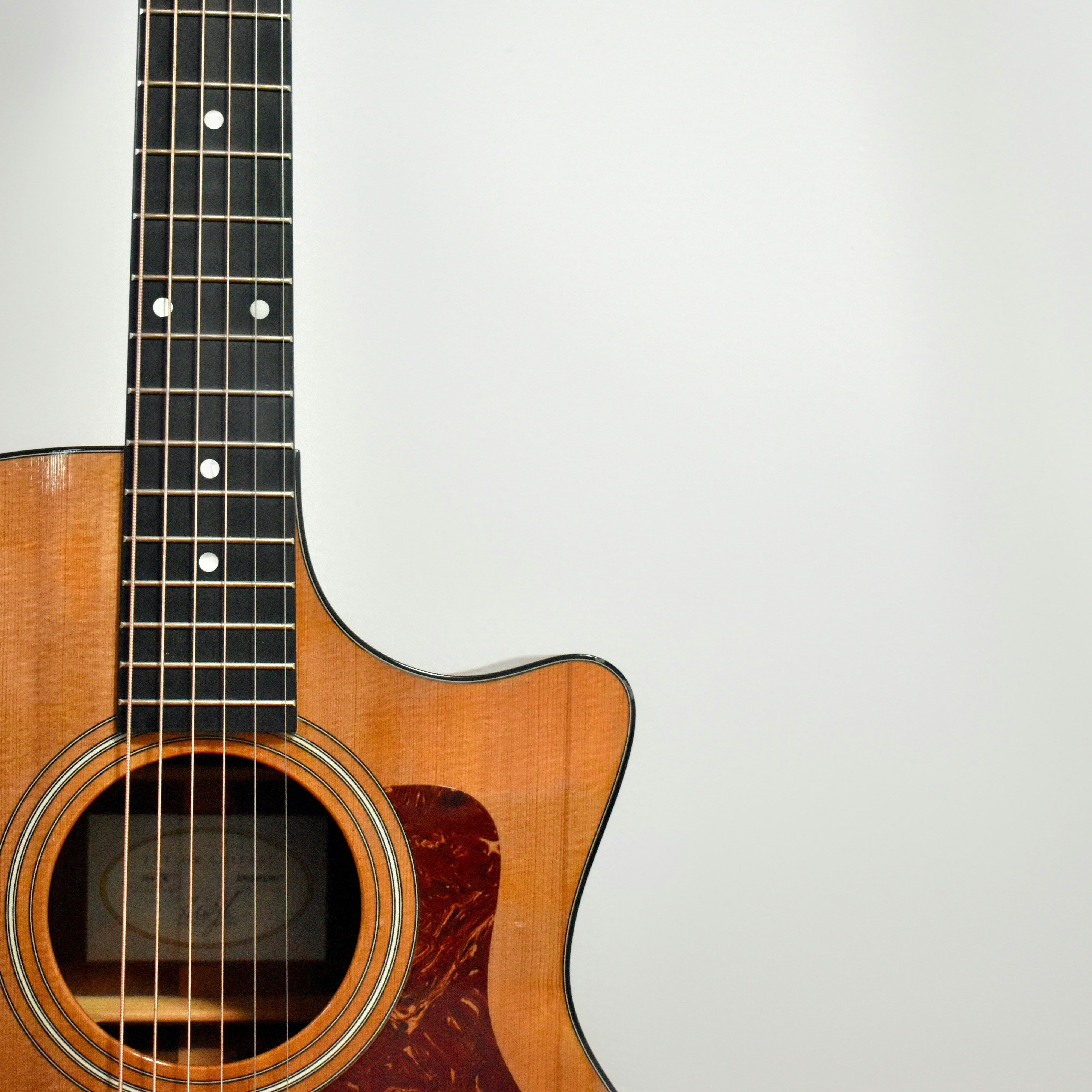
For an acoustic guitar top, the goal is efficient sound radiation. The top must respond to string vibration, move air, and produce volume and nuance. Low density and high stiffness are valuable here.
For backs and sides, the role is different. These parts often contribute more through reflection, enclosure behavior, structural support, and tonal shaping. Denser woods such as rosewood, maple, or similar alternatives can help create a different balance of projection, sustain, and harmonic content.
For necks, the priorities shift again. Stability, stiffness, resistance to warping, comfort, and reliability become central. A neck that sounds theoretically interesting but moves constantly with humidity is not a good neck.
For fingerboards, hardness, wear resistance, feel, and surface quality are critical. For bridges, density and energy transfer matter. For bodies of electric instruments, weight, resonance, balance, sustain, and compatibility with hardware and electronics all become part of the equation.
The important point is simple: wood choice only makes sense when connected to function.
Sustainability and the Search for Alternatives
Many traditional tonewoods are now harder to source responsibly. Some are restricted. Some are overharvested. Others come with ecological, legal, or ethical concerns. This has forced modern lutherie to ask a serious question: can we build exceptional instruments without relying blindly on increasingly scarce materials?
The answer is yes, but it requires more nuance than simply replacing one famous wood with another.
Sustainable instrument making can involve responsibly sourced traditional woods, locally available species, reclaimed material, thermally modified woods, engineered woods, laminated structures, bamboo, composites, and other alternatives. Some of these materials can perform extremely well when used intelligently.
Thermally modified wood is one example. By treating wood with heat under controlled conditions, its cellular structure changes. This can improve stability, reduce sensitivity to humidity, and sometimes alter its acoustic response. It is not a magic substitute for aged wood, but it can be a useful tool.
Bamboo and other fast-growing materials also raise interesting possibilities. They do not behave exactly like traditional hardwoods, but with the right design approach, they can offer strength, stability, and sustainability.
The larger challenge is cultural as much as technical. Many players still believe that only a short list of traditional woods can produce a serious instrument. That belief is often too narrow. A good instrument is not created by a species name on a spec sheet. It is created by the relationship between material, design, execution, setup, and the musician’s hands.
Better Wood Selection Through Measurement
Modern tools allow builders to evaluate wood more precisely than ever before. One important approach is non-destructive testing, where a piece of wood can be analyzed without cutting or damaging it.
Methods such as vibrational testing can help identify stiffness, damping, resonance, and other useful properties. The BING method, for example — Beam Identification by Non-Destructive Grading — is used to evaluate wood through its vibrational behavior. Instead of relying only on appearance or species, builders can better understand what a specific piece of wood is likely to do.
This does not replace the luthier’s experience. It enhances it.
A skilled builder still has to interpret the data. Numbers do not make an instrument by themselves. But they can help sort wood more intelligently, reduce waste, make better use of less obvious material, and support more consistent results.
As high-quality traditional resonance wood becomes more limited, this kind of selection becomes increasingly valuable. The future of lutherie will likely depend less on romantic species names and more on understanding the actual properties of each piece.
Construction Matters as Much as Material
Wood choice is important, but construction often matters more than people admit.
Two instruments made from the same species can sound completely different depending on thickness, bracing, geometry, neck joint, bridge design, finish, hardware, and setup. A great piece of spruce can be ruined by poor graduation. A modest piece of wood can become a strong musical instrument if the design is intelligent and the execution is precise.
In acoustic instruments, bracing is central. The pattern, height, shape, and stiffness of braces control how the soundboard moves. X-bracing, fan bracing, ladder bracing, lattice systems, and modern hybrid approaches all distribute vibration differently. The top thickness also plays a major role. Too thick, and the instrument may sound stiff and quiet. Too thin, and it may become unstable or lose focus.
Joinery also matters. The way the neck meets the body affects energy transfer, stability, serviceability, and long-term reliability. Finishing matters too, although its effect depends heavily on the type of instrument. A thick, heavy finish can dampen vibration more than a thin, carefully applied one, especially on acoustic instruments.
Instrument making is therefore not a material contest. It is a system. Every choice interacts with the next.
What About Electric Guitars?
Electric guitars complicate the tonewood discussion because they do not produce sound in the same way as acoustic instruments.
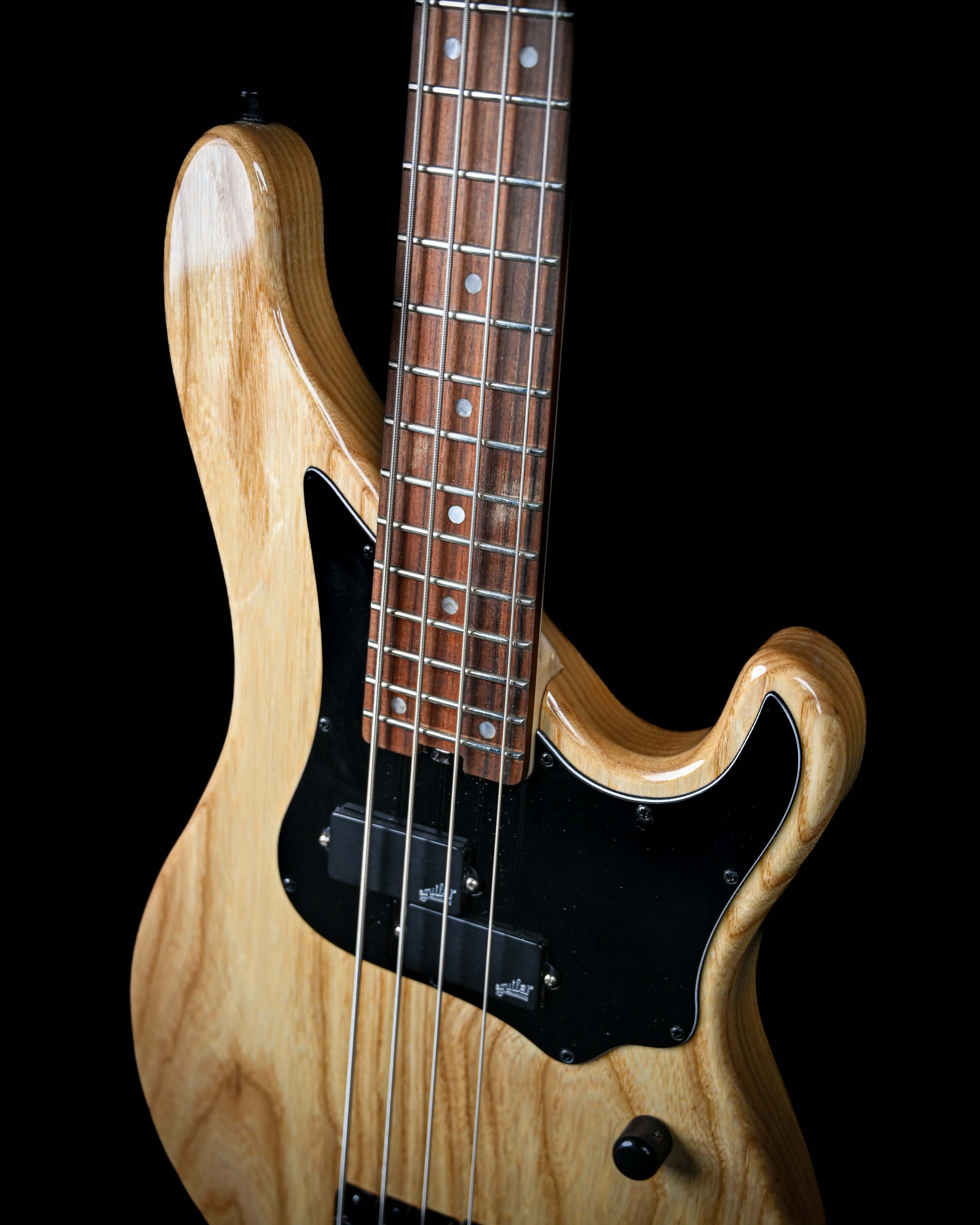
In a solid-body electric guitar, the amplified sound comes primarily from the strings, pickups, electronics, hardware, and amplifier chain. The body does not project sound acoustically in the same way an acoustic guitar does. That does not mean wood is irrelevant. It means its role is different.
The wood in an electric guitar affects weight, balance, resonance, sustain, attack, feel, and the way the instrument responds against the player’s body. It can influence how the strings vibrate over time. But the final sound is heavily shaped by pickups, pickup placement, wiring, bridge design, string choice, scale length, setup, and amplification.
This is why extreme claims should be treated carefully. Saying “wood does everything” is misleading. Saying “wood does nothing” is also too simplistic.
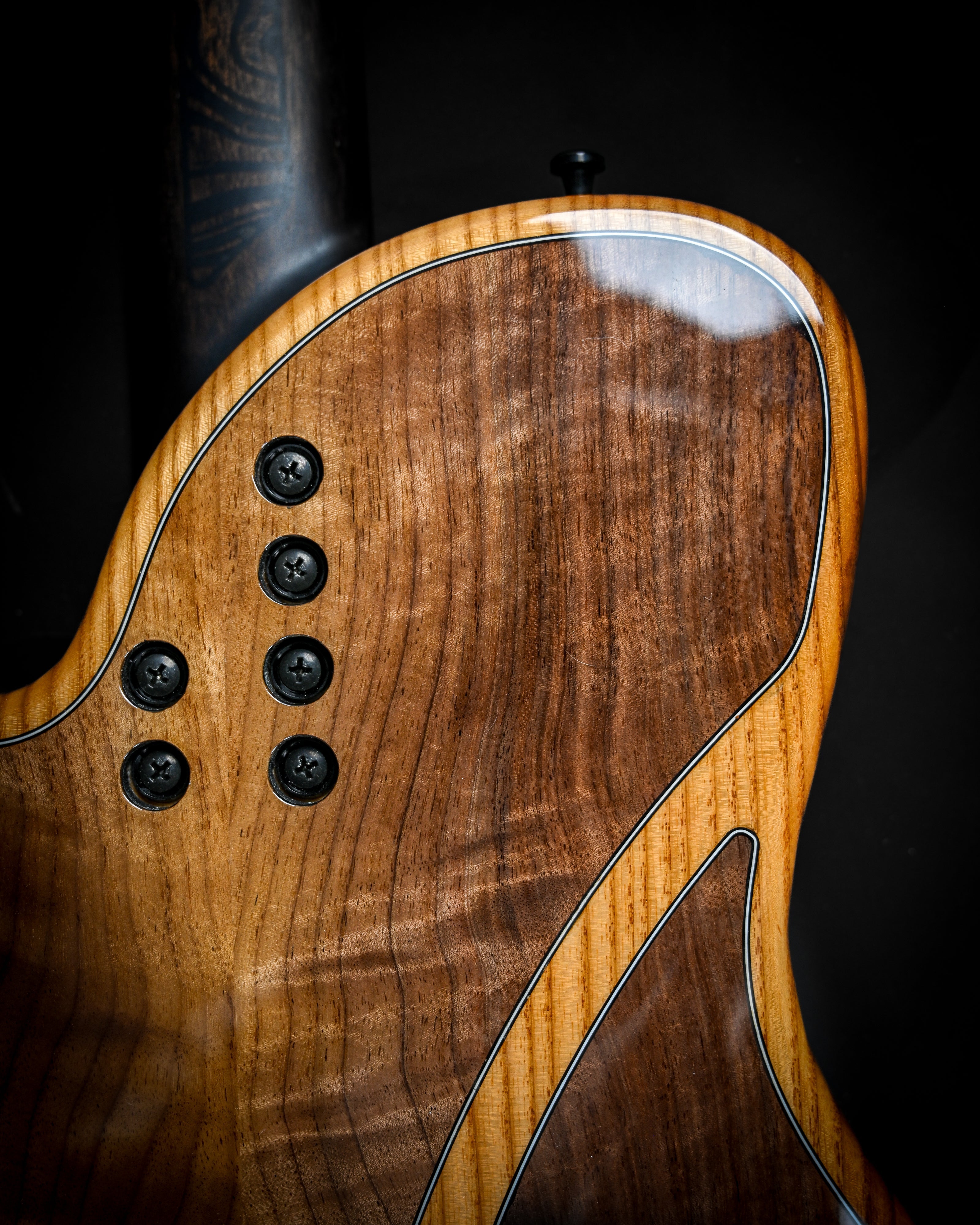
Alder, ash, mahogany, maple, basswood, walnut, korina, and other woods all bring different mechanical properties. But on an electric guitar, those properties are filtered through a much larger system. The player hears the result of the whole instrument, not the wood in isolation.
Neck construction is another key factor. Bolt-on, set-neck, and neck-through designs each have practical and tonal implications. Bolt-on necks are serviceable and adjustable. Set-necks can offer a different feel and transition. Neck-through construction can change sustain, stiffness, and access. None is universally superior. Each belongs to a design philosophy.
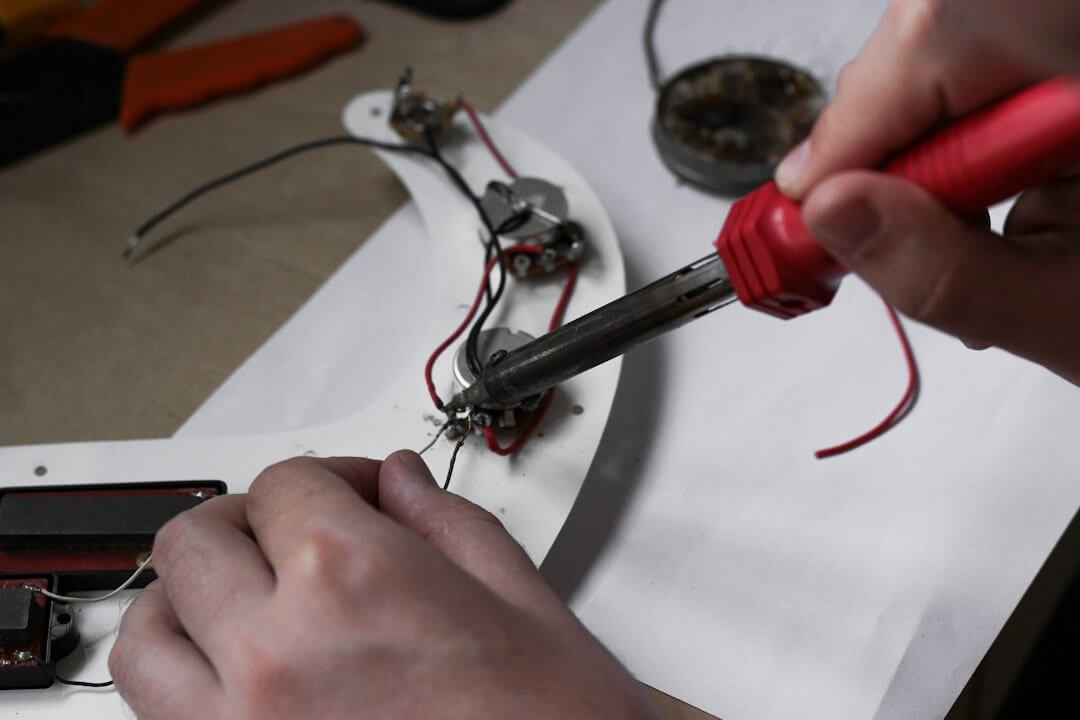
The same applies to hardware. A bridge, tremolo system, nut, tuners, frets, and pickup configuration can change the instrument dramatically. In many electric guitars, these elements have a more immediate and obvious effect than the body wood alone.
Psychoacoustics: What We Hear Is Not Only Sound
Any serious discussion about tone has to include psychoacoustics: the study of how humans perceive sound.
Players do not listen like measuring devices. We are influenced by expectation, appearance, price, brand reputation, weight, feel, visual design, and even the story behind the instrument. A guitar that looks expensive may be perceived as sounding better. A famous wood may create expectations before the first note is played. A heavier instrument may be assumed to sustain more, whether or not the difference is meaningful in a given case.
This does not mean tone is imaginary. It means perception is part of the musical experience.
Small changes in resonance, attack, sustain, or frequency response can matter. But not every measurable difference is musically meaningful, and not every perceived difference comes from the material being discussed. Controlled listening tests often show how difficult it is to isolate one factor from another.
For builders, this is important. The goal is not only to create an instrument that measures well. The goal is to create an instrument that feels alive, responds musically, and inspires confidence in the player.
That includes objective behavior, but also ergonomics, aesthetics, emotional connection, and trust.
Myths, Claims, and Better Conversations
The tonewood debate is often poor because it becomes tribal. One side treats wood as sacred. The other dismisses it entirely. Both positions are usually too crude.
A better conversation starts with context.
In an acoustic instrument, wood selection and construction are central to sound production. In a solid-body electric guitar, wood matters, but it is one part of a larger electromechanical system. In a neck, stability may matter more than romantic tone claims. In a fingerboard, durability and feel may be more important than vague promises of warmth or brightness.
The right question is not: “Does wood affect tone?”
The better question is: “How much does this specific material affect this specific part of this specific instrument, compared with the other design choices?”
That question leads to better instruments.
The Future of Tonewoods
The future of instrument making will not be built on nostalgia alone. Traditional woods will remain important, but they cannot be the only answer. The industry needs better sourcing, better education, better measurement, and a more open attitude toward alternative materials.
This does not mean abandoning tradition. It means understanding tradition deeply enough to move beyond imitation.
The best luthiers have always innovated. Every “traditional” design was once a new idea. Every accepted material was once an experiment. The challenge today is to combine craft, science, sustainability, and musical sensitivity without reducing instruments to marketing claims or laboratory charts.
The future will likely include more local woods, more reclaimed materials, more engineered solutions, more precise sorting, and more transparent communication with musicians. It will also require players to judge instruments with their hands and ears, not only with spec sheets.
Conclusión
Tonewoods matter, but not in the simplistic way they are often discussed.
A wood’s density, stiffness, hardness, damping, and stability all influence how it behaves. But the final character of an instrument comes from the complete system: material, design, construction, electronics, setup, finish, and the musician playing it.
Tradition gives us a valuable foundation. Science gives us better tools. Sustainability forces us to question old habits. Craftsmanship brings everything together.
The real art of lutherie is not choosing the most famous wood. It is knowing what each material can do, where it belongs, and how to turn it into an instrument that feels coherent, reliable, expressive, and alive.
That is where the future of tonewood should be: not trapped in myth, and not stripped of romance, but grounded in knowledge, responsibility, and music.
Compartir:
La Verdad Acerca de los Mástiles de Guitarra
La Verdad sobre los Acabados de Guitarra